15 Days of Chinese New Year: Traditions & Meaning Explained
Chinese New Year is not just one day of celebration — it is a 15-day journey filled with customs, symbolism, family rituals and spiritual significance.
In Malaysia, the celebration reflects both ancient Chinese traditions and modern adaptations shaped by local culture. From the emotional Reunion Dinner on New Year’s Eve to the festive finale of Chap Goh Meh, each day carries meaning.
Here is a complete and culturally enriched guide to the 15 days of Chinese New Year in Malaysia.
Before Day 1: Reunion Dinner (团圆饭)
The most important meal of the entire celebration takes place on Chinese New Year’s Eve.
The reunion dinner symbolises:
- Unity of the family
- Gratitude for the past year
- A complete circle before beginning anew
Families travel back to their hometowns to gather. The atmosphere is often emotional, especially for those working far away.
Typical dishes include:
- Fish (abundance year after year)
- Prawns (happiness and laughter)
- Steamboat (togetherness)
- Roast meats
- Yee Sang
Many families stay up late after dinner in a tradition known as shou sui (守岁), believed to bless parents with longevity.
Day 1: Welcoming the Lunar New Year
The first day is considered the most auspicious and spiritually sensitive.
Customs include:
- Wearing red or bright colours
- Avoiding sweeping or throwing rubbish
- Avoiding harsh words
- Visiting elders
- Giving and receiving ang pow
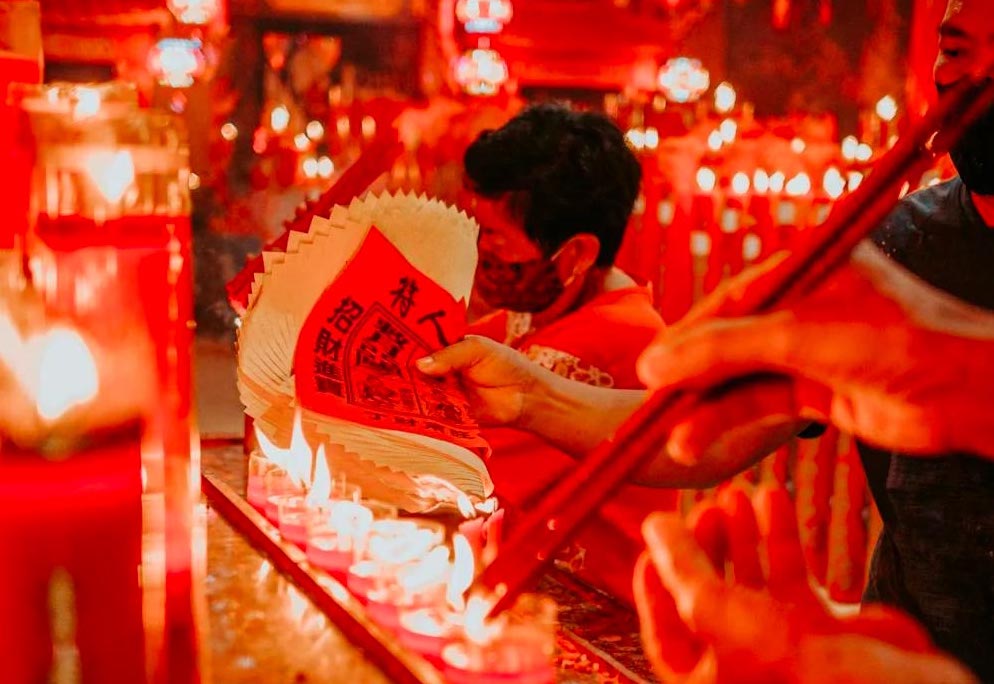
Many families visit temples early in the morning to offer prayers for prosperity.
In Malaysia, lion dances are common in residential neighbourhoods and shopping malls.
Day 2: Visiting Married Daughters
Traditionally, Day 2 is when married daughters return to visit their parents.
Historically, daughters were considered part of their husband’s household after marriage. Day 2 symbolised continued filial respect and family ties.
Modern Adaptation in Malaysia
However, in modern Malaysia:
- Many families no longer strictly follow this rule.
- Married daughters may visit on Day 1.
- Family visits are often arranged based on convenience rather than strict tradition.
Urban lifestyles and smaller family units have made the tradition more flexible.
Today, the spirit of togetherness matters more than rigid timing.
Day 3: “Red Mouth” (赤口)
Day 3 is traditionally believed to be prone to quarrels and conflict.
Many families:
- Avoid visiting others
- Stay home
- Keep celebrations low-key
It is considered inauspicious for social gatherings.
Day 4: Welcoming the Kitchen God
Day 4 marks the welcoming of the Kitchen God (灶君).
According to Chinese folk belief:
- The Kitchen God watches over each household throughout the year.
- Before Chinese New Year, he ascends to heaven to report on the family’s conduct.
- On Day 4, he returns to continue his watch.
Families prepare offerings such as:
- Fruits
- Sweet cakes
- Incense
In some traditions, sweet offerings are given so the Kitchen God will “report sweetly” about the household.
This day reflects:
- Moral accountability
- Spiritual awareness
- Renewal of good behaviour
While not all modern families practise this ritual, it remains culturally significant in more traditional households.
Day 5: Birthday of the God of Wealth
Day 5 is dedicated to the God of Wealth (财神).
Business owners often:
- Reopen their shops
- Set off firecrackers
- Invite lion dance troupes
- Pray for strong business performance
It symbolises inviting prosperity and financial success into the year.
Day 6: Social Visits Resume
After the quieter third day, social visits resume more actively.
People attend:
- Open houses
- Extended family gatherings
- Friendly visits
The festive spirit becomes more relaxed.
Day 7: Ren Ri (人日) — The Birthday of Mankind
Ren Ri, the seventh day, is believed to be the day the goddess Nuwa created human beings.
It is sometimes referred to as the “common birthday” of humanity.
Cultural Meaning of Ren Ri
Historically, this day symbolised:
- Equality among people
- Shared humanity
- Collective celebration
In Malaysia and Singapore, Ren Ri has become strongly associated with:
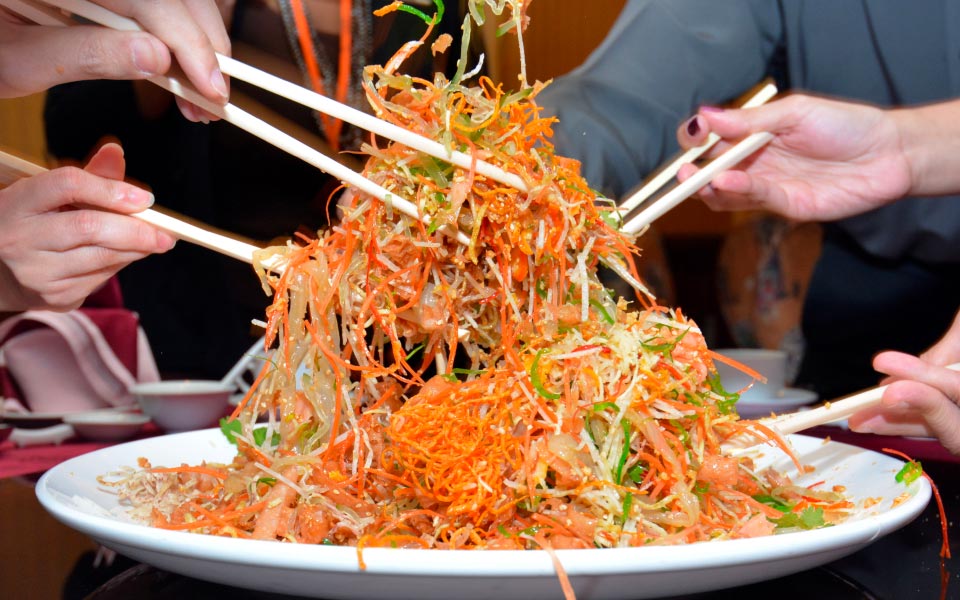
Lou Hei (捞起)
Families and colleagues gather to toss:
- Yee Sang
Read more about the origin of Yee Sang.
Each ingredient is added with auspicious phrases, and the final tossing ritual symbolises:
- Rising fortune
- Rising career success
- Rising prosperity
The louder and higher the toss, the more prosperity believed to follow.
Ren Ri has evolved into one of the most iconic corporate and social rituals during Chinese New Year in Malaysia.
Day 8: Preparation for the Jade Emperor’s Birthday
Day 8 is a very busy day for many Chinese families — especially the Hokkien community.
Throughout the day, families prepare:
- Elaborate offerings
- Fruits and cakes
- Sugarcane (a key symbol in Hokkien tradition)
- Incense and joss paper
The actual celebration takes place at midnight of Day 8, leading into Day 9.
Day 9: Jade Emperor’s Birthday (天公诞)
Day 9 is the official birthday of the Jade Emperor, the supreme deity in Taoist belief.
This day is particularly important among Hokkiens.
In Penang, large-scale celebrations can be seen at:
- Chew Jetty
Families pray for:
- Protection
- Prosperity
- Peace
Sugarcane plays an important symbolic role in Hokkien culture, representing resilience and gratitude.
For many Hokkien families, Day 9 is considered even more important than the first day of Chinese New Year.
Days 10–13: Continued Feasting and Celebration
These days are filled with:
- Corporate dinners
- Business Lou Hei gatherings
- Extended family banquets
Restaurants remain fully booked during this period.
Day 14: Preparing for the Finale
Markets become lively again as families prepare for the last day.
Lanterns are refreshed and offerings are purchased.
Day 15: Chap Goh Meh (元宵节)
Chap Goh Meh marks the end of the 15-day celebration.
In Malaysia, especially in Penang:
- Single women throw mandarin oranges into the sea
- In modern times, phone numbers may be written on them
Temples hold lantern festivals and prayers.
Chap Goh Meh symbolises:
- Completion
- New beginnings
- Hope for romance and happiness
The 15 days of Chinese New Year are not merely festive events — they represent a carefully structured cultural journey of:
- Family unity
- Spiritual awareness
- Moral reflection
- Social bonding
- Hope for prosperity
In Malaysia, traditions evolve, adapt and blend with modern life — yet the core values remain strong.
From reunion dinner to Chap Goh Meh, the celebration continues to unite generations.