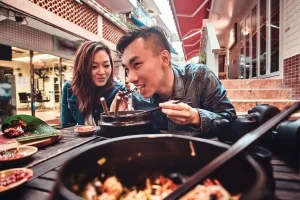
One of the best ways to understand Kuala Lumpur is through its hawker food.
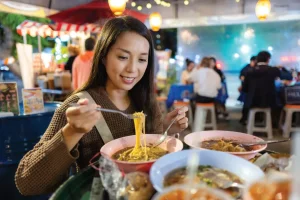
Across the city, hawker centres, food courts and food streets bring together stalls serving dishes influenced by Malaysia’s Malay, Chinese and Indian communities. You might find curry laksa and wantan mee at one end, nasi lemak and nasi campur at another, with traditional kuih, kopi and desserts in between.
Unlike Singapore, Kuala Lumpur’s hawker scene isn’t concentrated into large purpose-built hawker centres. Some of the city’s best hawker experiences are hidden inside wet markets, old neighbourhood food courts, narrow lanes and shopping centres.
From the morning crowds at ICC Pudu to the evening energy of Jalan Alor, here are some of the best hawker centres and food hubs in Kuala Lumpur for experiencing the city’s local food culture.
What Is a Hawker Centre?
A hawker centre is essentially a collection of independently operated food stalls sharing a common dining area. Instead of ordering everything from one restaurant, diners can buy different dishes from several stalls and enjoy them together at the same table.
However, the term can be slightly confusing in Kuala Lumpur.
The city’s hawker culture developed differently from Singapore’s highly organised hawker-centre system. In KL, hawkers can be found inside wet markets, traditional kopitiams, municipal food courts known as medan selera, roadside clusters, back lanes and dedicated food streets.
This means some of Kuala Lumpur’s most interesting “hawker centres” may not technically be hawker centres at all.
If you’re interested in individual stalls and dishes rather than places where many hawkers gather, our guide to the best street food in Kuala Lumpur explores the wider hawker and street-food scene.
Best Hawker Centres and Food Hubs in Kuala Lumpur
1. ICC Pudu – Best for a Traditional KL Hawker Breakfast
ICC Pudu is one of the best places to begin exploring Kuala Lumpur’s traditional hawker culture, particularly if you’re prepared to wake up early.
The complex became the new home of the historic Imbi Market, also known as Pasar Baru Bukit Bintang, when traders relocated from the old market in 2016. Today, its food court continues the legacy of many long-established hawkers while providing a larger and more organised setting.
Come in the morning and you’ll find the dining area buzzing with regulars having breakfast over bowls of noodles, plates of chee cheong fun and cups of traditional Hainanese coffee.
Popular foods to look out for include:
- Curry noodles
- Pork noodles
- Chee cheong fun
- Popiah
- Wantan mee
- Nasi lemak
- Hainanese tea and coffee
- Traditional kuih
One of the joys of ICC Pudu is that you don’t necessarily need to arrive knowing exactly what you want. Walk around the food court first, see what people are eating and follow the queues.
Best for: Traditional hawker breakfast and first-time visitors who want a more local experience.
Best time to visit: Early morning to late morning.
For a deeper dive into individual stalls and dishes, read our complete guide on what to eat at ICC Pudu. You can also explore the surrounding neighbourhood with our Pudu Kuala Lumpur guide.
2. Madras Lane – Best for Chinatown Hawker Food
Hidden behind the busy streets of Chinatown, Madras Lane offers a very different experience from Kuala Lumpur’s modern food courts.
The narrow hawker lane is simple, crowded and unmistakably old-school. Plastic tables and stools sit between stalls preparing some of Chinatown’s most recognisable dishes, while diners squeeze into whatever seats become available.
Madras Lane is particularly famous for curry laksa, with rich coconut-based curry broth filled with noodles, tofu puffs and other toppings. Yong tau foo is another speciality, alongside chee cheong fun and other traditional Chinese hawker dishes.
Foods to look out for include:
- Curry laksa
- Assam laksa
- Yong tau foo
- Chee cheong fun
- Chinese desserts and drinks
This isn’t the place to expect air conditioning or a polished dining environment. That’s precisely part of its appeal. Madras Lane provides a glimpse of the kind of everyday hawker culture that has existed around Chinatown for generations.
Best for: Traditional Chinese-Malaysian hawker food.
Best time to visit: Morning through lunchtime.
Madras Lane is easy to include while exploring Chinatown on foot. See our complete Petaling Street guide for more things to eat, see and do around the neighbourhood.
3. Pudu Wai Sek Kai – Best for Evening Hawker Food
If ICC Pudu represents the morning side of Pudu’s food culture, Pudu Wai Sek Kai shows what happens when the neighbourhood moves into the evening.
Located around Jalan Sayur, this old-school food street is known locally as Wai Sek Kai, a Cantonese expression commonly associated with a street for food lovers. Rather than a modern enclosed food court, expect a much more traditional collection of hawkers and casual eateries.
The experience is particularly good for travellers who want to venture beyond Kuala Lumpur’s main tourist dining areas. Pudu remains one of the city’s strongest neighbourhoods for traditional Chinese food, with generations of local businesses operating throughout the district.
Depending on the stalls operating during your visit, you may encounter noodles, fried snacks, desserts and other Chinese-Malaysian hawker favourites.
Best for: An old-school neighbourhood hawker experience.
Best time to visit: Late afternoon and evening.
Combine your meal with some exploration of the neighbourhood using our Pudu area guide, which covers the area’s markets, food, history and changing streetscape.
4. Lot 10 Hutong – Best for First-Time Visitors
For travellers who want to sample Malaysian hawker food without dealing with the heat, traffic or sometimes confusing ordering systems of traditional food centres, Lot 10 Hutong provides one of the easiest introductions.
Located beneath Lot 10 in Bukit Bintang, Hutong brings together a collection of established Malaysian food names in an air-conditioned food hall. You’ll find noodles, rice dishes, roasted meats and other local favourites without having to travel between different neighbourhoods.
Depending on the stalls, dishes may include:
- KL-style Hokkien mee
- Beef noodles
- Char kway teow
- Wantan mee
- Roast meats
- Local desserts
The setting is certainly more polished than ICC Pudu or Madras Lane, and prices can reflect its prime Bukit Bintang location. But the convenience is difficult to beat, particularly for first-time visitors staying in the city centre.
Best for: First-time visitors, families and anyone looking for air-conditioned comfort.
Best time to visit: Lunch or dinner.
Hutong is also an easy stop while exploring the wider neighbourhood. Our Bukit Bintang food guide covers more local food, restaurants and street-food options within walking distance.
5. Jalan Alor – Best for the Night-Time Atmosphere
Jalan Alor isn’t technically a hawker centre. It is a food street, but it deserves inclusion because it remains Kuala Lumpur’s most recognisable destination for visitors looking for a bustling street-food experience after dark.
Located just behind Jalan Bukit Bintang, the street transforms in the evening as restaurants and food stalls fill the pavements with tables, bright signs, smoke from grills and crowds of diners.
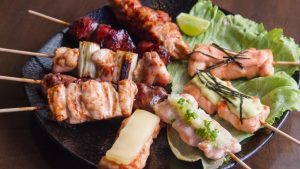
You’ll encounter everything from grilled chicken wings and satay to noodles, seafood, durian, tropical fruit and desserts.
Jalan Alor is more tourist-oriented than many traditional neighbourhood hawker centres, and prices can be higher as a result. That doesn’t mean you should skip it. Its strength is the atmosphere and convenience rather than being the cheapest or most local hawker experience in KL.
Best for: Night-time atmosphere and first-time visitors staying around Bukit Bintang.
Best time to visit: Evening through late night.
Before visiting, read our complete Jalan Alor Food Street guide for what to eat, what to expect and how to avoid common tourist traps.
6. Medan Selera Jalan Raja Muda Abdul Aziz – Best for Malay Food
For a different side of Kuala Lumpur’s hawker culture, head towards Jalan Raja Muda Abdul Aziz near Kampung Baru.
This local food court is particularly useful for visitors who want to move beyond the Chinese-dominated hawker centres commonly featured in KL food guides. Here, the focus is more heavily on Malay cooking, with stalls catering to office workers, neighbourhood residents and regulars throughout the morning and lunchtime.
Expect dishes built around rice, fried chicken, sambal, curries and a changing selection of lauk — the meat, fish and vegetable dishes commonly served with rice at Malay eateries.
Rather than searching for one famous dish, take your time looking over the trays of food before deciding what to order. Nasi campur-style dining allows you to combine several dishes on a single plate, making it a great introduction to everyday Malay food.
Best for: Malay food and a local breakfast or lunch.
Best time to visit: Breakfast and lunch.
If you want to continue exploring Malay food culture, head into nearby Kampung Baru, one of the best neighbourhoods in central Kuala Lumpur for traditional Malay cuisine.
7. Medan Selera Brickfields – Best for an Everyday Neighbourhood Food Court
Brickfields provides another useful contrast to Kuala Lumpur’s more famous tourist food destinations. Located close to KL Sentral and Little India, the neighbourhood brings together Indian, Chinese and Malay influences within a compact part of the city.
Medan Selera Brickfields is a straightforward local food court rather than a destination built specifically for visitors. That’s part of the reason to include it: hawker culture in Kuala Lumpur isn’t always about finding a famous stall. Often, it is simply about neighbourhood residents eating affordable everyday meals from a collection of small vendors.
Its location also makes it convenient for travellers passing through KL Sentral who want something more local than the restaurants inside the surrounding malls and transport complex.
Best for: Affordable everyday food close to KL Sentral.
Best time to visit: Lunch through early evening.
Spend more time exploring the surrounding streets with our Brickfields Kuala Lumpur guide, including Little India, temples, food and nearby attractions.
What About Central Market?
Central Market has a food hall serving Malaysian and international dishes, and its location makes it convenient for visitors exploring Chinatown, Merdeka Square and the historic city centre.
However, we wouldn’t prioritise it if your main goal is experiencing Kuala Lumpur’s traditional hawker culture.
Central Market today is primarily a cultural, shopping and tourism destination. Its food hall works well when you’re already visiting the building, but travellers specifically searching for a hawker experience will generally find more character at ICC Pudu, Madras Lane or one of Kuala Lumpur’s neighbourhood food courts.
What Local Foods Should You Try at a Kuala Lumpur Hawker Centre?
Part of the appeal of visiting a hawker centre is being able to try several dishes without travelling across the city. What is available varies considerably between locations, but these are some Malaysian favourites worth looking out for.
Nasi Lemak
Malaysia’s most famous rice dish combines coconut rice with sambal, anchovies, peanuts and egg, with fried chicken, rendang or other accompaniments often added. It is particularly popular for breakfast but can be eaten throughout the day.
Curry Laksa
A rich noodle dish served in a spicy coconut-based curry broth. Recipes vary between stalls, but toppings can include tofu puffs, cockles, fish cake, vegetables and other ingredients. Madras Lane is particularly well known for curry laksa.
KL Hokkien Mee
One of Kuala Lumpur’s signature noodle dishes, KL-style Hokkien mee uses thick noodles stir-fried with dark soy sauce, pork, seafood and vegetables. Good versions develop a smoky aroma from cooking over intense heat.
Wantan Mee
Springy noodles served either dry with dark sauce or in soup, typically accompanied by wantons and slices of char siu. It is a staple at Chinese hawker centres and traditional kopitiams throughout Kuala Lumpur.
Chee Cheong Fun
Steamed rice noodle rolls can be served in several styles, depending on the stall. In Kuala Lumpur, they are commonly accompanied by sweet sauce, chilli sauce or curry and topped with sesame seeds.
Yong Tau Foo
Vegetables, tofu and other ingredients stuffed or paired with fish paste are served in soup or with sauces. It is particularly enjoyable when ordered as several pieces to share alongside noodles or other dishes.
Nasi Campur
Literally “mixed rice”, nasi campur allows diners to select rice with several prepared dishes such as fried chicken, fish, vegetables, curries and sambal. It is one of the easiest ways to explore the diversity of Malay home-style cooking.
If you’re planning your meals across an entire trip rather than visiting individual hawker centres, start with our Kuala Lumpur Food Guide for a broader introduction to what and where to eat in the city.
Hawker Centre vs Food Court vs Night Market: What’s the Difference?
The terms are sometimes used interchangeably, but they describe slightly different dining experiences.
Hawker centres bring multiple independent food vendors together around shared seating. In Kuala Lumpur, these can range from traditional open-air centres to food areas attached to wet markets.
Food courts work on a similar principle but are generally found inside shopping centres or purpose-built commercial buildings. They tend to offer a more comfortable environment with air conditioning and standardised facilities.
Food streets such as Jalan Alor consist of restaurants and stalls concentrated along a street rather than within one shared building.
Night markets, or pasar malam, are temporary markets that usually operate on particular evenings of the week. Vendors set up stalls selling food, drinks, produce, clothing and household goods before packing everything away at the end of the night.
For an evening experience, see our guide to the best night markets in Kuala Lumpur.
Traditional Hawker Centre or Modern Food Hall: Which Should You Choose?
If this is your first visit to Kuala Lumpur, try both.
Traditional places such as ICC Pudu and Madras Lane offer more of the atmosphere associated with KL’s everyday food culture: shared tables, busy stalls, regular customers and recipes that may have been passed through generations.
Modern food halls such as Lot 10 Hutong are easier to navigate, usually more comfortable and particularly convenient when travelling with children or anyone who may struggle with Kuala Lumpur’s heat.
Neither experience has to replace the other. Together, they show how the city’s hawker culture has evolved from markets and roadside stalls into contemporary food halls while remaining an important part of how Kuala Lumpur eats.
Tips for Visiting Hawker Centres in Kuala Lumpur
Go at the Right Time
Timing matters more than many visitors realise. ICC Pudu and Madras Lane are primarily morning and lunchtime destinations, while places such as Pudu Wai Sek Kai and Jalan Alor become livelier later in the day. Some popular stalls close once they sell out.
Walk Around Before Ordering
Don’t immediately order from the first stall you see. Take a lap around the hawker centre, look at what locals are eating and compare the different stalls before deciding.
Carry Some Cash
QR and cashless payments have become increasingly common, but smaller and older hawker stalls may still prefer cash. Carrying some Malaysian Ringgit in smaller denominations makes ordering easier.
Sharing a Table Is Normal
During busy periods, you may be asked to share a table with other diners. This is perfectly normal at traditional hawker centres and is part of the communal dining experience.
Order From More Than One Stall
One of the biggest advantages of a hawker centre is variety. If you’re travelling with someone else, order different dishes from several stalls and share them rather than everyone buying the same meal.
Don’t Assume Every Stall Is Halal
Kuala Lumpur’s hawker centres reflect the city’s multicultural population, and some Chinese hawker stalls serve pork or use non-halal ingredients. Muslim travellers should look for halal certification or clearly Muslim-operated stalls when uncertain.
Expect Heat and Crowds
Traditional hawker centres can be hot, noisy and crowded, particularly around breakfast and lunch. Dress comfortably and carry water, especially if you’re combining your meal with sightseeing on foot.
Frequently Asked Questions
What is the best hawker centre in Kuala Lumpur for first-time visitors?
ICC Pudu is a good choice for travellers seeking a traditional local experience, while Lot 10 Hutong is considerably easier for first-time visitors staying around Bukit Bintang. If atmosphere matters most, Madras Lane offers a more old-school Chinatown hawker experience.
What is the best time to visit Kuala Lumpur’s hawker centres?
It depends on the location. Many traditional hawker centres are strongest in the morning and at lunchtime, particularly ICC Pudu and Madras Lane. Jalan Alor and Pudu Wai Sek Kai are better choices later in the day.
Are hawker centres in Kuala Lumpur cheap?
Traditional hawker centres are generally among the more affordable places to eat in Kuala Lumpur, although prices vary by dish and location. Tourist-oriented food streets and modern food halls in prime city-centre locations tend to cost more than neighbourhood food courts.
For travellers watching their spending, our guide to cheap food in Kuala Lumpur covers more ways to eat well on a budget.
Are Kuala Lumpur hawker centres halal?
Not all of them. Many hawker centres contain a mixture of stalls, and Chinese vendors may serve pork or other non-halal ingredients. Malay food courts and clearly halal-certified or Muslim-operated stalls are better choices for diners who require halal food.
Is Jalan Alor a hawker centre?
Not technically. Jalan Alor is a food street lined with restaurants and stalls rather than a single hawker centre with communal vendors. It is included in this guide because it is one of Kuala Lumpur’s best-known places for experiencing multiple local foods in one area.
What is the difference between Kuala Lumpur and Penang hawker food?
Both cities have strong hawker traditions, but their signature dishes and local styles differ. Kuala Lumpur is particularly associated with dishes such as KL Hokkien mee, while Penang is famous for foods including Penang char koay teow, assam laksa and prawn mee. You’ll find dishes from across Malaysia in both cities today.
Experience Kuala Lumpur Through Its Hawker Food
Kuala Lumpur’s hawker scene isn’t defined by a single famous food centre. It is spread throughout the city: inside markets, down narrow Chinatown lanes, beneath shopping centres and across neighbourhood food courts where locals gather for breakfast, lunch and dinner.
Start early at ICC Pudu, squeeze into Madras Lane for curry laksa, explore Pudu’s evening hawkers or take the easy route through Lot 10 Hutong before experiencing Jalan Alor after dark.
Together, these places offer something far more interesting than simply a cheap meal. They provide a window into the communities, neighbourhoods and food traditions that have shaped Kuala Lumpur.