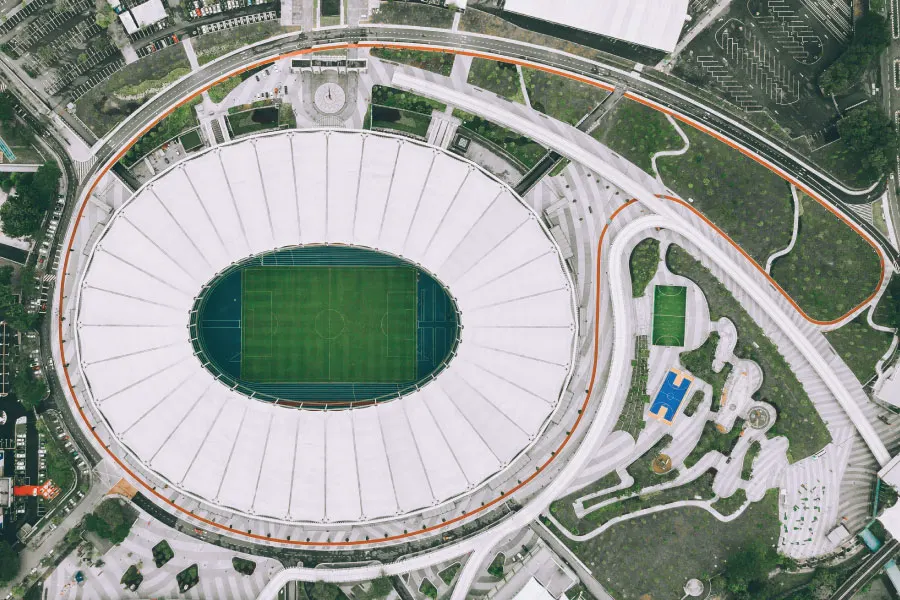
TM Stadium Nasional, widely known as Bukit Jalil National Stadium or Stadium Nasional Bukit Jalil, is one of Kuala Lumpur’s most recognisable sporting venues. Located within Kuala Lumpur Sports City, it draws visitors for football matches, major concerts and large public events.
For first-time visitors, planning the journey can be just as important as securing a ticket. The stadium is large, entrances vary by event, and getting home after a packed concert or match requires some preparation.
This guide covers the stadium’s name, history, transport connections, seating considerations and practical tips for visiting.
TM Stadium Nasional at a Glance
| Detail | Information |
|---|---|
| Current name | TM Stadium Nasional |
| Other names | Bukit Jalil National Stadium; Stadium Nasional Bukit Jalil |
| Location | Kuala Lumpur Sports City, Bukit Jalil, Kuala Lumpur |
| Venue type | Outdoor stadium |
| Listed seating capacity | 85,500 |
| Nearest LRT station | Bukit Jalil, Sri Petaling Line |
| Admission | Depends on the event or authorised activity |
| Opening and entry times | Check the organiser’s announcement |
Perbadanan Stadium Malaysia currently lists the stadium’s seating capacity as 85,500. The number of tickets available for an individual event can differ according to its layout and operational requirements.
Is TM Stadium Nasional the Same as Bukit Jalil National Stadium?
Yes. TM Stadium Nasional and Bukit Jalil National Stadium refer to the same venue.
The new name took effect on 6 March 2026, following a three-year naming rights partnership between Perbadanan Stadium Malaysia and Telekom Malaysia.
The partnership also renamed the nearby Stadium Putra as Unifi Arena. Visitors should pay attention to the venue printed on their tickets: TM Stadium Nasional and Unifi Arena are separate venues within the Bukit Jalil sports complex.
When searching for directions, accommodation or older event information, you may still encounter the names Stadium Nasional Bukit Jalil and Bukit Jalil National Stadium.
Where Is Bukit Jalil National Stadium?
The stadium is located in Bukit Jalil, in southern Kuala Lumpur, within the larger Kuala Lumpur Sports City complex.
It is outside the central tourist districts of KLCC and Bukit Bintang, so visitors staying in the city centre should plan their transport in advance.
For navigation, search for TM Stadium Nasional or Bukit Jalil National Stadium. Once the organiser releases an event map, use the designated entrance or drop-off location rather than relying solely on the stadium’s general map pin.
The complex is extensive, and arriving on the wrong side can mean an additional walk before reaching your gate.
A Brief History of Bukit Jalil National Stadium
Construction of the stadium began in March 1994, and it was completed in 1998 for the Kuala Lumpur Commonwealth Games.
Its distinctive bowl contains three tiers of spectator seating, with an athletics track surrounding the central field. The venue became a major landmark within the national sports complex built around that sporting occasion.
The stadium has since accommodated international sporting events, football matches and large concerts. Its role extends beyond sport: for many visitors, Bukit Jalil is associated with the shared experience of joining a huge crowd for a long-awaited event.
How to Get to TM Stadium Nasional
By LRT: Bukit Jalil Station
Bukit Jalil LRT station on the Sri Petaling Line is the main rail stop for the stadium complex. From the station, follow the pedestrian route and event signage towards your designated entrance.
The stadium operator identifies the station as a transport connection for Kuala Lumpur Sports City.
For major events, rail is a practical option because it avoids the need to find parking immediately around the venue. However, allow time for station queues, security checks and the walk to your particular gate.
Our LRT Ampang and Sri Petaling Line guide explains the route and its interchange stations.
From KLCC or KL Sentral
Take the Kelana Jaya Line to Masjid Jamek, then change to the Sri Petaling Line towards Putra Heights and alight at Bukit Jalil.
Check the destination display carefully. The Ampang and Sri Petaling services share part of their route, but an Ampang-bound train does not continue to Bukit Jalil.
If you are unfamiliar with the first part of the journey, see our Kelana Jaya Line guide.
From Bukit Bintang
One option is to take the KL Monorail to Hang Tuah, then change to the Sri Petaling Line towards Putra Heights.
Alternatively, take the MRT Kajang Line to Merdeka, follow the connection to Plaza Rakyat LRT station, and continue on the Sri Petaling Line.
Choose the route that best suits your starting point and check current services before departure.
From the MRT Putrajaya Line
Visitors travelling on the MRT Putrajaya Line can change to the Sri Petaling Line at Sungai Besi. Bukit Jalil is the next LRT station in the direction of Putra Heights.
Our MRT Putrajaya Line guide provides more information about stations and connections.
From TBS or Kuala Lumpur International Airport
From Terminal Bersepadu Selatan (TBS), follow the connection to Bandar Tasik Selatan station, then take the Sri Petaling Line towards Putra Heights to Bukit Jalil.
From KLIA, one rail option is to take KLIA Transit to Bandar Tasik Selatan and transfer to the LRT. Check the stopping pattern before buying a ticket, as KLIA Transit and KLIA Ekspres operate different services.
For an introduction to transfers and ticketing, read our guide to using the LRT, MRT and Monorail in Kuala Lumpur.
By Car
If you are driving, check the organiser’s traffic and parking announcement before leaving.
An event may use selected car parks, introduce temporary road restrictions or direct vehicles through specific entrances. A navigation app’s suggested route may therefore need to be adjusted to match the event’s traffic plan.
Allow extra time for both arrival and departure. Leaving a full stadium car park can take considerably longer than entering it.
By Grab or Taxi
For e-hailing journeys, use the event’s designated drop-off and pick-up points where provided.
After a large event, consider waiting for the initial crowd to disperse before requesting a ride. Agree on a clear meeting location with your group and follow official pedestrian routes when moving towards a pick-up area.
Parking at Bukit Jalil National Stadium
Parking is among the facilities listed by the stadium operator. However, visitors should confirm which parking areas are available for their particular event.
Before driving, check:
- Which car parks will open.
- Whether parking must be booked in advance.
- The applicable fee and payment method.
- Vehicle entry and exit routes.
- Any restrictions affecting surrounding roads.
There is no single parking arrangement that should be assumed for every event. Follow the latest information issued by the organiser or venue.
Take a photograph of your parking location and nearby landmarks before walking to the stadium.
Stadium Seating: How to Choose Your Tickets
The best section depends on the event, your budget and the experience you want.
For Football Matches
Seats along the side of the pitch generally suit visitors who want to follow the movement of play across the field.
Behind-goal sections offer a different perspective and may appeal to supporters who prioritise the crowd atmosphere. Higher tiers provide a broader view, although the action appears farther away.
Check whether the match uses allocated seating, designated supporter areas or other section restrictions before purchasing.
For Concerts
Concert seating plans depend heavily on the stage position.
Before choosing a ticket, examine:
- Whether the section faces the stage directly.
- Whether it is marked as a restricted or side view.
- The position of production towers and equipment.
- Whether the category is seated or standing.
- The distance between the section and the stage.
A lower-tier seat is not automatically the best choice if it sits at a difficult angle. Likewise, a floor ticket may offer proximity but require long periods of standing.
Use the seating plan for your specific event, as a football layout will not explain a concert’s stage configuration.
Is Bukit Jalil National Stadium Covered?
TM Stadium Nasional is an outdoor stadium. Visitors should prepare for heat, humidity and possible rain.
Do not assume that a ticket guarantees complete protection from the weather. Exposure can depend on the section, wind direction and event layout, particularly for activities on the stadium floor.
Check whether your organiser permits rain ponchos, umbrellas, hats and other weather-related items before packing.
Tickets, Entry Times and Stadium Access
There is no universal admission price for TM Stadium Nasional. Ticket prices, gate opening times and entry requirements depend on the event.
Purchase through the ticketing platform identified by the organiser and read the conditions attached to your ticket.
Before leaving, confirm:
- The event date and venue.
- Gate opening time.
- Your entrance, section, row and seat.
- Whether identification is required.
- Age restrictions or conditions for children.
- Bag limits and prohibited items.
- Re-entry rules.
Save your ticket in the format accepted by the ticketing provider. If it uses a live or changing barcode, a screenshot may not be sufficient.
Can You Visit Without an Event Ticket?
Do not assume that the stadium interior is open for casual sightseeing.
Access to the seating bowl, track and pitch depends on an authorised event, booking or activity. If you want to visit specifically to see inside, contact the venue about current arrangements before travelling.
Access around the wider complex may also change during event preparations.
What to Bring
Pack according to the organiser’s rules, with an emphasis on keeping your belongings light and manageable.
Useful items may include:
- Your valid ticket and any required identification.
- A charged phone.
- A permitted power bank.
- A small bag within the stated size limit.
- Comfortable walking shoes.
- A rain poncho, if allowed.
- An accepted payment method.
Check the rules for water bottles, outside food, cameras and umbrellas. These can differ between football matches, concerts and other events.
Avoid bringing an item simply because it was permitted at a previous event.
Facilities and Accessibility
The stadium operator lists toilets and surau, alongside parking and other facilities within the venue.
For accessibility needs, contact the organiser before buying tickets and confirm the arrangements for your specific event.
Questions to ask include:
- Where are the accessible viewing areas?
- How are wheelchair and companion tickets booked?
- Which entrance provides the appropriate access?
- Is there an accessible drop-off point?
- What assistance is available between the entrance and seating area?
Checking these details early is particularly useful when attending with someone who may find long walks, stairs or prolonged standing difficult.
Food Before a Match or Concert
Consider eating before joining the entry queue, especially if you expect to spend several hours inside.
Check the event’s food arrangements and outside-food policy rather than assuming that particular vendors will be available.
If you plan to eat elsewhere in Bukit Jalil or Sri Petaling, leave enough time to travel to the stadium afterwards. A restaurant that appears close on a map may still require a separate journey.
Where to Stay for a Stadium Event
Choose accommodation around your transport plan as well as its distance from the stadium.
For a trip centred on one event, accommodation in Bukit Jalil or Sri Petaling may be worth considering. Confirm the actual walking route or transport connection before booking.
If you are combining the event with sightseeing, staying in central Kuala Lumpur may suit your wider itinerary. Look for convenient access to the Sri Petaling Line or a straightforward interchange.
Our Where to Stay in Kuala Lumpur guide compares the city’s main accommodation areas.
Leaving the Stadium After an Event
Plan your return journey before entering the stadium.
For rail travel, check the latest operating hours on Rapid KL’s official website, including the last services needed for any onward transfers.
Extended operating hours should only be relied on when officially announced for your event. A later departure from Bukit Jalil does not automatically guarantee every connection elsewhere in the network.
For drivers, expect queues around parking exits. For e-hailing users, prepare for a possible wait and follow the designated pick-up arrangements.
Choose a meeting point with your companions in case you become separated, and keep enough phone battery for the journey home.
Frequently Asked Questions
What is the new name of Bukit Jalil National Stadium?
Its current name is TM Stadium Nasional, effective from 6 March 2026. It remains widely known as Bukit Jalil National Stadium.
Which LRT station serves the stadium?
Use Bukit Jalil LRT station on the Sri Petaling Line. Follow the event signage from the station to your assigned entrance.
Is TM Stadium Nasional the same as Unifi Arena?
No. They are separate venues within the Bukit Jalil sports complex. Check the venue name on your ticket before travelling.
How early should I arrive?
Follow the organiser’s recommended arrival time. Allow additional time for walking, queues, security checks and locating your seat, especially for a major concert or match.
Can I bring food, water or an umbrella?
Check the event’s prohibited-items list. Rules are set for the individual event and should not be assumed from previous visits.
Does the stadium have fixed opening hours?
Event visitors should use the gate opening times announced by their organiser. Do not treat general venue or office hours as public admission hours.