The LRT Ampang and Sri Petaling Lines form one of the most extensive rail corridors in Kuala Lumpur and the Klang Valley. Together, they connect Sentul Timur with Ampang in eastern Selangor and Putra Heights in the south-west, passing through central Kuala Lumpur, Cheras, Bukit Jalil, Puchong, and several major transport hubs.
For visitors, the lines provide convenient access to attractions such as Merdeka Square, Petaling Street, Berjaya Times Square, Bukit Jalil National Stadium, and the wider Chinatown area. They are also useful for reaching Terminal Bersepadu Selatan, one of Kuala Lumpur’s main long-distance bus terminals.
The network contains 36 stations across approximately 45.1 kilometres. Both routes share the same tracks between Sentul Timur and Chan Sow Lin before separating towards their respective termini.
This guide explains the difference between the two lines, their stations, interchange points, fares, operating hours, and how to make sure you board the correct train.
For a broader introduction to the city’s transport system, read our guides to Public Transport in Kuala Lumpur, Getting Around Kuala Lumpur, and Using MRT, LRT & Monorail in Kuala Lumpur.
What Are the Ampang and Sri Petaling Lines?
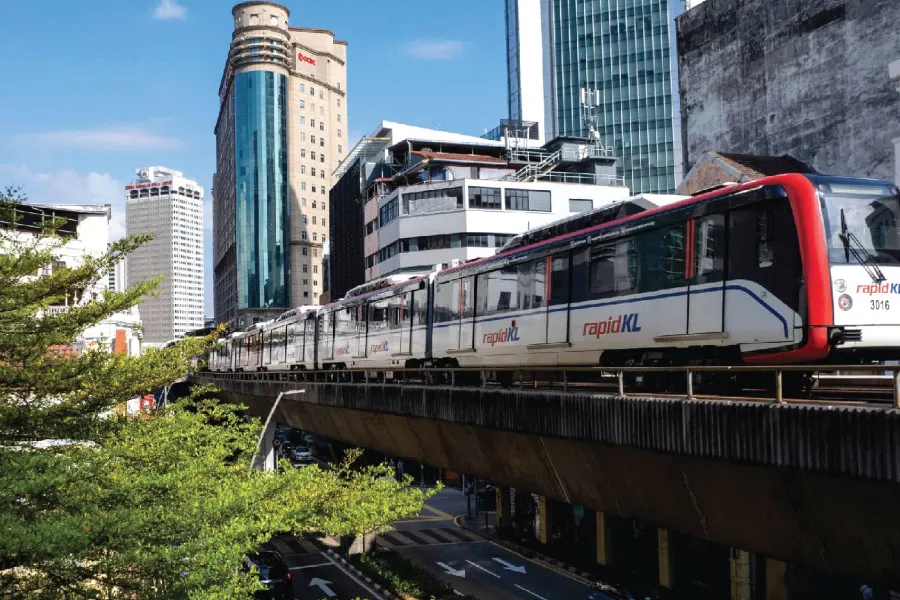
The Ampang Line and Sri Petaling Line are two connected light rail routes operated as part of the Rapid KL network.
On Kuala Lumpur’s integrated transit map:
- The Ampang Line is identified as Line 3 and shown in orange.
- The Sri Petaling Line is identified as Line 4 and shown in maroon.
Both services begin at Sentul Timur and follow the same route through central Kuala Lumpur to Chan Sow Lin. After Chan Sow Lin, the tracks divide:
- Ampang Line trains continue towards Ampang.
- Sri Petaling Line trains continue through Bukit Jalil and Puchong towards Putra Heights.
This branching arrangement is the most important thing to understand when using the two lines. Passengers travelling south of Chan Sow Lin should always check the train destination before boarding.
Ampang Line vs Sri Petaling Line
Although the lines share several stations, they serve different parts of the Klang Valley.
| Feature | Ampang Line | Sri Petaling Line |
|---|---|---|
| Northern terminus | Sentul Timur | Sentul Timur |
| Southern or eastern terminus | Ampang | Putra Heights |
| Shared section | Sentul Timur–Chan Sow Lin | Sentul Timur–Chan Sow Lin |
| Main areas served | Central KL, Maluri, Pandan, Ampang | Central KL, Cheras, Bukit Jalil, Puchong |
| Line colour | Orange | Maroon |
| Useful for | Ampang and eastern KL | TBS, Bukit Jalil, Puchong and Putra Heights |
If your destination is located between Sentul Timur and Chan Sow Lin, you can generally use a train from either line. Beyond Chan Sow Lin, you must board the train displaying the correct terminus.
Ampang and Sri Petaling Line Route
The combined network can be divided into three sections.
Shared section: Sentul Timur to Chan Sow Lin
Both lines serve the same central corridor:
- Sentul Timur
- Sentul
- Titiwangsa
- PWTC
- Sultan Ismail
- Bandaraya
- Masjid Jamek
- Plaza Rakyat
- Hang Tuah
- Pudu
- Chan Sow Lin
This shared section passes through central Kuala Lumpur and contains several of the network’s most important interchange stations.
Ampang branch: Chan Sow Lin to Ampang
After Chan Sow Lin, Ampang Line trains serve:
- Miharja
- Maluri
- Pandan Jaya
- Pandan Indah
- Cempaka
- Cahaya
- Ampang
This branch is particularly useful for commuters travelling between Kuala Lumpur city centre, Cheras, Pandan, and Ampang.
Sri Petaling branch: Chan Sow Lin to Putra Heights
Sri Petaling Line trains continue through:
- Cheras
- Salak Selatan
- Bandar Tun Razak
- Bandar Tasik Selatan
- Sungai Besi
- Bukit Jalil
- Sri Petaling
- Awan Besar
- Muhibbah
- Alam Sutera
- Kinrara BK5
- IOI Puchong Jaya
- Pusat Bandar Puchong
- Taman Perindustrian Puchong
- Bandar Puteri
- Puchong Perdana
- Puchong Prima
- Putra Heights
The Sri Petaling route has 29 stations from Sentul Timur to Putra Heights, with an end-to-end journey taking approximately 74 minutes.
Major Stations and Interchanges
The lines connect with most of Kuala Lumpur’s other major rail services, making them useful even when your destination is not located directly along either route.
Titiwangsa
Titiwangsa is one of the city’s most important interchange stations. Passengers can transfer to:
- KL Monorail
- MRT Putrajaya Line
- Rapid KL buses
The station is useful for travelling towards Bukit Bintang by Monorail or destinations such as Hospital Kuala Lumpur and Putrajaya via the MRT Putrajaya Line.
PWTC
PWTC station serves the World Trade Centre Kuala Lumpur area.
Passengers can also walk to Putra KTM Komuter station, although the two stations are not located within the same paid interchange area.
Nearby destinations include:
- World Trade Centre Kuala Lumpur
- Sunway Putra Mall
- Chow Kit
- Putra World Trade Centre precinct
Bandaraya
Bandaraya station is located near Jalan Tuanku Abdul Rahman and the historic northern section of central Kuala Lumpur.
It is connected by a pedestrian bridge to Bank Negara KTM Komuter station, allowing passengers to continue their journey on the KTM network.
Nearby places include:
- SOGO Kuala Lumpur
- Jalan Tuanku Abdul Rahman
- Masjid India
- Bank Negara Malaysia Museum and Art Gallery
Masjid Jamek
Masjid Jamek is the main interchange between the Ampang and Sri Petaling Lines and the LRT Kelana Jaya Line.
Passengers can transfer here for destinations including:
- KLCC
- Kampung Baru
- KL Sentral
- Bangsar
- Petaling Jaya
- Subang Jaya
The station is also within walking distance of Merdeka Square, the River of Life, and Masjid Jamek Sultan Abdul Samad.
Our dedicated LRT Kelana Jaya Line guide explains the stations and destinations accessible after transferring here.
Plaza Rakyat
Plaza Rakyat is connected to Merdeka MRT station on the MRT Kajang Line through a pedestrian walkway.
This interchange is useful for travelling towards:
- Bukit Bintang
- TRX
- Cochrane
- Kajang
- Muzium Negara and KL Sentral
Plaza Rakyat is also one of the nearest rail stations to Petaling Street and the southern side of Chinatown.
Hang Tuah
Hang Tuah provides an interchange with the KL Monorail.
Passengers can transfer here for:
- Bukit Bintang
- Imbi
- Raja Chulan
- Bukit Nanas
- KL Sentral
Nearby destinations include Berjaya Times Square, Lalaport Bukit Bintang City Centre, and the former Pudu Jail site.
Chan Sow Lin
Chan Sow Lin is where the Ampang and Sri Petaling routes separate.
Passengers continuing towards Ampang, Pandan Indah, or Maluri should follow signs for the Ampang-bound service. Those travelling towards Bukit Jalil, Puchong, or Putra Heights should follow signs for the Putra Heights-bound service.
Chan Sow Lin also connects with the MRT Putrajaya Line, providing access to destinations such as TRX, Ampang Park, Sungai Besi, Cyberjaya, and Putrajaya.
Temporary operating arrangements may occasionally require Ampang Line passengers to change trains at Chan Sow Lin, so check Rapid KL’s live service updates before travelling.
Maluri
Maluri station connects the Ampang Line with the MRT Kajang Line.
It is useful for reaching:
- Sunway Velocity Mall
- AEON Taman Maluri
- Cochrane
- TRX
- Bukit Bintang
- Kajang
Bandar Tasik Selatan
Bandar Tasik Selatan is an integrated transport hub connecting the Sri Petaling Line with:
- KTM Komuter
- KLIA Transit
- Terminal Bersepadu Selatan
- Local buses and taxis
This is the main station for passengers using Terminal Bersepadu Selatan, commonly known as TBS, for long-distance buses to destinations across Peninsular Malaysia.
Travellers heading to Kuala Lumpur International Airport can also take KLIA Transit from here. For other airport options, see our complete guide to travelling from KL Airport to the city centre.
Sungai Besi
Sungai Besi connects with the MRT Putrajaya Line, providing another convenient transfer between the Sri Petaling corridor and destinations in central Kuala Lumpur, Cyberjaya, and Putrajaya.
Putra Heights
Putra Heights is the southern terminus of the Sri Petaling Line and an interchange with the LRT Kelana Jaya Line.
Passengers can change here to travel towards:
- Subang Jaya
- Glenmarie
- Ara Damansara
- Petaling Jaya
- KL Sentral
- KLCC
- Gombak
Top Attractions Accessible by the Ampang and Sri Petaling Lines
The two lines are useful for both everyday commuting and sightseeing.
Merdeka Square
Nearest station: Masjid Jamek
Merdeka Square is one of Kuala Lumpur’s most historically significant landmarks. From Masjid Jamek station, visitors can walk to the Sultan Abdul Samad Building, Royal Selangor Club, Kuala Lumpur City Gallery, and the River of Life.
Masjid Jamek Sultan Abdul Samad
Nearest station: Masjid Jamek
Located beside the confluence of the Klang and Gombak rivers, the mosque is one of the city’s oldest and most recognisable religious landmarks.
Chinatown and Petaling Street
Nearest stations: Plaza Rakyat or Masjid Jamek
Plaza Rakyat is convenient for approaching Chinatown from the south, while Masjid Jamek provides an alternative walk through the historic city centre. Visitors can explore Petaling Street, Central Market, Kwai Chai Hong, and several temples in the surrounding area.
Berjaya Times Square
Nearest station: Hang Tuah
From Hang Tuah, visitors can walk to Berjaya Times Square and the Imbi area. The station is also connected to the Monorail for travelling deeper into Bukit Bintang.
Lalaport Bukit Bintang City Centre
Nearest station: Hang Tuah
Lalaport BBCC is located beside Hang Tuah station and contains retail shops, restaurants, event spaces, and rooftop areas.
National Stadium Bukit Jalil
Nearest station: Bukit Jalil
Bukit Jalil station is the main public transport stop for the Bukit Jalil National Stadium and the Kuala Lumpur Sports City precinct. The station can become extremely busy before and after concerts, football matches, and major sporting events.
IOI Mall Puchong
Nearest station: IOI Puchong Jaya
The station provides convenient rail access to one of Puchong’s established shopping areas. A short walk may be required depending on the entrance used.
Ampang
Nearest station: Ampang
The eastern terminus serves the wider Ampang area, which is known for its residential neighbourhoods, local restaurants, and proximity to destinations in eastern Selangor.
How to Use the Ampang and Sri Petaling Lines
Using the network is straightforward once you understand the split at Chan Sow Lin.
Travelling within the shared section
For journeys between Sentul Timur and Chan Sow Lin, either an Ampang-bound or Putra Heights-bound train can generally take you to your destination.
For example, travelling from Masjid Jamek to Hang Tuah does not require you to choose a specific branch.
Travelling towards Ampang
Board a train showing Ampang as its destination.
This applies when travelling to:
- Miharja
- Maluri
- Pandan Jaya
- Pandan Indah
- Cempaka
- Cahaya
- Ampang
Travelling towards Bukit Jalil, Puchong or Putra Heights
Board a train showing Putra Heights as its destination.
This applies when travelling to:
- Bandar Tasik Selatan
- Bukit Jalil
- Sri Petaling
- Puchong
- Putra Heights
Travelling from one branch to the other
A journey between the Ampang branch and the Sri Petaling branch normally requires a transfer at Chan Sow Lin.
For example, a passenger travelling from Ampang to Bukit Jalil should travel to Chan Sow Lin and change to a Putra Heights-bound train.
How to Pay for the LRT
The Ampang and Sri Petaling Lines use Rapid KL’s integrated fare system.
Passengers can generally travel using:
- Touch ’n Go card
- Single-journey token
- Eligible Rapid KL travel passes
A Touch ’n Go card is usually the most convenient option for passengers making several journeys because it can also be used across the MRT, Kelana Jaya Line, Monorail, and many Rapid KL bus services.
Fares are distance-based, meaning the amount charged depends on your entry and exit stations. Rapid KL lists Touch ’n Go and token-based ticketing among its LRT payment options.
Ampang and Sri Petaling Line Operating Hours
Rapid KL rail services generally begin at approximately 6:00am, with the final trains departing before midnight. The exact last-train time varies by station and destination, so passengers making late journeys should check the station-specific schedule.
Train frequency varies throughout the day. Services are usually more frequent during weekday morning and evening peaks, with longer waiting times late at night, on weekends, and during public holidays. Rapid KL publishes current frequency information and service notices through its official channels.
Do not assume that arriving at a station shortly before midnight guarantees a train to the end of the line. The final through-service may leave substantially earlier from intermediate stations.
Is the Ampang and Sri Petaling Line Useful for Tourists?
Yes, although the central shared section is usually more useful to tourists than the outer branches.
The lines provide easy access to:
- Historic Kuala Lumpur
- Chinatown
- Merdeka Square
- Berjaya Times Square
- Bukit Jalil National Stadium
- Terminal Bersepadu Selatan
They also offer convenient interchanges with the Kelana Jaya Line, MRT Kajang Line, MRT Putrajaya Line, KL Monorail, KTM Komuter, and KLIA Transit.
Visitors staying around KLCC or KL Sentral will not be directly served by these lines, but they can transfer at Masjid Jamek, Hang Tuah, Titiwangsa, Plaza Rakyat, or Bandar Tasik Selatan.
Tips for First-Time Passengers
- Check whether your destination is on the Ampang or Putra Heights branch before boarding.
- Look at the terminus displayed on the front of the train and station screens.
- Change at Chan Sow Lin when travelling between the two branches.
- Use Masjid Jamek to transfer to the Kelana Jaya Line.
- Use Plaza Rakyat–Merdeka for the MRT Kajang Line and central Bukit Bintang.
- Use Bandar Tasik Selatan for TBS, KTM Komuter, or KLIA Transit.
- Check Rapid KL’s service status before starting your journey.
- Allow extra time after concerts or sporting events at Bukit Jalil.
- Use a feeder bus or Grab when your destination is not within comfortable walking distance.
For journeys that require a last-mile connection, our Kuala Lumpur bus guide explains how Rapid KL buses can be combined with the city’s rail system.
Frequently Asked Questions
Are the Ampang Line and Sri Petaling Line the same?
They are separate routes that share the same tracks between Sentul Timur and Chan Sow Lin. After Chan Sow Lin, one branch continues to Ampang while the other continues to Putra Heights.
How many stations are on the Ampang and Sri Petaling Lines?
The combined network has 36 stations across approximately 45.1 kilometres. The Ampang service has 18 stations, while the Sri Petaling route has 29, including their shared section.
Where do the two lines split?
They separate at Chan Sow Lin. Check the train destination before continuing south or east from this station.
Which LRT line goes to Bukit Jalil?
The Sri Petaling Line serves Bukit Jalil. Board a train travelling towards Putra Heights.
Which line goes to Ampang?
Take an Ampang Line train displaying Ampang as its destination.
Does the Ampang Line stop at Ampang Park?
No. Despite the similar name, Ampang Park station is on the Kelana Jaya Line and MRT Putrajaya Line, not the Ampang Line.
Which station should I use for TBS?
Use Bandar Tasik Selatan station on the Sri Petaling Line. It connects to Terminal Bersepadu Selatan, KTM Komuter, and KLIA Transit.
Does the line go to KL Sentral?
No direct station on either line serves KL Sentral. Transfer to the Kelana Jaya Line at Masjid Jamek or to the Monorail at Hang Tuah or Titiwangsa.
Can I reach KLCC using the Ampang or Sri Petaling Line?
Yes, but a transfer is required. Change to the Kelana Jaya Line at Masjid Jamek and continue to KLCC station.
Can I reach Kuala Lumpur International Airport from the line?
The line does not travel directly to the airport. Take the Sri Petaling Line to Bandar Tasik Selatan and transfer to KLIA Transit, or travel to KL Sentral for other airport connections.
The LRT Ampang and Sri Petaling Lines are important parts of Kuala Lumpur’s public transport system, linking the city centre with Ampang, Cheras, Bukit Jalil, Puchong, and Putra Heights.
For first-time passengers, the main thing to remember is that both lines share the route between Sentul Timur and Chan Sow Lin. At Chan Sow Lin, the services separate: one continues towards Ampang, while the other travels towards Putra Heights.
Once you understand this branching arrangement, the network becomes relatively easy to use. Its connections at Masjid Jamek, Titiwangsa, Plaza Rakyat, Hang Tuah, Maluri, Bandar Tasik Selatan, and Putra Heights also make it a valuable gateway to the wider rail network.
Combined with the LRT Kelana Jaya Line, MRT services, Monorail, buses, and walking, the Ampang and Sri Petaling Lines provide an affordable way to explore both central Kuala Lumpur and the surrounding Klang Valley.