
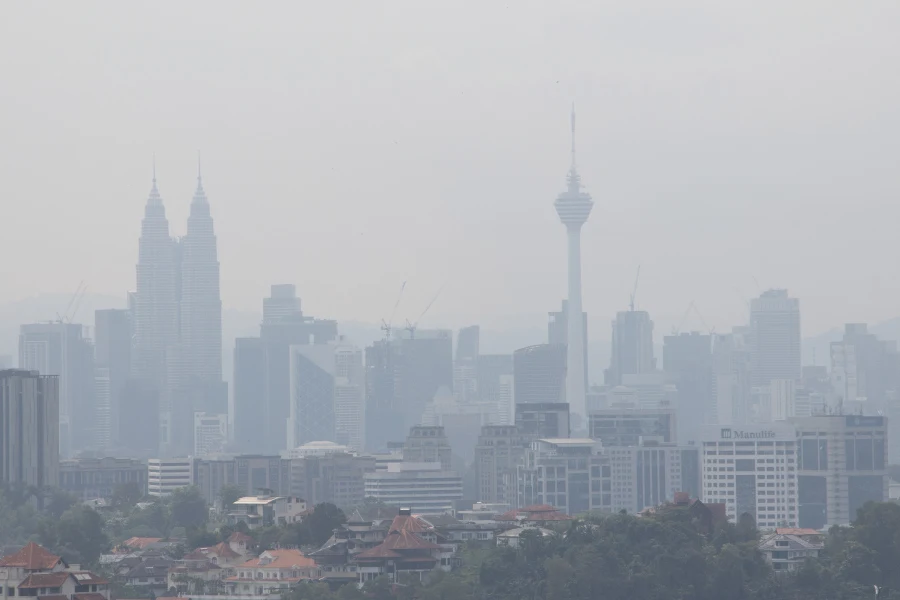
Haze can occasionally affect Kuala Lumpur, reducing visibility across the city and causing air quality to deteriorate. During more significant episodes, Kuala Lumpur’s normally prominent skyline can become obscured and outdoor activities may become less comfortable.
For travellers, however, haze in Kuala Lumpur does not necessarily mean that a trip needs to be cancelled.
Conditions can vary considerably from one day to another, and Kuala Lumpur has plenty of indoor attractions, shopping malls, museums, restaurants and other activities that can be enjoyed when outdoor conditions are less favourable.
The most important thing is to understand Malaysia’s Air Pollutant Index (API), monitor current conditions and adjust your itinerary accordingly.
This guide explains what causes haze in Kuala Lumpur, when it normally occurs, how to check the air quality and what you can do if haze affects your visit.
Is There Haze in Kuala Lumpur Now?
Updated: September 2026
Kuala Lumpur and parts of the Klang Valley have experienced periods of unhealthy air quality during the current haze episode.
On 27 August 2026, the Department of Environment reported an API reading of 153 in Cheras and 107 in Batu Muda, both within Kuala Lumpur. Several locations in neighbouring Selangor, Putrajaya and other parts of Malaysia also recorded unhealthy readings.
Earlier in August, Kuala Lumpur had recorded an API reading of 131 during another deterioration in air quality.
Haze conditions have continued into the beginning of September, with METMalaysia forecasting hazy conditions in Kuala Lumpur during the first few days of the month.
Conditions can nevertheless change quickly because of rainfall, wind direction, hotspots and other weather conditions.
If you are currently in Kuala Lumpur, check the latest official API reading before making decisions about outdoor activities.
What Is Haze?
Haze occurs when very small particles suspended in the atmosphere reduce air quality and visibility.
During a haze episode, Kuala Lumpur’s sky may appear grey or washed out. Distant buildings can become difficult to see, while landmarks such as the Petronas Twin Towers, KL Tower and Merdeka 118 may partially disappear behind the haze when visibility becomes poor.
Haze is more than simply a visibility problem.
Fine particles in polluted air can affect health, particularly when pollution reaches higher levels. The Malaysian Ministry of Health notes that exposure to haze can cause short-term effects including eye irritation, runny or stuffy nose, throat irritation and coughing.
People with existing respiratory or cardiovascular conditions, children and older adults may be more susceptible to the effects of poor air quality.
What Causes Haze in Kuala Lumpur?
There is no single cause of every haze episode.
One important contributor to severe regional haze is smoke from forest, peatland and land fires. Depending on prevailing winds, smoke from fires elsewhere in Malaysia or neighbouring parts of Southeast Asia can travel considerable distances.
This phenomenon is commonly referred to as transboundary haze.
During the August 2026 haze episode, for example, satellite observations detected hundreds of hotspots in Kalimantan and Sumatra while only a small number were detected in Malaysia.
Local sources of air pollution can also contribute to poor air quality, including:
- open burning
- vehicle emissions
- industrial emissions
- construction activity
- other combustion sources
Weather conditions determine how these pollutants disperse. Extended dry periods, limited rainfall and particular wind patterns can therefore make haze conditions worse.
When Is Haze Season in Kuala Lumpur?
There is no fixed annual “haze season” when Kuala Lumpur is guaranteed to experience poor air quality.
However, haze episodes have historically been more likely during dry periods associated with the Southwest Monsoon, which generally affects Malaysia between approximately May and September.
Dry conditions can increase the likelihood of forest and land fires around the region, while prevailing winds can transport smoke over long distances.
This does not mean Kuala Lumpur is hazy throughout these months.
There may be long periods of perfectly normal air quality, and the severity of haze varies substantially between years.
Travellers should therefore avoid deciding whether to visit Kuala Lumpur solely according to a supposed haze season. Checking conditions closer to your trip is considerably more useful.
If weather is an important factor when planning your visit, see our guide to the best time to visit Kuala Lumpur.
Understanding Malaysia’s Air Pollutant Index (API)
Malaysia uses the Air Pollutant Index, commonly abbreviated as API, to communicate ambient air quality.
The Department of Environment calculates the index using pollutants including particulate matter and gases such as ozone, carbon monoxide, nitrogen dioxide and sulphur dioxide.
The API is divided into five main categories:
| API Reading | Air Quality |
|---|---|
| 0–50 | Good |
| 51–100 | Moderate |
| 101–200 | Unhealthy |
| 201–300 | Very Unhealthy |
| Above 300 | Hazardous |
For most travellers, the number to remember is 100.
Once the API exceeds 100, the air quality is officially categorised as unhealthy.
An API above 200 is considered very unhealthy, while readings above 300 are categorised as hazardous.
How to Check Kuala Lumpur’s Current Air Quality
Do not judge Kuala Lumpur’s air quality purely by looking out of your hotel window.
The official source for Malaysia’s API readings is the Department of Environment’s Air Pollutant Index Management System (APIMS).
Readings are available for monitoring stations throughout Malaysia, including Kuala Lumpur and surrounding areas of the Klang Valley.
If you are travelling around Greater Kuala Lumpur, you may also want to check readings from nearby areas such as:
- Cheras
- Batu Muda
- Petaling Jaya
- Shah Alam
- Putrajaya
- Klang
Conditions can vary across the Klang Valley.
For the most reliable picture, check the official API readings before heading out rather than relying solely on third-party weather apps.
Is It Safe to Visit Kuala Lumpur During Haze?
Whether you should change your plans depends largely on the severity of the haze and your personal circumstances.
A moderate API reading does not mean that Kuala Lumpur has effectively shut down. Shops, restaurants, hotels, public transport and attractions generally continue operating normally.
Once readings reach unhealthy or higher levels, however, reducing prolonged or strenuous outdoor activity becomes increasingly sensible.
Malaysia’s Ministry of Health advises people in areas experiencing unhealthy air quality to reduce outdoor physical activity and take measures to limit their exposure to haze.
Visitors who are particularly sensitive to air pollution or have existing medical conditions should follow medical advice appropriate to their circumstances.
If you feel unwell during a haze episode, seek medical assistance rather than relying on travel information online.
Should You Wear a Mask During Haze in Kuala Lumpur?
A suitable respirator can help reduce exposure to fine airborne particles.
Malaysia’s Ministry of Health guidance identifies N95 respirators as an option for reducing exposure to particles associated with haze.
The effectiveness of a respirator also depends on proper fit and use.
Ordinary surgical masks are designed primarily for different purposes and should not automatically be treated as equivalent protection against fine airborne particles.
When haze becomes severe, reducing unnecessary exposure remains important even if you are wearing a mask.
What Should You Do During Haze in Kuala Lumpur?
If air quality deteriorates during your trip, you don’t necessarily need to spend the entire day inside your hotel.
Instead, adapt your itinerary according to the conditions.
Reduce strenuous outdoor activities
Consider postponing long walks, hiking, running and other prolonged outdoor activities when the API reaches unhealthy levels.
This is particularly relevant if you were planning outdoor excursions such as Batu Caves, hiking around the Klang Valley or spending several hours exploring the city on foot.
Check the API before leaving your hotel
Conditions can change during the day.
Checking the latest API reading takes only a moment and can help you decide whether to continue with outdoor sightseeing or switch to an indoor itinerary.
Keep windows closed when conditions are poor
Malaysia’s Ministry of Health recommends closing windows to reduce haze entering homes and buildings during periods of unhealthy air quality.
When travelling by car, using the air-conditioning system’s recirculation mode can also help limit outside air entering the vehicle.
Stay hydrated
Kuala Lumpur is already hot and humid, so drinking sufficient water is important when spending time around the city.
Consider indoor alternatives
One advantage Kuala Lumpur has during bad weather or haze is the enormous number of things you can do indoors.
Rather than abandoning your sightseeing day, rearrange your itinerary.
Things to Do in Kuala Lumpur During Haze
If the API rises or visibility becomes poor, this can be an excellent opportunity to explore some of Kuala Lumpur’s indoor attractions.
Explore Kuala Lumpur’s museums
Spend a few hours discovering Malaysia’s history, culture and arts.
The National Museum of Malaysia is a particularly useful introduction for first-time visitors, while the Bank Negara Malaysia Museum and Art Gallery combines exhibitions covering economics, money, Islamic finance and Malaysian art.
Families can also consider Petrosains at Suria KLCC.
Spend the day around KLCC
The KLCC area is one of the easiest places to spend several hours predominantly indoors.
You can explore Suria KLCC, visit Petrosains, discover marine life at Aquaria KLCC, have lunch or dinner and move between several attractions without spending extended periods outdoors.
Explore The Exchange TRX
The Exchange TRX has become another major indoor destination in Kuala Lumpur, with extensive shopping and dining options.
Its rooftop TRX City Park is normally worth exploring too, although you may want to save the outdoor sections for a clearer day when air quality is poor.
Go shopping in Bukit Bintang
Few places in Kuala Lumpur offer as many indoor options within such a compact area as Bukit Bintang.
Pavilion Kuala Lumpur, Fahrenheit88, Lot 10, The Starhill and numerous restaurants and entertainment venues provide plenty of alternatives to outdoor sightseeing.
Discover Kuala Lumpur’s food
Bad visibility does not stop you from discovering the city’s food.
Use the opportunity to explore Kuala Lumpur’s kopitiams, restaurants, food courts and other indoor dining destinations.
Neighbourhoods including Bukit Bintang, Chinatown, Brickfields and Kampung Baru all offer distinctive food experiences, although you may want to minimise walking between locations when the API is high.
For more ideas, see our guide to things to do in Kuala Lumpur when it rains. Many of the indoor attractions suitable for rainy weather also make excellent alternatives during haze.
Should You Visit the Petronas Twin Towers During Haze?
You can generally still visit the Petronas Twin Towers during haze unless access is otherwise restricted, but poor visibility can affect the experience.
The Skybridge and observation deck are partly about seeing Kuala Lumpur from above.
During heavy haze, distant landmarks and the wider Klang Valley may be difficult to see.
If you have flexibility in your itinerary, consider checking visibility and the API before visiting.
On a multi-day trip, it may be worthwhile moving your observation-deck visit to a clearer day.
What About KL Tower and Merdeka 118?
The same principle applies to other elevated viewpoints.
KL Tower offers panoramic views across central Kuala Lumpur, while Merdeka 118 has transformed the city’s skyline and surrounding precinct.
Poor visibility can dramatically change the experience of visiting high observation points.
If panoramic photography is one of your priorities, save these experiences for the clearest day of your trip whenever possible.
Can You Visit Batu Caves During Haze?
Batu Caves normally remains accessible during haze, but it is primarily an outdoor attraction.
Visitors need to climb the famous staircase leading towards the Temple Cave, making the experience considerably more physically demanding than visiting an air-conditioned museum or shopping centre.
During unhealthy air quality, consider whether the visit is necessary that day, particularly if you are sensitive to air pollution.
If you have several days in Kuala Lumpur, moving Batu Caves to a clearer day is often the easiest solution.
Does Haze Affect Flights at Kuala Lumpur International Airport?
The presence of haze does not automatically mean flights at Kuala Lumpur International Airport (KLIA) will be cancelled.
Aviation operations depend on numerous factors, including actual visibility and weather conditions at the airport.
During particularly severe haze, reduced visibility can potentially affect aviation operations, but travellers should not assume that an unhealthy API reading in central Kuala Lumpur means their flight will be disrupted.
Check directly with your airline and official airport information before travelling to KLIA if conditions are particularly poor.
METMalaysia also publishes visibility observations for KLIA.
For more information about arriving in the city, read our guide to travelling from KLIA to Kuala Lumpur.
Does Haze Affect Public Transport in Kuala Lumpur?
Generally, Kuala Lumpur’s rail network continues operating during haze.
The MRT, LRT, KL Monorail and KTM Komuter can actually become particularly useful because they reduce the amount of time you need to spend walking outdoors.
If the API is unhealthy, consider adjusting your route so that more of your journey is made by train rather than walking long distances between attractions.
See our complete Kuala Lumpur public transport guide if you’re unfamiliar with the city’s rail network.
Does Rain Clear Haze in Kuala Lumpur?
Rain can temporarily improve local air quality by removing some airborne particles, which is why conditions sometimes appear noticeably clearer following a heavy Kuala Lumpur thunderstorm.
However, rain does not necessarily end a regional haze episode.
If smoke continues arriving from fires elsewhere or weather patterns remain unfavourable, hazy conditions can return.
Wind direction, rainfall, atmospheric stability and the location and intensity of fires can all influence how long an episode lasts.
How Long Does Haze Last in Kuala Lumpur?
There is no standard duration.
A mild episode may improve quickly following changing winds or rainfall, while significant regional haze events can persist or recur over days or weeks.
Conditions can also fluctuate considerably within the same episode.
This is another reason travellers should focus on current API readings rather than assuming that Kuala Lumpur will remain hazy throughout their entire trip.
Should You Cancel a Trip to Kuala Lumpur Because of Haze?
Not automatically.
Kuala Lumpur is a large city with extensive indoor infrastructure, including shopping centres, museums, galleries, restaurants, hotels and a comprehensive urban rail network.
During mild or moderate conditions, your itinerary may require little adjustment.
During unhealthy conditions, you may want to shift towards indoor attractions and reduce prolonged outdoor activity.
More severe conditions deserve greater caution, particularly for people who are more susceptible to air pollution.
Instead of making a decision based simply on photographs of a hazy Kuala Lumpur skyline, check:
- the latest official API readings;
- weather forecasts;
- conditions expected during your actual travel dates;
- any official health or travel advice; and
- your individual health circumstances.
Planning Your Kuala Lumpur Trip Around Haze
Haze is one of several weather-related conditions travellers may encounter in Kuala Lumpur.
The city also experiences tropical heat, high humidity and frequent heavy rain, particularly during certain periods of the year.
A flexible itinerary is therefore useful.
Plan some outdoor attractions and some indoor alternatives rather than scheduling every day around walking and outdoor sightseeing.
For example:
Clear day: Batu Caves → outdoor neighbourhood exploration → observation deck → rooftop bar
Hazy or rainy day: museum → shopping mall → indoor attraction → restaurant → evening entertainment
That flexibility can make a significant difference to your experience in Kuala Lumpur regardless of the weather.
For more help planning your visit, start with our first-time guide to Kuala Lumpur, Kuala Lumpur itinerary and guide to the best time to visit Kuala Lumpur.
Frequently Asked Questions About Haze in Kuala Lumpur
Does Kuala Lumpur get haze?
Yes. Kuala Lumpur occasionally experiences haze and periods of poor air quality. The severity varies considerably between episodes and from year to year.
Is Kuala Lumpur always hazy?
No. Kuala Lumpur is not continuously affected by haze, even during months when regional haze is more likely. Air quality can remain good or moderate for long periods.
When is haze season in Kuala Lumpur?
There is no official fixed haze season. However, significant haze episodes are more likely during prolonged dry conditions, particularly around the Southwest Monsoon period.
What API level is unhealthy in Malaysia?
An API reading between 101 and 200 is classified as unhealthy. Readings of 201–300 are very unhealthy, while readings above 300 are hazardous.
Where can I check Kuala Lumpur’s API?
Malaysia’s Department of Environment provides official readings through its Air Pollutant Index Management System (APIMS). Travellers should use official readings when making decisions about outdoor activities.
Should I wear an N95 mask during haze?
Malaysia’s Ministry of Health guidance identifies N95 respirators as an option for reducing exposure to haze particles. Proper fit and use are important.
Can I still go sightseeing during haze?
That depends on the API and the type of activity. Indoor sightseeing can generally continue, while prolonged or strenuous outdoor activities should be reconsidered when air quality becomes unhealthy.
Can I visit Batu Caves during haze?
Batu Caves may remain open, but the attraction involves outdoor exposure and climbing a long staircase. If air quality is unhealthy and your itinerary is flexible, consider visiting on another day.
Does haze affect views of Kuala Lumpur?
Yes. Reduced visibility is one of the most obvious effects of haze. Views from KL Tower, the Petronas Twin Towers and other elevated locations can be significantly reduced during heavier haze.
Will haze cancel my flight from KLIA?
Not necessarily. Haze in Kuala Lumpur does not automatically result in flight cancellations. Actual airport visibility and operating conditions matter, so check your flight status directly with your airline.
What can I do in Kuala Lumpur when it is hazy?
Kuala Lumpur has numerous indoor attractions, including museums, shopping malls, galleries, Aquaria KLCC, Petrosains, restaurants and entertainment venues. Our guide to rainy-day activities in Kuala Lumpur provides additional ideas that are also useful during haze.
Final Tips for Travelling in Kuala Lumpur During Haze
Haze can look dramatic when Kuala Lumpur’s skyline disappears behind a grey curtain, but conditions vary considerably between episodes.
Don’t assume that a hazy photograph means an entire trip has been ruined.
Check the official API, pay attention to government health advice and adjust your plans according to actual conditions.
Kuala Lumpur is particularly adaptable to this kind of disruption. Its extensive shopping malls, museums, indoor attractions, restaurants and public transport network mean that even when outdoor sightseeing becomes less appealing, there is still plenty to experience around the city.
And when the air clears, you can return outside and continue exploring Kuala Lumpur.