Before Pavilion Kuala Lumpur, Suria KLCC, The Exchange TRX, and the sprawling shopping malls that define Kuala Lumpur today, shopping in the city was a very different experience.
For generations who grew up in Kuala Lumpur during the 1970s, 1980s and 1990s, a trip to the supermarket or department store could be an occasion in itself. Families travelled into town to buy school uniforms, festive clothes, groceries, household necessities and the occasional special treat. Children wandered through toy departments while their parents compared fabrics, appliances and groceries.
Names such as Yaohan, Hankyu Jaya, Fajar Supermarket and Globe Silk Store were once familiar parts of everyday life.
Some disappeared as retail trends changed. Others were taken over or replaced, while a handful of the buildings associated with Kuala Lumpur’s earlier shopping era remain standing today.
Looking back at these stores isn’t just an exercise in nostalgia. Their stories reveal how shopping habits—and Kuala Lumpur itself—have changed over the past half-century.
How Shopping in Kuala Lumpur Has Changed
Long before Kuala Lumpur became famous for enormous integrated shopping malls, much of the city’s commercial activity took place along streets such as Jalan Tuanku Abdul Rahman, Jalan Masjid India and Jalan Petaling.
Shophouses, textile merchants, traditional markets and standalone department stores formed the backbone of the city’s retail landscape.
Jalan Tuanku Abdul Rahman in particular developed into one of Kuala Lumpur’s great shopping streets. Stores such as Globe Silk Store helped make the area a destination for families shopping for clothes, textiles and festive necessities.
Then came the rise of the modern shopping complex.
The 1970s brought developments including Ampang Park, Campbell Complex, Pertama Complex and Sungei Wang Plaza, introducing Kuala Lumpur residents to a new style of shopping where numerous retailers could be found inside a single building.
By the 1980s and 1990s, the retail landscape was changing again. Japanese department-store concepts became increasingly visible, suburban shopping centres expanded, and large supermarkets became part of everyday Malaysian life.
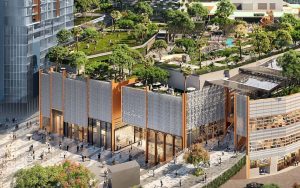
Today, shopping has become deeply integrated into Kuala Lumpur’s urban lifestyle. Areas such as Bukit Bintang and KLCC have evolved into major international shopping districts, while newer developments such as The Exchange TRX combine retail with dining, parks, offices, residences and entertainment.
Yet before all of these came the stores that many older Kuala Lumpur residents still remember.
Yaohan Supermarket
Mention Yaohan to Malaysians who grew up during the late 1980s and 1990s and there is a good chance the name will bring back memories.
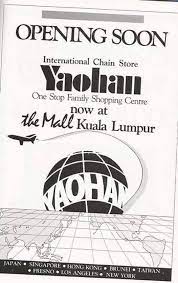
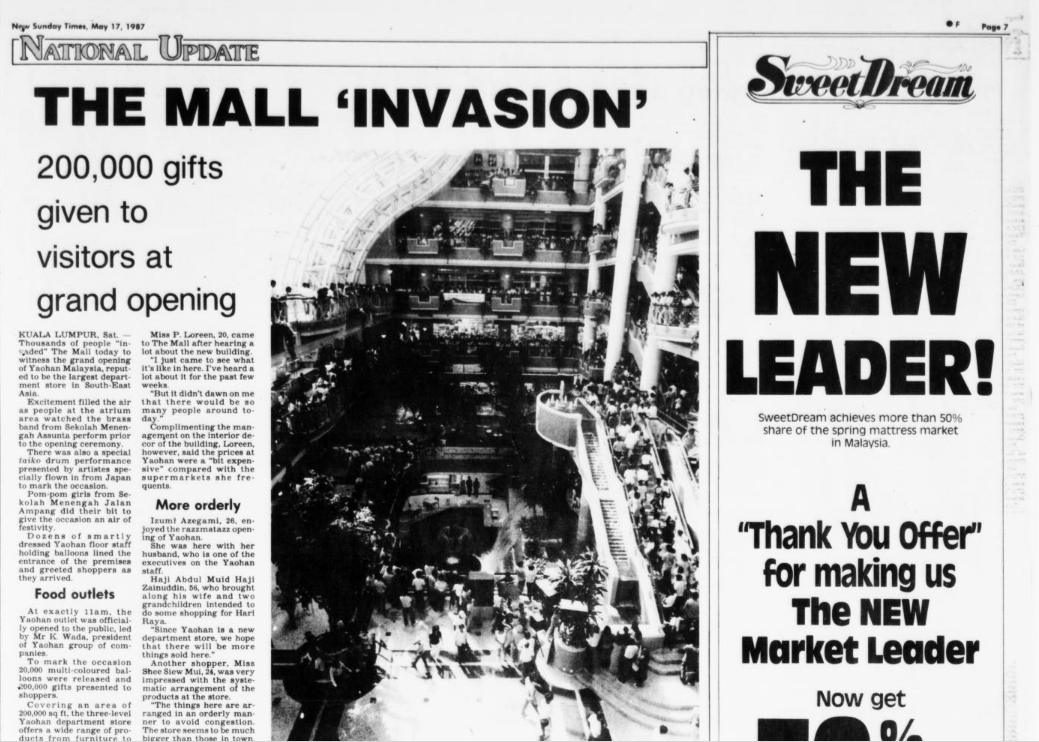
The Japanese retail chain entered Malaysia in 1987, opening its first Malaysian outlet at The Mall in Chow Kit, Kuala Lumpur.
At the time, Japanese retailers represented something exciting and modern. Yaohan combined a supermarket with department-store shopping, allowing families to shop for groceries, clothes, household products and other necessities during the same outing.
The Malaysian operation subsequently expanded beyond Kuala Lumpur. Yaohan stores eventually appeared at locations including Plaza OUG along Old Klang Road, KOMTAR in Penang, Centre Point Sabah, Terminal One in Seremban and Sunway Pyramid.
For Kuala Lumpur residents, however, The Mall became particularly associated with the Yaohan name. Even long after Yaohan disappeared, some older residents continued referring to the shopping centre by its former anchor tenant.
What happened to Yaohan?
The international Yaohan group ran into serious financial difficulties during the 1990s and declared bankruptcy in Japan in 1997.
Its Malaysian stores were subsequently replaced by Aktif Lifestyle in 1998, with the business later becoming part of Parkson.
The original Mall subsequently underwent major redevelopment and is today known as Sunway Putra Mall.
Yaohan may have disappeared from Malaysia’s retail landscape, but its name remains deeply embedded in the memories of a generation of Kuala Lumpur shoppers.
Hankyu Jaya
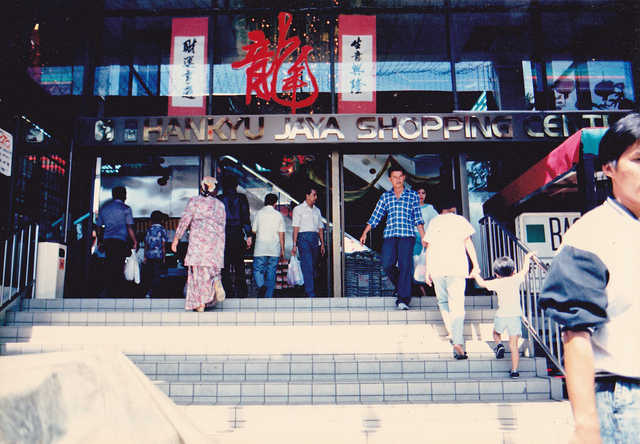
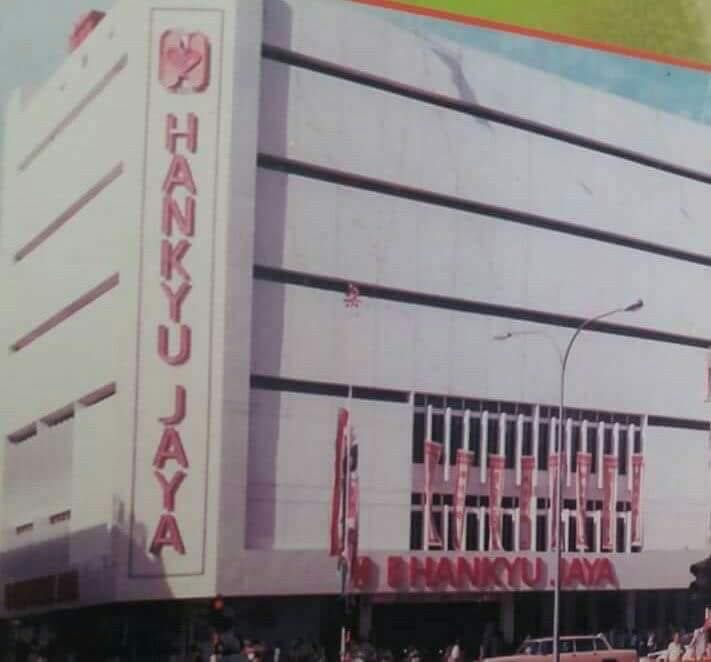
Another name closely associated with Kuala Lumpur’s shopping scene during the 1980s was Hankyu Jaya.
The company behind Hankyu Jaya Shopping Centre was incorporated in Malaysia in 1984 as a department-store and supermarket operator. The brand was linked to Japan’s Hankyu department-store business and became part of the wave of Japanese-influenced retail concepts arriving in Malaysia during this period.
Hankyu Jaya operated at several locations, including Jalan Tuanku Abdul Rahman and Ampang Park.
For many Kuala Lumpur residents, its stores represented the increasingly modern retail environment of the 1980s—a period when air-conditioned department stores and shopping centres were rapidly changing how families spent their leisure time.
The Jalan Tuanku Abdul Rahman outlet was later taken over by Mun Loong. The building subsequently went through other incarnations and became Plaza TAR.
Hankyu Jaya eventually disappeared from Malaysia, but its story reflects an important period when Kuala Lumpur was becoming increasingly connected to international retail trends.
Fajar Supermarket
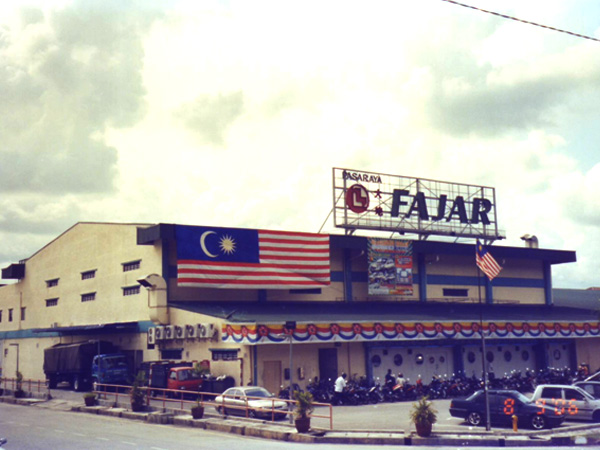
If Yaohan represented the arrival of a major Japanese retailer, Fajar Supermarket was a homegrown name familiar to many Malaysian families.
Founded in 1984 and based in Kuala Lumpur, Fajar grew into a supermarket chain with outlets around Malaysia.
Unlike today’s destination malls, neighbourhood supermarkets such as Fajar played a much more practical role in people’s everyday routines. They were places where families bought groceries, household goods and daily necessities, often without travelling into Kuala Lumpur’s major commercial districts.
That everyday familiarity is precisely why Fajar remains nostalgic for so many people.
Fajar Retail Enterprise later became associated with department-store group The Store. The company eventually ceased operations in 2007.
Its disappearance reflected a wider transformation taking place across Malaysian retail as larger hypermarkets, international supermarket chains and increasingly sophisticated shopping malls changed where—and how—Malaysians shopped.
Globe Silk Store
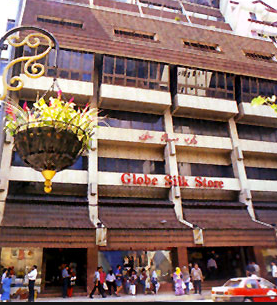
Few names capture the history of shopping along Jalan Tuanku Abdul Rahman quite like Globe Silk Store.
Its history stretches back much further than Kuala Lumpur’s modern shopping malls.
The business was established by Tirathdas Jethanand in Segamat, Johor, in 1930. In 1947, Globe moved to Kuala Lumpur, where it joined an increasingly competitive retail scene that included established names such as Robinsons, John Little and Whiteaway Laidlaw.
Globe nevertheless prospered.
From a relatively modest shop, it eventually grew into a major department store along Jalan Tuanku Abdul Rahman, selling men’s, women’s and children’s clothing, home furnishings and other products.
One of Globe’s strengths was its accessibility. Rather than positioning itself purely as an exclusive department store, it became somewhere ordinary families could shop.
For generations of Malaysians, Globe was particularly associated with:
- School uniforms
- School shoes
- Clothing
- Textiles
- Household goods
- Festive shopping
At its height, Globe attracted thousands of shoppers every day.
A Kuala Lumpur institution
Globe was more than a department store. It became part of the ritual of visiting Jalan Tuanku Abdul Rahman.
During festive periods, the entire district would fill with shoppers looking for clothes, fabrics and gifts. Globe stood at the heart of this retail ecosystem alongside the many textile merchants and shops surrounding it.
The original Globe Silk Store eventually closed in 2005 after decades of operation.
Its story remains particularly important because it connects two very different eras of Kuala Lumpur: the age when Jalan Tuanku Abdul Rahman was one of the city’s dominant shopping streets and the modern era of large-scale malls and lifestyle developments.
Campbell Complex
Unlike most of the names on this list, Campbell Complex is still standing.
Opened in 1973, Campbell Complex was among the pioneering modern shopping developments that helped transform Kuala Lumpur’s retail landscape.
The 20-storey development combined two floors of retail space with an 18-storey office tower—an ambitious concept at a time when high-rise commercial developments were still relatively new to the city.
Its location near Jalan Campbell—today known as Jalan Dang Wangi—and the wider Jalan Tuanku Abdul Rahman shopping district placed it within one of Kuala Lumpur’s busiest commercial areas.
The Campbell Complex fire
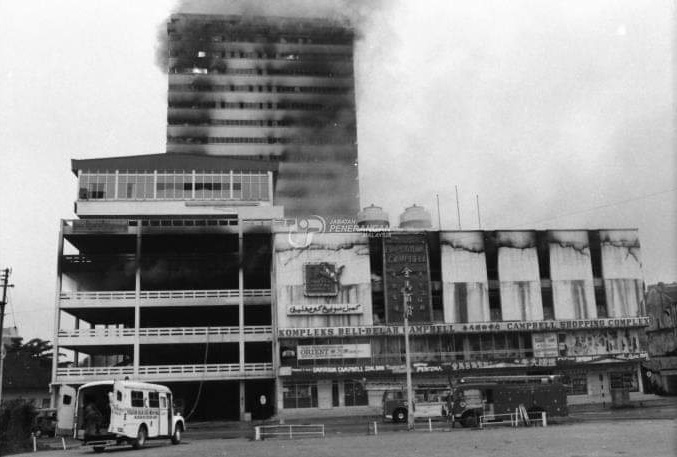
Campbell Complex also occupies a notable place in Kuala Lumpur’s history because of a devastating fire.
On 8 April 1976, a major fire swept through the complex and severely damaged the building.
Rather than demolishing it, however, the structure was repaired and eventually reopened.
Campbell Complex survived while Kuala Lumpur transformed around it.
Today, it may appear modest beside the enormous contemporary malls featured in our guide to the best shopping malls in Kuala Lumpur, but its continued existence makes it an important physical reminder of an earlier era of the city.
Walk through Campbell Complex today and you’re not merely visiting an old shopping centre—you’re stepping into part of Kuala Lumpur’s retail history.
Jalan Tuanku Abdul Rahman: Kuala Lumpur’s Original Shopping District
There is another story connecting several of these old department stores: Jalan Tuanku Abdul Rahman, commonly known as Jalan TAR.
Before Bukit Bintang developed into Kuala Lumpur’s premier modern shopping district, Jalan TAR was one of the places to go shopping in the city.
Globe Silk Store, Campbell Complex, Pertama Complex and numerous textile stores drew shoppers from across Kuala Lumpur and beyond.
The area became particularly important for clothing and textiles, a tradition that survives today.
During Ramadan and the weeks approaching Hari Raya Aidilfitri, Jalan TAR and nearby Jalan Masjid India remain among Kuala Lumpur’s busiest shopping areas, filled with shoppers looking for traditional clothing, fabrics, accessories and festive food.
This continuity makes Jalan TAR particularly fascinating. Individual department stores may have disappeared, but the street’s identity as a shopping district has survived.
From Department Stores to Shopping Malls
The disappearance of stores such as Yaohan, Hankyu Jaya and Fajar wasn’t simply the result of individual businesses succeeding or failing.
Malaysians were changing the way they shopped.
The 1970s: The Rise of the Shopping Complex
Developments such as Ampang Park, Campbell Complex, Pertama Complex and Sungei Wang Plaza introduced a generation of Malaysians to purpose-built shopping centres.
Shopping could now happen in an air-conditioned environment with numerous stores gathered together.
The 1980s: Department Stores and International Influence
As Kuala Lumpur became wealthier and increasingly cosmopolitan, department stores expanded and overseas retailers entered the Malaysian market.
Japanese names such as Yaohan and Hankyu became part of the city’s retail landscape, while local department stores and supermarkets continued expanding.
The 1990s: The Mega Mall Arrives
The scale of shopping centres increased dramatically.
Malls increasingly incorporated cinemas, entertainment, food courts, supermarkets and hundreds of retailers, turning shopping centres into places where families could spend much of the day.
Bukit Bintang strengthened its position as a shopping district while malls spread throughout the Klang Valley.
The 2000s: Shopping Becomes an Experience
The opening of major developments such as Suria KLCC and later Pavilion Kuala Lumpur helped position Kuala Lumpur as an international shopping destination.
Luxury boutiques, flagship stores, celebrity restaurants and elaborate festive installations became part of the mall experience.
The 2020s: The Lifestyle Destination
The transformation continues today.
Developments such as The Exchange TRX demonstrate how shopping malls are increasingly integrated with parks, restaurants, workplaces, hotels and residences.
Upcoming destinations such as Ombak KLCC take the idea even further by combining retail with art, cultural spaces and community experiences.
The supermarket or department store that once anchored a family shopping trip has evolved into an entire urban destination.
Why These Old Stores Still Matter
It can be tempting to see Yaohan, Hankyu Jaya, Fajar and Globe simply as businesses that disappeared.
But cities are remembered through everyday experiences as much as through major monuments.
Not everyone has a childhood memory connected to the Petronas Twin Towers or Merdeka Square. Far more personal memories might involve choosing a first school bag at Globe, accompanying parents on a grocery trip to Fajar, eating after shopping at Yaohan, or meeting friends at an old shopping complex.
These seemingly ordinary experiences form part of Kuala Lumpur’s social history.
Department stores also tell us how the city developed.
Their locations reveal where Kuala Lumpur’s commercial centres once were. Their products show how consumer habits changed. Their rise and decline reflect the growth of Malaysia’s middle class, the arrival of international retailers and eventually the dominance of the modern shopping mall.
Preserving their stories therefore means preserving a small but meaningful part of the city’s collective memory.
The Evolution of Shopping in Kuala Lumpur
Kuala Lumpur’s shopping landscape has never stopped changing.
The city’s earliest retail centres grew around traditional commercial streets and markets. Department stores then brought a new style of shopping to places such as Jalan Tuanku Abdul Rahman. Shopping complexes followed in the 1970s, before increasingly large malls transformed the city from the 1980s onwards.
Today, the contrast is extraordinary.
Visitors can browse luxury boutiques at Pavilion Kuala Lumpur, shop beneath the Petronas Twin Towers at Suria KLCC, explore the rooftop park at The Exchange TRX, or wander through older commercial districts such as Petaling Street and Jalan Tuanku Abdul Rahman.
Yet each generation of shopping destinations tells a different chapter of the same story.
Yaohan, Hankyu Jaya, Fajar Supermarket, Globe Silk Store and Campbell Complex remind us of the Kuala Lumpur that existed before today’s skyline—and of the everyday places that helped the city become what it is today.
Frequently Asked Questions
What were some famous old department stores in Kuala Lumpur?
Some of Kuala Lumpur’s best-remembered former department stores and retailers include Globe Silk Store, Hankyu Jaya and Yaohan. The city was also home to other historic retail names over different periods, including Robinsons, John Little, Whiteaway Laidlaw and Mun Loong.
When did Yaohan open in Malaysia?
Yaohan entered Malaysia in 1987, with its first Malaysian store opening at The Mall in Kuala Lumpur’s Chow Kit area.
What happened to Yaohan Malaysia?
After the wider Yaohan group encountered financial difficulties and went bankrupt in 1997, its Malaysian stores were replaced by Aktif Lifestyle in 1998. The operations subsequently became part of Parkson.
Where was Globe Silk Store in Kuala Lumpur?
Globe Silk Store was located along Jalan Tuanku Abdul Rahman, historically one of Kuala Lumpur’s most important shopping streets. The company had moved its operations to Kuala Lumpur in 1947 after originally being established in Segamat, Johor.
Is Campbell Complex still open?
Yes. Campbell Complex remains standing and operating today, making it one of the surviving landmarks from Kuala Lumpur’s early shopping-complex era.
What was Kuala Lumpur’s main shopping area before Bukit Bintang?
Jalan Tuanku Abdul Rahman was one of Kuala Lumpur’s most important historical shopping streets, alongside commercial areas around Jalan Masjid India and Petaling Street. While modern malls have shifted much of the city’s retail activity elsewhere, Jalan TAR remains an important shopping district today.
Remember Shopping at These Places?
For those who grew up in Kuala Lumpur, the memories attached to these stores may be very different.
Perhaps it was buying school shoes at Globe, grocery shopping at Fajar, spending weekends at Yaohan or simply walking through Campbell Complex with your family.
As Kuala Lumpur continues to change, these memories become part of the story of the city itself.
Which old Kuala Lumpur supermarket, department store or shopping complex do you remember most?