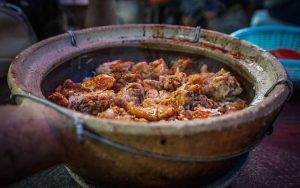
Few noodle dishes are as closely associated with Kuala Lumpur as Hokkien Mee. Thick yellow noodles coated in glossy dark soy sauce, fried over intense heat with pork, prawns, cabbage and crispy pork lard — it is rich, smoky and unmistakably KL.
Often called KL Hokkien Mee or Tai Lok Mee, this local favourite is quite different from the Hokkien Mee you’ll encounter in Penang or Singapore. Kuala Lumpur’s version is darker, richer and traditionally cooked in a large wok, where high heat creates the coveted wok hei that defines an excellent plate.
From historic restaurants around Petaling Street to neighbourhood favourites in Pudu, Petaling Jaya and Old Klang Road, here are some of the best places for Hokkien Mee in Kuala Lumpur and the Klang Valley.
What Is KL Hokkien Mee?
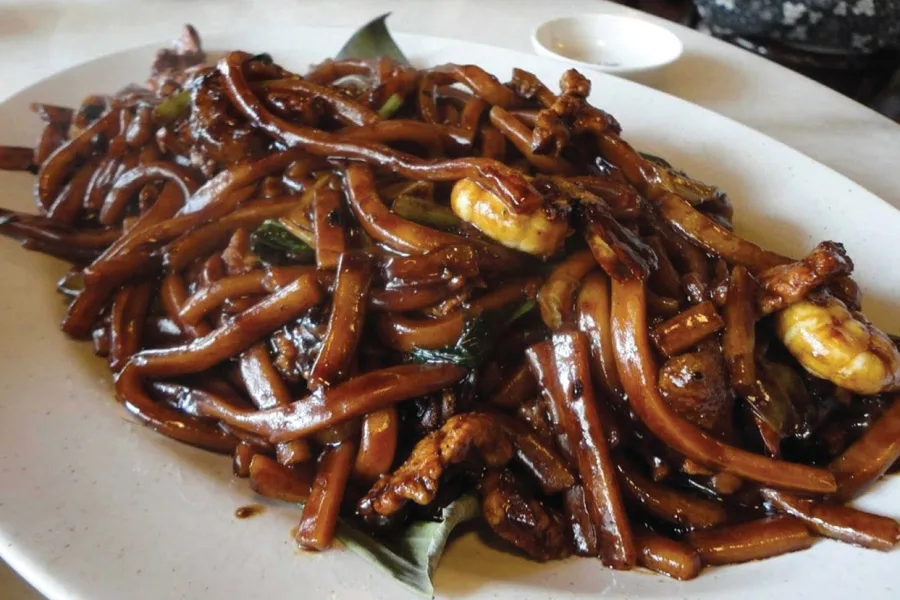
KL-style Hokkien Mee is a stir-fried noodle dish made with thick yellow noodles cooked in a dark, savoury sauce.
Common ingredients include:
- Thick yellow noodles
- Pork slices
- Prawns
- Squid
- Cabbage
- Dark soy sauce
- Stock
- Crispy pork lard
The noodles are typically fried over high heat until they absorb the sauce and develop a rich, smoky aroma.
Unlike a dry fried noodle dish, good KL Hokkien Mee usually retains some moisture. The sauce should cling to the noodles, giving every strand its characteristic glossy appearance.
Why Is Hokkien Mee Famous in Kuala Lumpur?
Hokkien Mee is deeply connected to Kuala Lumpur’s Chinese food heritage, particularly the old commercial districts around Petaling Street and Jalan Sultan.
The dish evolved into a distinctly Kuala Lumpur style characterised by thick noodles, dark soy sauce and pork lard. Over the decades, it spread from the city centre to neighbourhood restaurants throughout the Klang Valley.
Today, Hokkien Mee remains particularly popular for dinner and supper, with many longstanding restaurants firing up their woks from late afternoon until well into the night.
If you’re exploring the city’s heritage food scene, pair this guide with our Petaling Street Food Guide, where you’ll find more KL favourites including wantan mee, curry laksa, claypot chicken rice and roast meats.
Best Hokkien Mee in Kuala Lumpur & Klang Valley
1. Kim Lian Kee
92, Jalan Hang Lekir, City Centre, 50000 Kuala Lumpur.
2. Mun Wah Hokkien Mee
155, Jalan Maharajalela, Kampung Attap, 50460 Kuala Lumpur.
3. Ahwa Hokkien Mee
66, Jalan 14/48, Seksyen 14, 46100 Petaling Jaya, Selangor.
4. Tong Lian Kee Hokkien Mee
215, Jalan Pudu, Pudu, 55100 Kuala Lumpur.
5. Old Klang Road Hokkien Mee
No. 23, Batu 4½, Old Klang Rd, 58000 Kuala Lumpur.
6. Imbi Road Fatt Kee Hokkien Mee
183, Jalan Imbi, Imbi, 55100 Kuala Lumpur.
What Makes Great Hokkien Mee?
Hokkien Mee may look straightforward, but getting the noodles, sauce and wok technique right requires considerable skill.
Strong Wok Hei
A good plate should carry the smoky aroma known as wok hei, created when the noodles are tossed quickly over intense heat. It adds complexity without leaving the noodles tasting burnt.
Rich, Balanced Sauce
KL Hokkien Mee should be dark and savoury, but the sauce shouldn’t simply taste salty. Good versions balance dark soy sauce, stock and the natural sweetness of ingredients such as cabbage and seafood.
The Right Noodle Texture
The thick yellow noodles should be tender while retaining some bite. They also need to absorb enough sauce to become flavourful without turning overly soft or mushy.
Crispy Pork Lard
For traditional versions, crispy pork lard adds richness, fragrance and small bursts of crunch throughout the noodles. For many enthusiasts, it is one of the defining ingredients of KL Hokkien Mee.
Fresh Ingredients
Pork, prawns, squid and vegetables should remain fresh and properly cooked. These ingredients contribute different flavours and textures that balance the richness of the noodles.
KL Hokkien Mee vs Penang Hokkien Mee: What’s the Difference?
Despite sharing the same name, KL Hokkien Mee and Penang Hokkien Mee are completely different dishes.
KL Hokkien Mee
Kuala Lumpur’s version consists of thick yellow noodles fried in a dark soy-based sauce, typically with pork, prawns, squid, cabbage and pork lard.
It is:
- Dark
- Rich
- Savoury
- Smoky
- Wok-fried
Penang Hokkien Mee
In Penang, Hokkien Mee refers to the noodle soup that is also commonly called prawn mee elsewhere in Malaysia.
It features noodles served in an aromatic broth made using prawns and pork, typically accompanied by prawns, sliced pork, egg and chilli paste.
It is:
- Soup-based
- Prawn-forward
- Spicy
- Aromatic
So if you order “Hokkien Mee” in Kuala Lumpur and Penang, don’t be surprised when two completely different dishes arrive.
Best Areas for Hokkien Mee in Kuala Lumpur
Petaling Street & Chinatown
If you want to understand the relationship between Hokkien Mee and Kuala Lumpur, Chinatown is the natural place to begin.
The streets surrounding Petaling Street and Jalan Sultan are closely associated with the city’s early Chinese food culture, and Hokkien Mee remains one of the area’s signature dishes.
Explore our Petaling Street Guide and Best Food in Petaling Street for more ideas on what to eat nearby.
Pudu
Just outside the main city centre, Pudu remains one of KL’s best neighbourhoods for old-school Chinese food.
Traditional kopitiams, markets and decades-old eateries make it an excellent area for discovering Hokkien Mee alongside pork noodles, curry laksa, claypot dishes and other local favourites.
Read our complete Pudu Guide before exploring the neighbourhood.
Petaling Jaya
Head beyond Kuala Lumpur proper and you’ll find plenty of established Hokkien Mee restaurants across Petaling Jaya.
Section 14 and the surrounding neighbourhoods are particularly convenient for diners looking for traditional Chinese restaurants away from the tourist districts.
Explore more with our Petaling Jaya Guide.
Old Klang Road
Old Klang Road has a longstanding reputation for neighbourhood Chinese restaurants and tai chow dining.
It’s a particularly good area for groups, as Hokkien Mee can be ordered alongside seafood, vegetables, fried noodles and other sharing dishes.
Hokkien Mee and Kuala Lumpur’s Food Culture
Nasi lemak may be Malaysia’s national favourite, but Hokkien Mee has a particularly strong claim as one of Kuala Lumpur’s defining dishes.
Its roots in the city’s old Chinese commercial districts, distinctive dark appearance and continued popularity across generations make it part of KL’s culinary identity.
It also represents the style of eating that continues to define many traditional Chinese restaurants around the city: gather around a table, order several wok-fried dishes and share everything.
If you’re building a food itinerary around local classics, continue with our guides to Char Koay Teow in Kuala Lumpur, Bak Kut Teh in Kuala Lumpur, Chicken Rice in Kuala Lumpur, Satay in Kuala Lumpur, and Roti Canai in Kuala Lumpur.
Tips for Eating Hokkien Mee in KL
- Eat it while it’s hot — Hokkien Mee is at its best straight from the wok.
- Ask for extra sambal if you enjoy some heat.
- Order several dishes to share when dining in a group.
- Try both famous institutions and neighbourhood restaurants.
- Expect traditional versions to contain pork and pork lard.
- Dinner and supper are particularly popular times for Hokkien Mee.
For anyone interested in understanding Kuala Lumpur through its food, Hokkien Mee deserves a place near the top of the list.
The combination of thick noodles, dark caramelised sauce, pork lard and smoky wok hei produces a dish that feels distinctly connected to the city in which it developed.
Start with the historic restaurants around Petaling Street, then venture into Pudu, Old Klang Road and Petaling Jaya to discover how different cooks interpret the KL classic.
Whether you’re a visitor tasting it for the first time or a local debating which restaurant has the strongest wok hei, searching for the best Hokkien Mee is part of the fun of eating your way through Kuala Lumpur.
FAQs About Hokkien Mee in Kuala Lumpur
What is KL Hokkien Mee?
KL Hokkien Mee is a noodle dish made with thick yellow noodles wok-fried in a dark soy-based sauce, usually with pork, prawns, squid and cabbage. Traditional versions commonly include pork lard for additional flavour and texture.
Is Hokkien Mee originally from Kuala Lumpur?
The dark stir-fried style of Hokkien Mee is strongly associated with Kuala Lumpur and its historic Chinatown district. It has become one of the dishes most closely connected with the city’s Chinese culinary heritage.
Why is KL Hokkien Mee black?
Its distinctive dark colour comes primarily from dark soy sauce used during cooking. The sauce coats the thick noodles and caramelises in the hot wok, creating the glossy appearance associated with KL-style Hokkien Mee.
Is KL Hokkien Mee the same as Penang Hokkien Mee?
No. KL Hokkien Mee is a dark wok-fried noodle dish, while Penang Hokkien Mee is a prawn-based noodle soup. Despite sharing a name, their ingredients, preparation and flavours are very different.
Does Hokkien Mee contain pork?
Traditional KL Hokkien Mee commonly contains pork and pork lard. Muslim diners should therefore check whether a restaurant specifically serves a pork-free or halal version before ordering.
What should I eat with Hokkien Mee?
Hokkien Mee is commonly eaten with sambal and can be accompanied by dishes such as fried chicken, lala, vegetables, Cantonese fried noodles and other tai chow favourites.
Where is the best area to try Hokkien Mee in Kuala Lumpur?
Petaling Street and Chinatown are excellent places to start because of the dish’s historic connection with the area. Pudu, Old Klang Road and Petaling Jaya also have longstanding restaurants specialising in KL-style Hokkien Mee.
Is Hokkien Mee a breakfast, lunch or dinner dish?
You can find it at different times of day, but KL Hokkien Mee is especially associated with dinner and supper. Several traditional restaurants only begin operating in the late afternoon or evening.