
Malaysia Day, known in Malay as Hari Malaysia, is celebrated on 16 September every year. It commemorates the formation of Malaysia in 1963, when the Federation of Malaya, Sabah, Sarawak and Singapore came together to establish a new federation.
While Malaysia’s National Day on 31 August remembers the independence of Malaya in 1957, Malaysia Day tells a broader story. It recognises the creation of Malaysia and the important roles played by Sabah and Sarawak in the country’s formation.
Today, Malaysia Day is a federal public holiday celebrated throughout the country. Official ceremonies are often held in Sabah or Sarawak, while Kuala Lumpur marks the occasion through flag displays, cultural performances, exhibitions, concerts and other public programmes.
For Malaysians and visitors alike, 16 September offers an opportunity to learn how the country was formed, appreciate its cultural diversity and reflect on the relationships connecting Peninsular Malaysia, Sabah and Sarawak.
When Is Malaysia Day?
Malaysia Day is celebrated annually on 16 September.
The date commemorates 16 September 1963, when the Federation of Malaysia officially came into being. The original federation brought together:
- The Federation of Malaya
- North Borneo, which became Sabah
- Sarawak
- Singapore
Singapore subsequently separated from Malaysia on 9 August 1965 and became an independent country.
Malaysia Day is now a federal public holiday across Malaysia. It falls 16 days after Malaysia’s National Day on 31 August, creating a patriotic period that is often known as Bulan Kebangsaan, or National Month.
What Does Malaysia Day Celebrate?
Malaysia Day celebrates the formation of Malaysia as a federation.
Before 1963, the Federation of Malaya was an independent country consisting of 11 states in the Malay Peninsula. Sabah, then known as North Borneo, and Sarawak were British territories on the island of Borneo, while Singapore was separately administered.
The formation of Malaysia brought these territories together under a new constitutional arrangement. It was not simply another declaration of Malayan independence; it represented the creation of a larger and more diverse country.
This is why Malaysia Day is especially significant to Sabah and Sarawak. It acknowledges that modern Malaysia was formed through the participation of territories with their own histories, societies, cultures and constitutional interests.
The History Behind Malaysia Day
The formation of Malaysia was the result of several years of proposals, negotiations, consultations and constitutional planning.
Tunku Abdul Rahman Proposes Malaysia
On 27 May 1961, Tunku Abdul Rahman, then Prime Minister of the Federation of Malaya, publicly proposed a closer political association involving Malaya, Singapore, North Borneo, Sarawak and Brunei.
The idea emerged during a period of rapid political change and decolonisation in Southeast Asia. Malaya had achieved independence in 1957, while neighbouring territories were moving towards greater self-government.
The proposal led to extensive discussions about how the new federation would work and what protections would be required for its different territories.
The Cobbold Commission
In 1962, the British and Malayan governments established the Commission of Enquiry for North Borneo and Sarawak, commonly known as the Cobbold Commission.
Led by Lord Cobbold, the commission was tasked with examining public opinion in the two Bornean territories regarding the proposal to form Malaysia. It received written submissions, met community representatives and visited different parts of North Borneo and Sarawak.
Its report concluded that there was sufficient support to proceed with the proposal, although views differed over the timing and conditions of federation.
The report also emphasised the need to protect the interests, identities and existing institutions of the Bornean territories.
The Inter-Governmental Committee
Following the Cobbold Commission, an Inter-Governmental Committee was formed to work out the constitutional arrangements for North Borneo and Sarawak within Malaysia.
Issues discussed included:
- Immigration control
- Religion
- Language
- Education
- Representation in Parliament
- State constitutions
- Public service arrangements
- Financial powers
- The position of Indigenous communities
Many of these subjects remain important in contemporary discussions about the relationship between the federal government, Sabah and Sarawak.
The Malaysia Agreement 1963
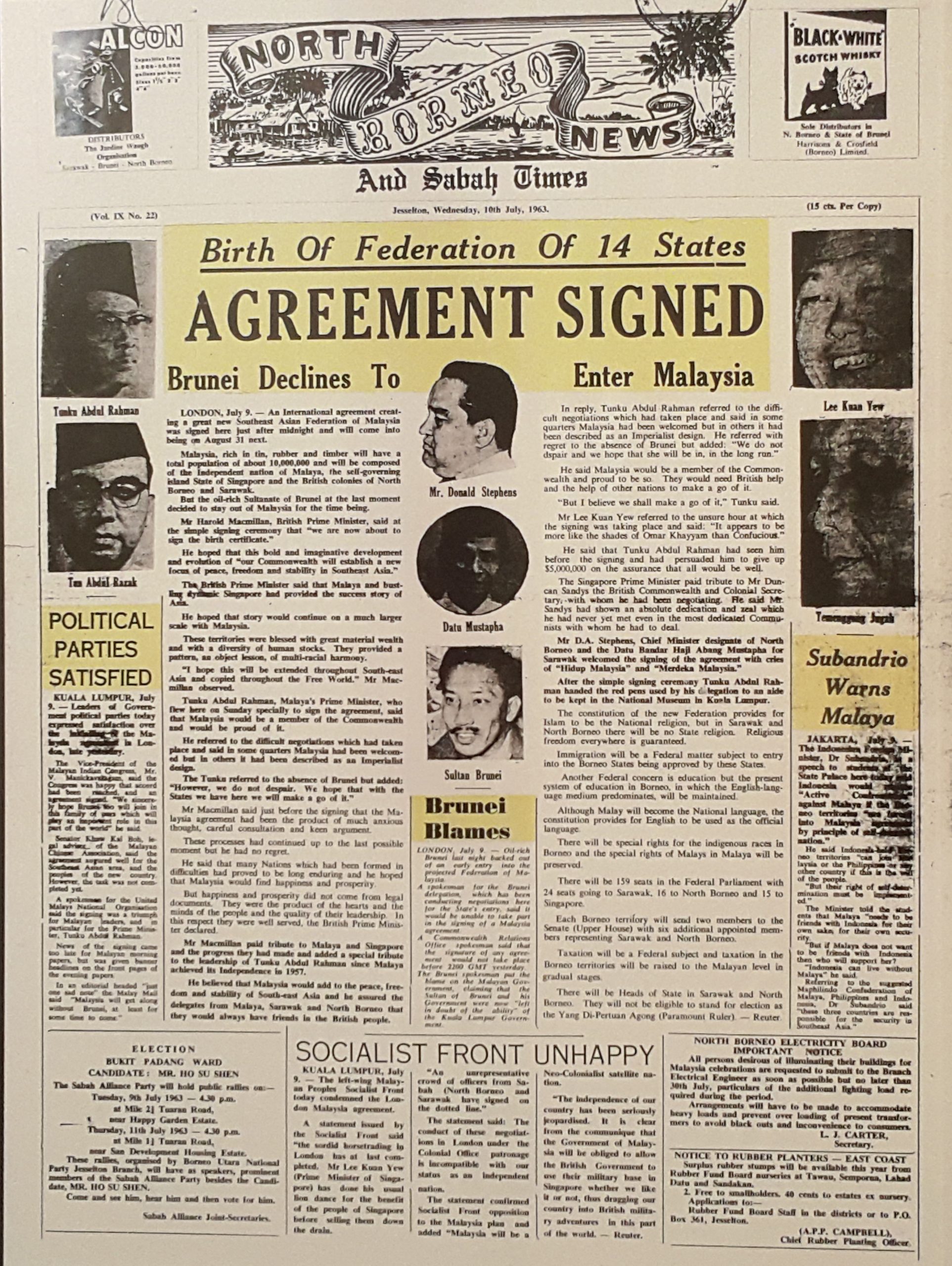
The Malaysia Agreement was signed in London on 9 July 1963 by representatives of the United Kingdom, the Federation of Malaya, North Borneo, Sarawak and Singapore.
Often referred to as MA63, the agreement set out the legal and constitutional steps required to establish Malaysia. It was accompanied by constitutional documents and arrangements covering the new federation.
Brunei had participated in earlier discussions but ultimately did not join Malaysia.
Why Was Malaysia Formed on 16 September?
The formation of Malaysia was initially planned for an earlier date and was subsequently expected to take place on 31 August 1963.
However, the date was postponed while a United Nations mission assessed public opinion in North Borneo and Sarawak amid objections to the proposed federation from Indonesia and the Philippines.
Malaysia was ultimately proclaimed on 16 September 1963. The United Nations Treaty Series records that the Malaysia Agreement came into force on that date.
What Happened on 16 September 1963?
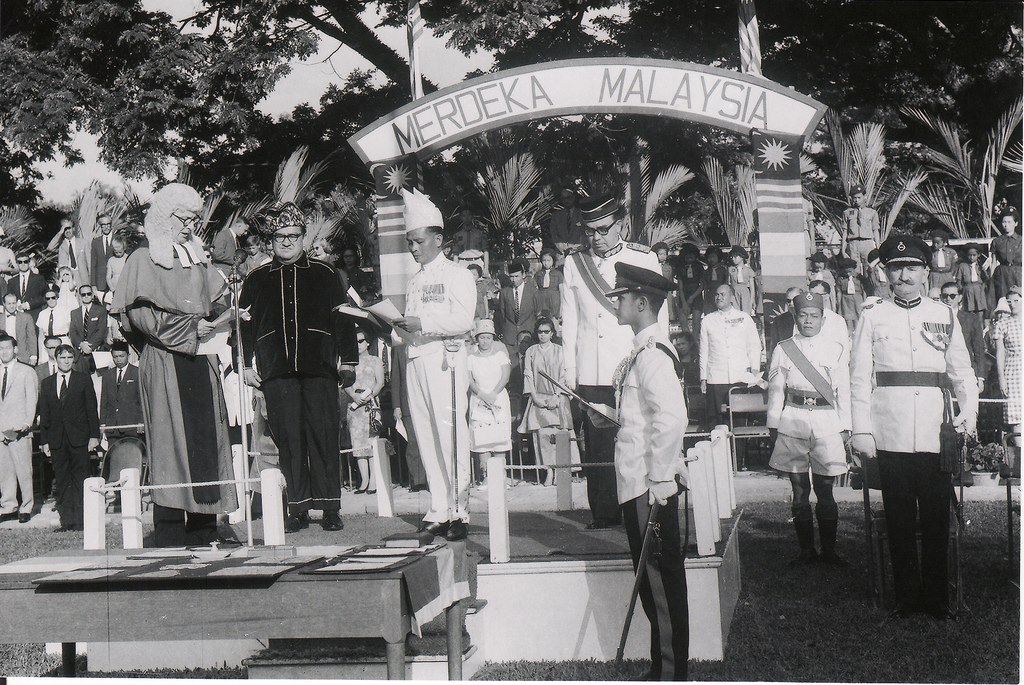
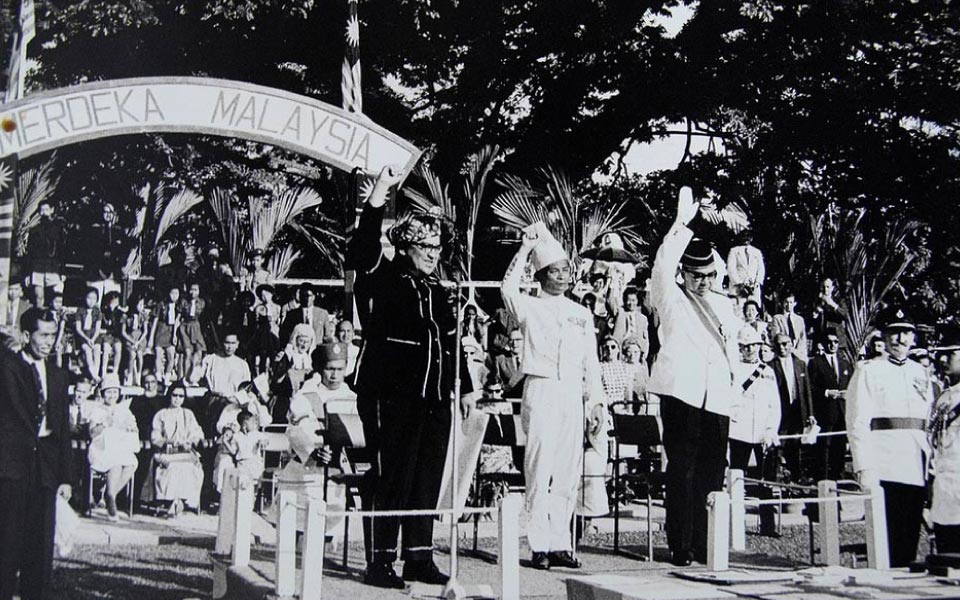
Proclamation ceremonies were held in different parts of the newly formed country on 16 September 1963.
In Kuala Lumpur, Tunku Abdul Rahman read the Proclamation of Malaysia at Stadium Merdeka. The historic stadium had already hosted the formal proclamation of Malaya’s independence six years earlier, on 31 August 1957.
Visitors can learn more about these landmark events in our guide to Stadium Merdeka.
Separate ceremonies were held in Kuching, Jesselton—now Kota Kinabalu—and Singapore. These ceremonies marked the beginning of the new federation from the perspectives of its different constituent territories.
The day represented a major change in the political map of Southeast Asia. A federation stretching from the Malay Peninsula across the South China Sea to northern Borneo had officially been created.
Why Is Malaysia Day Important?
Malaysia Day is important because it explains how modern Malaysia came into existence.
It Recognises the Formation of the Federation
National Day commemorates Malaya’s independence, while Malaysia Day commemorates the establishment of Malaysia.
Understanding both occasions helps tell the country’s history more accurately. Independence in 1957 was a foundational moment, but the Malaysia known today was formed six years later.
It Recognises Sabah and Sarawak
Malaysia Day gives particular recognition to the roles of Sabah and Sarawak as founding members of the federation.
The two states occupy a substantial part of Malaysia’s land area and are home to numerous Indigenous communities, languages, landscapes and cultural traditions.
Celebrating Malaysia Day therefore means recognising that Malaysian identity extends beyond the peninsula. The histories and perspectives of Sabah and Sarawak are fundamental parts of the national story.
It Celebrates Malaysia’s Diversity
Malaysia is shaped by Malay, Chinese, Indian, Orang Asli, Dayak, Kadazan-Dusun, Bajau, Melanau and many other communities.
Malaysia Day celebrations commonly bring these traditions together through music, dance, food, clothing, crafts and storytelling. They show that the country’s diversity is not incidental to Malaysia—it is one of the defining characteristics of the federation.
Visitors can experience this cultural variety throughout the year by exploring Kuala Lumpur’s neighbourhoods, markets, religious sites and historical landmarks.
It Encourages Reflection on Federalism
Malaysia Day also encourages Malaysians to consider how the federation functions.
Discussions surrounding MA63, regional development, state powers and the constitutional position of Sabah and Sarawak continue to shape public life. The occasion provides space to revisit the principles and agreements on which Malaysia was founded.
The subject can be complex, but its central question is straightforward: how can the federation continue to develop while respecting the identities and interests of all its members?
Malaysia Day vs National Day: What Is the Difference?
Malaysia Day and National Day commemorate two separate historical events.
| Occasion | Date | What It Commemorates |
|---|---|---|
| National Day, Hari Kebangsaan or Hari Merdeka | 31 August | The independence of the Federation of Malaya in 1957 |
| Malaysia Day or Hari Malaysia | 16 September | The formation of Malaysia in 1963 |
National Day is closely associated with the lowering of the British flag at what is now Dataran Merdeka and the proclamation of independence at Stadium Merdeka.
Malaysia Day marks the establishment of a new federation comprising Malaya, Sabah, Sarawak and, at the time, Singapore.
The two occasions should not be treated as interchangeable. Together, however, they provide a more complete account of the country’s development.
Is Malaysia Day an Independence Day?
Malaysia Day is not the same as the independence anniversary commemorated on 31 August.
The Federation of Malaya became independent on 31 August 1957. Malaysia Day, six years later, marked the formation of Malaysia.
The histories of Sabah and Sarawak are more complex and should not be reduced to a single Peninsular Malaysian timeline. Sarawak was granted self-government on 22 July 1963, while North Borneo achieved self-government on 31 August 1963 before the formation of Malaysia on 16 September.
For this reason, Malaysia Day is an essential part of understanding the country as a federation rather than simply an enlarged continuation of Malaya.
When Did Malaysia Day Become a Nationwide Public Holiday?
Although Malaysia Day had long held considerable significance in Sabah and Sarawak, it was not initially observed as a nationwide public holiday.
The federal government announced in 2009 that, beginning in 2010, 16 September would be observed as a national public holiday throughout Malaysia.
This decision gave Malaysia Day greater prominence in Peninsular Malaysia and encouraged wider public awareness of the country’s formation.
It also established two distinct national commemorations:
- National Day on 31 August
- Malaysia Day on 16 September
The period between them has increasingly become a broader celebration of Malaysian history, identity and unity.
How Is Malaysia Day Celebrated?
Malaysia Day celebrations vary from year to year. The main national-level ceremony is often held in Sabah or Sarawak, reflecting the occasion’s strong connection to the two Bornean states.
Official Malaysia Day Celebrations
The national celebration may include:
- Speeches by national and state leaders
- Cultural performances
- Musical concerts
- Historical presentations
- Flag ceremonies
- Multimedia displays
- Parades or community processions
- Fireworks or drone displays
- Exhibitions about Malaysia’s formation
The host location and programme change, so travellers should check current government announcements before planning a trip around the official celebration.
Cultural Performances
Dance, music and traditional clothing are central to many Malaysia Day events.
Performances may represent communities from across the country, including Sabah’s Kadazan-Dusun, Bajau and Murut traditions and Sarawak’s Iban, Bidayuh, Orang Ulu and Melanau cultures.
These are often presented alongside traditions from Peninsular Malaysia, creating a broader picture of the country’s cultural inheritance.
Exhibitions and Educational Programmes
Museums, galleries, universities, schools and public institutions may organise exhibitions or talks about:
- The creation of Malaysia
- The Cobbold Commission
- The Malaysia Agreement 1963
- The histories of Sabah and Sarawak
- Malaysian identity and nation-building
- Traditional arts and Indigenous cultures
In Kuala Lumpur, the National Museum is an especially useful place to explore the country’s history. It is one of several institutions featured in our guide to the best museums in Kuala Lumpur.
Community Activities
Schools, residential communities, businesses and civil organisations may organise smaller celebrations such as flag displays, cultural performances, art competitions and talks.
These local programmes often focus on unity and provide a more accessible way for families to participate in the occasion.
Where to Experience Malaysia Day in Kuala Lumpur
Although national-level celebrations may take place outside the capital, Kuala Lumpur remains closely connected to the story of Malaysia’s formation.
Stadium Merdeka
Stadium Merdeka is one of the most important sites in the history of both National Day and Malaysia Day.
Tunku Abdul Rahman proclaimed the formation of Malaysia here on 16 September 1963, six years after declaring Malaya’s independence at the same stadium.
Its role in both events makes it a powerful reminder of the difference—and the connection—between independence and federation.
Dataran Merdeka
Dataran Merdeka is primarily associated with the events of 30 and 31 August 1957, but it remains an important national gathering place throughout the patriotic season.
Flags, decorations and special programmes may appear around the square and the neighbouring Sultan Abdul Samad Building during the period between National Day and Malaysia Day.
The district also contains several of the city’s finest heritage structures and can be explored as part of a wider walking tour through old Kuala Lumpur.
Muzium Negara
Muzium Negara, or the National Museum, provides an overview of Malaysian history from early kingdoms and colonial rule to independence and the formation of the federation.
Visitors who want to understand Malaysia Day should pay particular attention to exhibits concerning the post-war period, independence and the political developments of the early 1960s.
Central Market
Central Market Kuala Lumpur is a convenient place to explore Malaysian crafts, textiles and souvenirs.
Its shops often carry batik, woven products, woodwork and decorative items inspired by traditions from different parts of Malaysia. Special performances or cultural activities may also be held during the National Month period.
Malaysia Tourism Centre
The Malaysia Tourism Centre, commonly known as MaTiC, sometimes hosts cultural performances, tourism programmes and exhibitions.
Its central location near Bukit Nanas makes it an accessible stop for travellers who want to learn more about Malaysia’s different states and cultural traditions.
A Malaysia Day Heritage Route in Kuala Lumpur
Visitors can explore several places connected to Malaysia’s national history in a single day.
Begin at Dataran Merdeka, where the flag of independent Malaya was raised at midnight on 31 August 1957. Walk around the surrounding heritage district to see the Sultan Abdul Samad Building, Royal Selangor Club and Masjid Jamek.
Continue towards Central Market and Petaling Street. These areas provide a broader look at the communities, trades and cultures that contributed to Kuala Lumpur’s development.
From Chinatown, walk or take a short ride to Stadium Merdeka, where both the 1957 independence proclamation and the 1963 proclamation of Malaysia took place.
Complete the route at Muzium Negara, where the formation of Malaysia can be understood within the country’s wider historical timeline.
For a fuller introduction to navigating the capital, consult our Kuala Lumpur public transport guide.
Visiting Kuala Lumpur During Malaysia Day
Malaysia Day can be an enjoyable time to visit Kuala Lumpur, but arrangements differ depending on the year.
Check the Official Programme
Concerts, exhibitions and community celebrations are not held at the same places every year. Check announcements from government agencies, local authorities, museums and event organisers before travelling.
Expect a Public Holiday
Government offices, banks and some independent businesses will be closed. Most major shopping malls, restaurants, hotels and tourist attractions generally remain open, although individual operating hours may change.
Use Public Transport for Major Events
Traffic diversions and road closures may be introduced around celebration venues. Rail services are often more convenient than driving, particularly for events in central Kuala Lumpur.
The city’s transport network includes the MRT, LRT, KL Monorail, KTM Komuter and buses. Read our complete guide to getting around Kuala Lumpur before planning your route.
Prepare for Heat and Rain
September is normally hot and humid, and afternoon rain is possible. Wear light clothing, bring drinking water and carry a compact umbrella or raincoat.
If wet weather changes your plans, there are numerous rainy-day activities in Kuala Lumpur, including museums, galleries, indoor attractions and shopping centres.
Allow More Travelling Time
Large public celebrations may result in crowds, security checks and temporary changes to public transport services. Arrive early and leave additional time between activities.
Frequently Asked Questions About Malaysia Day
When is Malaysia Day?
Malaysia Day is celebrated on 16 September every year.
What happened on 16 September 1963?
The Federation of Malaysia was officially formed, bringing together the Federation of Malaya, North Borneo—renamed Sabah—Sarawak and Singapore.
Why is Malaysia Day celebrated?
Malaysia Day commemorates the formation of Malaysia and recognises the roles of Sabah and Sarawak as founding members of the federation.
Is Malaysia Day the same as National Day?
No. National Day on 31 August commemorates the independence of the Federation of Malaya in 1957. Malaysia Day on 16 September commemorates the formation of Malaysia in 1963.
Is Malaysia Day a public holiday?
Yes. Malaysia Day is a federal public holiday throughout Malaysia.
When did Malaysia Day become a nationwide public holiday?
Malaysia Day became a nationwide public holiday in 2010.
Where was Malaysia proclaimed?
Proclamation ceremonies were held in Kuala Lumpur, Kuching, Jesselton—now Kota Kinabalu—and Singapore. In Kuala Lumpur, Tunku Abdul Rahman read the Proclamation of Malaysia at Stadium Merdeka.
Was Singapore part of Malaysia?
Yes. Singapore was one of the territories that formed Malaysia in 1963. It separated from the federation and became an independent country on 9 August 1965.
Was Brunei supposed to join Malaysia?
Brunei participated in early discussions about the proposed federation but ultimately decided not to join.
What is MA63?
MA63 is the common abbreviation for the Malaysia Agreement 1963. Signed on 9 July 1963, it provided the legal and constitutional framework for the formation of Malaysia.
Why are Sabah and Sarawak important to Malaysia Day?
Malaysia Day recognises Sabah and Sarawak as integral participants in the formation of the federation. Their distinct histories, cultures and constitutional arrangements are central to understanding modern Malaysia.
Where is the main Malaysia Day celebration held?
The venue changes from year to year. National-level celebrations are frequently held in Sabah or Sarawak, but official announcements should be checked for the current programme.
Can tourists attend Malaysia Day celebrations?
Most public concerts, cultural performances and community programmes are open to visitors. Certain official areas may have controlled entry, security screening or limited capacity.
Celebrating the Formation of Malaysia
Malaysia Day completes an important part of the country’s national story.
National Day remembers the moment Malaya became independent. Malaysia Day remembers the moment a new and more geographically, culturally and politically diverse federation was created.
The occasion encourages Malaysians to recognise the contributions of Sabah and Sarawak, appreciate the country’s many communities and reflect on the commitments that hold the federation together.
Whether you attend a cultural celebration, explore a museum or stand inside Stadium Merdeka, Malaysia Day provides an opportunity to understand not only when Malaysia was formed, but what it means to belong to Malaysia.