Every year on 31 August, Malaysians celebrate National Day, also known as Hari Kebangsaan or Hari Merdeka. It is one of the country’s most important public holidays, commemorating the independence of the Federation of Malaya from British colonial rule in 1957.
Across Malaysia, the occasion is marked by parades, flag displays, patriotic performances and community celebrations. Kuala Lumpur holds a particularly important place in the story: the Union Jack was lowered near what is now Dataran Merdeka shortly before midnight, while the formal proclamation of independence took place the following morning at Stadium Merdeka.
For travellers, National Day is also one of the most memorable times to visit the capital. The streets are decorated with the Jalur Gemilang, historic landmarks take on greater significance, and major public spaces host celebrations throughout the Merdeka season.
When Is Malaysia’s National Day?
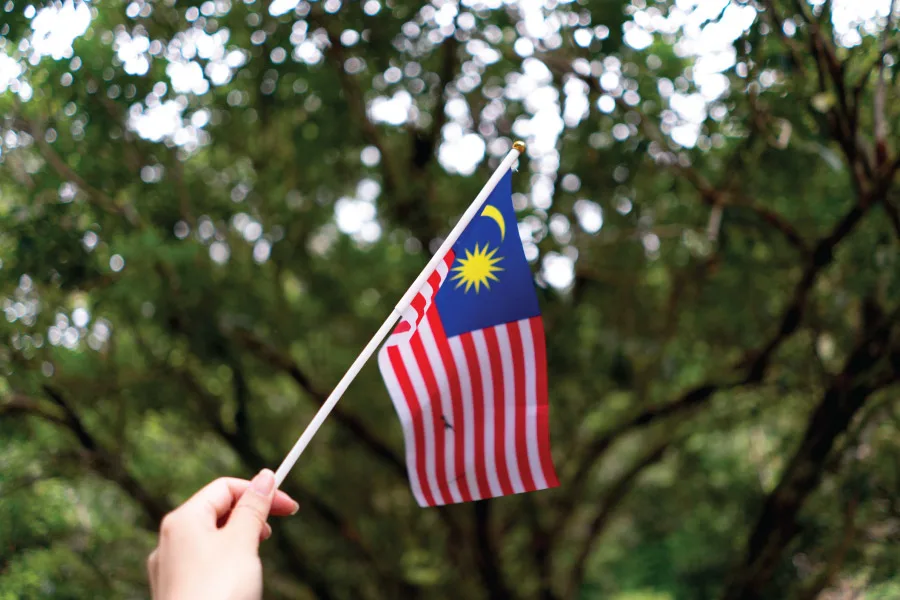
Malaysia’s National Day is celebrated on 31 August every year.
The date commemorates 31 August 1957, when the Federation of Malaya officially became independent. National Day should not be confused with Malaysia Day, which is celebrated on 16 September and marks the formation of Malaysia in 1963.
National Day is known by several names:
- Hari Kebangsaan, meaning National Day
- Hari Merdeka, meaning Independence Day
- Merdeka Day
- Malaysia’s National Day
“Merdeka” is a Malay word that means independence or freedom. It became closely associated with the independence movement and remains one of the most recognisable expressions of Malaysian national identity.
The History of Malaysia’s National Day
Malaysia’s journey towards independence developed over many years through negotiations, political organisation and growing public support for self-government.
In January 1956, a delegation led by Tunku Abdul Rahman travelled to London to negotiate independence with the British government. An agreement was eventually reached for the Federation of Malaya to become an independent nation.
Upon returning from London, Tunku Abdul Rahman announced the agreed independence date at Padang Bandar Hilir in Melaka on 20 February 1956. The declaration was met by enthusiastic cries of “Merdeka” from the crowd.
More than a year later, Kuala Lumpur became the centre of the official independence celebrations.
The Midnight Ceremony at the Selangor Club Padang
On the night of 30 August 1957, thousands gathered at the Selangor Club Padang, the field now known as Dataran Merdeka.
Shortly before midnight, the lights around the field were turned off. At midnight, the Union Jack was lowered and the new flag of the Federation of Malaya was raised as the national anthem, Negaraku, was played.
The ceremony symbolised the end of British colonial rule and the beginning of an independent Malaya.
Today, Dataran Merdeka remains one of the country’s most symbolic public spaces. Facing the field is the Sultan Abdul Samad Building, one of the most recognisable historical landmarks in Kuala Lumpur.
The Proclamation of Independence at Stadium Merdeka
On the morning of 31 August 1957, the official proclamation ceremony took place at the newly completed Stadium Merdeka.
More than 20,000 people gathered inside the stadium alongside the Malay rulers, government officials and foreign dignitaries. During the ceremony, Tunku Abdul Rahman read the Proclamation of Independence before raising his hand and leading the crowd in seven cries of:
“Merdeka!”
The national flag was raised, Negaraku was played and a 21-gun salute marked the birth of an independent nation.
This moment made Stadium Merdeka one of the most historically important places in Malaysia. Although Dataran Merdeka is closely associated with the midnight flag ceremony, Stadium Merdeka was the site of the formal proclamation on the morning of 31 August.
Who Was Tunku Abdul Rahman?
Tunku Abdul Rahman Putra Al-Haj was the first Prime Minister of the Federation of Malaya and is widely remembered as Bapa Kemerdekaan, or the Father of Independence.
As leader of the independence delegation, he played a central role in negotiations with the British government. His image, with one hand raised while calling out “Merdeka”, became an enduring symbol of Malaysian independence.
Tunku Abdul Rahman served as Prime Minister from 1957 until 1970. He also played a leading role in the formation of Malaysia in 1963.
Why Is National Day Important to Malaysians?
National Day is more than an anniversary of a historical event. It is an opportunity for Malaysians to reflect on the country’s journey, the meaning of independence and the responsibilities that come with nationhood.
Remembering the Struggle for Independence
The celebration honours the leaders, activists and ordinary citizens who contributed to the movement towards self-government.
It also remembers those who defended the country during periods of conflict. Visitors who want to explore this part of Malaysian history can visit Tugu Negara, Malaysia’s National Monument, which commemorates those who died in the struggle for peace and freedom.
Celebrating Malaysia’s Cultural Diversity
Malaysia is home to communities with different ethnic, religious, linguistic and cultural backgrounds. National Day celebrations commonly feature traditional costumes, music, dance and performances representing the country’s diverse population.
The occasion emphasises that national identity is not defined by a single community, but by the shared experiences and aspirations of Malaysians.
Reflecting on the Meaning of Independence
Independence gave the country the right to determine its own future. In the modern context, Merdeka can also represent freedom of thought, access to education, economic opportunity, cultural confidence and the ability to build a fairer society.
National Day therefore encourages Malaysians to consider not only how independence was achieved, but what it should mean for future generations.
How Is Malaysia’s National Day Celebrated?
National Day celebrations take place throughout the country, from large-scale official events to smaller neighbourhood and school programmes.
National Day Parade
The National Day parade is the largest official celebration. It normally features:
- Marching contingents
- Military and police units
- Government departments
- Emergency services
- Cultural performers
- School and youth organisations
- Decorated vehicles and floats
- Aircraft flypasts
- Musical performances
The host city and parade venue can vary, so visitors should check the official programme for the relevant year before making plans. Kuala Lumpur, Putrajaya and other Malaysian cities have hosted major National Day celebrations.
Raising the Jalur Gemilang
In the weeks before National Day, the Malaysian flag appears across homes, schools, businesses, vehicles and public buildings.
Known as the Jalur Gemilang, the flag consists of 14 alternating red and white stripes, a blue canton, a yellow crescent and a 14-point star. Its elements represent the federation, Islam as the religion of the federation, the country’s constitutional monarchy and unity among its members.
Merdeka Eve Countdowns
On the evening of 30 August, countdown events may be organised in shopping districts, public squares and entertainment precincts.
Depending on the year and location, celebrations can include concerts, cultural shows, light displays and fireworks at midnight. Event arrangements change annually, so it is advisable to follow official announcements instead of assuming that previous venues will host the same programme.
Patriotic Songs and Performances
Songs such as Tanggal 31, Keranamu Malaysia, Saya Anak Malaysia, Setia and Jalur Gemilang are frequently heard during the Merdeka season.
Schools, community groups and cultural organisations also organise performances, exhibitions, competitions and history programmes throughout August.
National Day Decorations
Kuala Lumpur becomes noticeably more colourful during the Merdeka season. Flags are displayed along major roads, outside office buildings and throughout shopping centres.
Some landmarks are illuminated in the colours of the Malaysian flag, while malls and public spaces may feature historical exhibitions, themed installations and cultural performances. Visitors can consult our guide to events and festivals in Kuala Lumpur for more ideas during their stay.
Where to Experience National Day in Kuala Lumpur
Even when the main national parade is held elsewhere, Kuala Lumpur remains one of the best places to explore the history of Merdeka.
Dataran Merdeka
Dataran Merdeka is the most recognisable National Day landmark in the capital. It was here, at the former Selangor Club Padang, that the colonial flag was lowered and the flag of independent Malaya was raised at midnight.
The square is surrounded by some of the city’s finest heritage architecture, including the Sultan Abdul Samad Building, Royal Selangor Club and former colonial administrative buildings.
Stadium Merdeka
Stadium Merdeka is where Tunku Abdul Rahman formally proclaimed independence on 31 August 1957.
The stadium later hosted numerous landmark events, including the proclamation of Malaysia, major sporting competitions and international concerts. Its architecture and history make it an essential stop for anyone interested in the story of modern Malaysia.
Muzium Negara
The National Museum offers a broader introduction to the country’s history, from early civilisations and the Malay sultanates to colonial rule, independence and the formation of Malaysia.
It is one of several important museums in Kuala Lumpur where visitors can better understand the events that shaped the nation.
Tugu Negara
The National Monument is dedicated to those who sacrificed their lives for Malaysia’s freedom and peace. Set near the Perdana Botanical Gardens, it provides a quieter place to reflect on the struggles that preceded and followed independence.
Seri Negara
Seri Negara is a historic former residence associated with Malaysia’s transition from colonial administration to independent government.
Its connection to the country’s early leaders adds another dimension to a Merdeka-themed exploration of Kuala Lumpur.
A Merdeka Heritage Route Through Kuala Lumpur
Visitors can explore several independence-related sites in one day.
Begin at Dataran Merdeka and walk around the surrounding heritage district. From here, continue towards Masjid Jamek and the River of Life before heading south through Central Market and Chinatown.
Central Market is a convenient stop for Malaysian crafts, batik and souvenirs. Nearby, Petaling Street offers heritage buildings, traditional eateries and some of Kuala Lumpur’s best-known street scenes.
Continue towards Stadium Merdeka, which stands just beyond the Chinatown district. Depending on access arrangements, visitors may be able to view the stadium and learn more about its historical importance.
The National Museum and Tugu Negara can then be visited in the afternoon, completing a route that connects independence with Malaysia’s wider historical development.
National Day and Malaysia Day: What Is the Difference?
National Day and Malaysia Day commemorate two different events.
| Occasion | Date | What It Commemorates |
|---|---|---|
| National Day or Hari Merdeka | 31 August | The independence of the Federation of Malaya in 1957 |
| Malaysia Day or Hari Malaysia | 16 September | The formation of Malaysia in 1963 |
On 16 September 1963, the Federation of Malaya, Sabah, Sarawak and Singapore came together to form Malaysia. Singapore subsequently left the federation in 1965.
This distinction is important, particularly when discussing the histories of Sabah and Sarawak. National Day remembers the independence of Malaya, while Malaysia Day recognises the creation of the federation that became modern Malaysia.
Both dates are national public holidays and together tell a more complete story of the country.
Tips for Attending National Day Celebrations
Major Merdeka events can attract very large crowds. Advance planning will make the experience more comfortable.
Arrive Early
Spectators often begin arriving before sunrise for morning parades. Roads may be closed and viewing areas can fill quickly.
Use Public Transport
Driving into the city centre is usually difficult during major events due to traffic diversions and road closures. Kuala Lumpur’s rail network is generally the most practical option.
Our Kuala Lumpur public transport guide explains how to use the MRT, LRT, Monorail and buses around the city.
Check Road Closures and Train Schedules
Temporary road closures, station crowd controls and extended train services may be introduced. Check announcements from the event organisers, police and public transport operators shortly before travelling.
Prepare for the Weather
August in Malaysia is hot and humid, with the possibility of rain. Bring drinking water, sun protection, a hat and a compact umbrella or raincoat.
Wear Comfortable Clothing
Light clothing and comfortable walking shoes are recommended. If you plan to wear the colours of the Jalur Gemilang, red, white, blue and yellow are popular choices.
Follow Security Instructions
Large events may include bag inspections and controlled entry points. Avoid bringing unnecessary items and follow directions from security personnel.
Is Kuala Lumpur Open During National Day?
National Day is a federal public holiday, but Kuala Lumpur does not shut down completely.
Most shopping malls, restaurants and tourist attractions remain open, although operating hours may vary. Government offices, banks and some independent businesses will be closed.
The main disruption is normally around the official celebration venue, where roads may be temporarily closed. Visitors should allow additional travelling time and consult a current guide to getting around Kuala Lumpur.
Frequently Asked Questions About Malaysia’s National Day
When is Malaysia’s National Day?
Malaysia’s National Day is celebrated annually on 31 August.
Why does Malaysia celebrate National Day on 31 August?
The date commemorates the independence of the Federation of Malaya from British colonial rule on 31 August 1957.
Is National Day the same as Merdeka Day?
Yes. Malaysia’s National Day is commonly known as Hari Merdeka or Merdeka Day.
What does “Merdeka” mean?
“Merdeka” means independence or freedom. Tunku Abdul Rahman famously led the crowd in seven chants of “Merdeka” during the independence proclamation ceremony.
Where was Malaysian independence declared?
The formal Proclamation of Independence was delivered at Stadium Merdeka in Kuala Lumpur on the morning of 31 August 1957. The flag-raising ceremony took place shortly before that at the Selangor Club Padang, now known as Dataran Merdeka.
Is National Day a public holiday in Malaysia?
Yes. National Day is a federal public holiday throughout Malaysia.
What is the difference between National Day and Malaysia Day?
National Day on 31 August commemorates Malaya’s independence in 1957. Malaysia Day on 16 September commemorates the formation of Malaysia in 1963.
Where is the National Day parade held?
The official venue can change from year to year. Visitors should check announcements from the Malaysian government and official National Day organisers for the latest location, programme and access information.
Can tourists attend National Day celebrations?
Yes. Public parades and celebrations are generally open to visitors, although some areas may have controlled access or limited capacity.
Celebrating the Meaning of Merdeka
Malaysia’s National Day is a celebration of independence, but it is also a reminder of the continuing work of nation-building.
The events of 31 August 1957 gave the country the freedom to shape its own future. Today, Merdeka represents the shared responsibility to protect that freedom, strengthen unity and create opportunities for generations to come.
Whether you experience the National Day parade, visit Stadium Merdeka or simply walk across Dataran Merdeka beneath the Jalur Gemilang, the occasion offers a meaningful opportunity to understand Malaysia’s history and the diverse society that emerged from it.