The MRT Kajang Line is one of Kuala Lumpur’s most important public transport routes, connecting residential neighbourhoods, commercial districts, shopping destinations, and major attractions across the Klang Valley.
Running between Kwasa Damansara and Kajang, the line passes through Kota Damansara, Bandar Utama, TTDI, Damansara Heights, central Kuala Lumpur, Cheras, and Kajang.
For visitors, the Kajang Line is particularly useful because it provides direct access to some of Kuala Lumpur’s most popular destinations, including Bukit Bintang, Chinatown, Central Market, Merdeka 118, The Exchange TRX, and the KL Sentral area.
The line stretches approximately 46 kilometres and has 29 stations, including seven underground stations through central Kuala Lumpur. It also connects with the MRT Putrajaya Line, LRT Kelana Jaya Line, LRT Ampang Line, KL Monorail, and other public transport services.
Whether you’re commuting to work, exploring Kuala Lumpur, or travelling between neighbourhoods, this guide explains the MRT Kajang Line route, stations, interchanges, fares, and nearby attractions.
For an overview of the wider network, read our guides to MRT Kuala Lumpur, Public Transport in Kuala Lumpur, and Getting Around Kuala Lumpur.
What Is the MRT Kajang Line?
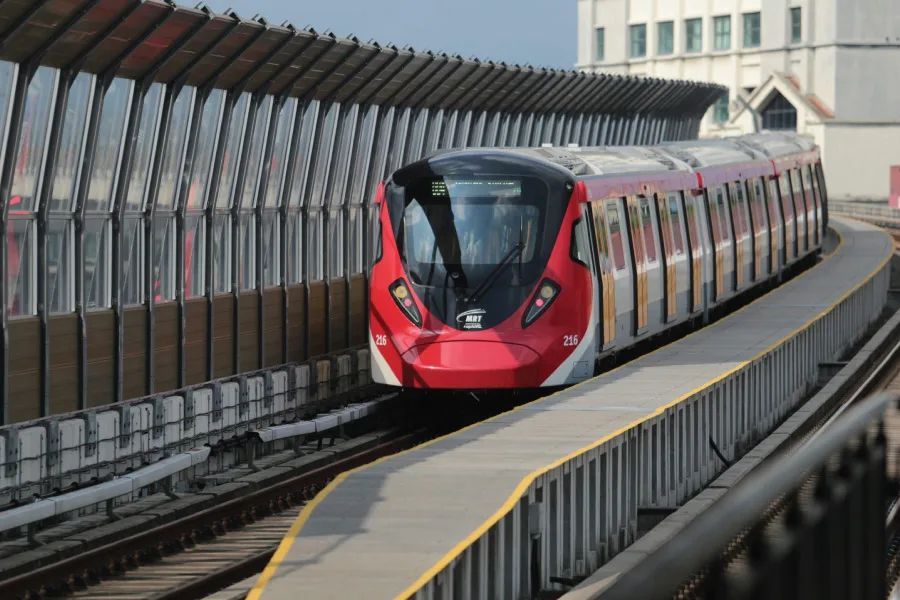
The MRT Kajang Line, formerly known as the MRT Sungai Buloh–Kajang Line (SBK Line), was the first Mass Rapid Transit line constructed under the Klang Valley MRT project.
The line began operations in December 2016, with the second phase opening in July 2017.
Today, it forms an important part of Kuala Lumpur’s integrated rail network, connecting established residential communities with employment centres, shopping districts, educational institutions, and tourist attractions.
Unlike the LRT Kelana Jaya Line or KL Monorail, which serve different corridors through Kuala Lumpur, the Kajang Line provides a north-west-to-south-east connection across the Klang Valley.
The route includes elevated tracks through suburban areas and underground stations through the city centre.
MRT Kajang Line at a Glance
| Information | Details |
|---|---|
| Line name | MRT Kajang Line |
| Former name | Sungai Buloh–Kajang Line |
| Line number | 9 |
| Route colour | Green |
| Northern terminus | Kwasa Damansara |
| Southern terminus | Kajang |
| Route length | Approximately 46 km |
| Number of stations | 29 |
| Underground stations | 7 |
| Operator | Rapid Rail |
| First opened | December 2016 |
| Main interchange | Tun Razak Exchange (TRX) |
The Kajang Line is particularly valuable because it serves both everyday commuters and visitors exploring Kuala Lumpur.
MRT Kajang Line Route
The MRT Kajang Line runs from Kwasa Damansara in the north-west to Kajang in the south-east.
Along the way, it passes through several major areas:
- Kwasa Damansara
- Kota Damansara
- Mutiara Damansara
- Bandar Utama
- Taman Tun Dr Ismail
- Damansara Heights
- KL Sentral area
- Chinatown
- Bukit Bintang
- Tun Razak Exchange
- Cheras
- Kajang
The route provides an important alternative to driving along some of the Klang Valley’s busiest roads.
For visitors staying in central Kuala Lumpur, the section between Muzium Negara, Pasar Seni, Merdeka, Bukit Bintang, and TRX is particularly useful.
Complete MRT Kajang Line Station List
The MRT Kajang Line has 29 stations.
The following stations are listed in order from Kwasa Damansara towards Kajang.
| No. | Station | Main area served |
|---|---|---|
| 1 | Kwasa Damansara | Kwasa Damansara |
| 2 | Kwasa Sentral | Kwasa Damansara |
| 3 | Kota Damansara | Kota Damansara |
| 4 | Surian | Kota Damansara |
| 5 | Mutiara Damansara | Mutiara Damansara |
| 6 | Bandar Utama | Bandar Utama |
| 7 | TTDI | Taman Tun Dr Ismail |
| 8 | Phileo Damansara | Damansara |
| 9 | Pusat Bandar Damansara | Damansara Heights |
| 10 | Semantan | Damansara Heights |
| 11 | Muzium Negara | KL Sentral / National Museum |
| 12 | Pasar Seni | Chinatown / Central Market |
| 13 | Merdeka | Merdeka 118 / Stadium Merdeka |
| 14 | Bukit Bintang | Bukit Bintang |
| 15 | Tun Razak Exchange | TRX |
| 16 | Cochrane | Cochrane / MyTOWN |
| 17 | Maluri | Maluri / Sunway Velocity |
| 18 | Taman Pertama | Cheras |
| 19 | Taman Midah | Cheras |
| 20 | Taman Mutiara | Cheras |
| 21 | Taman Connaught | Cheras |
| 22 | Taman Suntex | Cheras |
| 23 | Sri Raya | Cheras |
| 24 | Bandar Tun Hussein Onn | Cheras |
| 25 | Batu 11 Cheras | Cheras |
| 26 | Bukit Dukung | Kajang |
| 27 | Sungai Jernih | Kajang |
| 28 | Stadium Kajang | Kajang |
| 29 | Kajang | Kajang |
The line is relatively straightforward because it does not have multiple branches.
Trains travel in two directions:
- Towards Kwasa Damansara
- Towards Kajang
Passengers should check the destination displayed on the platform before boarding.
Major MRT Kajang Line Stations and Interchanges
Several stations along the Kajang Line connect with other public transport services.
Understanding these interchanges makes it easier to travel across Kuala Lumpur without a car.
1. Kwasa Damansara
Interchange: MRT Putrajaya Line
Kwasa Damansara is the northern terminus of the Kajang Line.
It connects with the MRT Putrajaya Line, allowing passengers to travel towards:
- Sungai Buloh
- Kepong
- Titiwangsa
- Ampang Park
- Persiaran KLCC
- TRX
- Cyberjaya
- Putrajaya
However, passengers travelling between the Kajang and Putrajaya Lines within central Kuala Lumpur will generally find TRX a more convenient interchange.
Our MRT Putrajaya Line Guide covers the second MRT route in greater detail.
2. Bandar Utama
Best for: 1 Utama Shopping Centre and Bandar Utama
Bandar Utama station serves one of Petaling Jaya’s major commercial and residential districts.
Nearby destinations include:
- 1 Utama Shopping Centre
- Bandar Utama commercial areas
- Hotels and offices around Bandar Utama
The station is connected to the wider 1 Utama precinct, making it particularly convenient for shopping.
Bandar Utama is also an important planned interchange with the LRT Shah Alam Line (LRT3). Passengers should check the latest operating status before relying on this connection.
3. Muzium Negara
Connection: KL Sentral
Muzium Negara is one of the most important MRT stations for visitors.
Although the Kajang Line does not have a station named KL Sentral, Muzium Negara provides a covered pedestrian connection to Kuala Lumpur’s main transport hub.
From KL Sentral, passengers can transfer to:
- LRT Kelana Jaya Line
- KTM Komuter
- KL Monorail
- KLIA Express
- KLIA Transit
- Long-distance rail services
- Buses and taxis
Nearby attractions include:
- National Museum
- KL Sentral
- Little India, Brickfields
- National Mosque, via a longer walk
If you’re arriving from Kuala Lumpur International Airport, you can take the airport train to KL Sentral before transferring to the Kajang Line at Muzium Negara.
Our guides to KL Sentral, KL Airport to the City, and KLIA Express vs KLIA Transit explain these connections.
4. Pasar Seni
Interchange: LRT Kelana Jaya Line
Pasar Seni is one of the most useful stations for exploring historic Kuala Lumpur.
It provides an interchange with the LRT Kelana Jaya Line and direct access to the Chinatown area.
Nearby attractions include:
- Central Market
- Petaling Street
- Kasturi Walk
- Sri Mahamariamman Temple
- Guan Di Temple
- River of Life
- Masjid Jamek, within walking distance
Pasar Seni is particularly useful for visitors who want to explore Chinatown without driving.
The station also connects with several bus services.
For a deeper exploration of the neighbourhood, see our Petaling Street Guide.
5. Merdeka
Connection: LRT Ampang and Sri Petaling Lines via Plaza Rakyat
Merdeka station serves the southern side of Kuala Lumpur’s historic city centre.
It provides a pedestrian connection to Plaza Rakyat station on the LRT Ampang and Sri Petaling Lines.
Nearby attractions include:
- Merdeka 118
- Stadium Merdeka
- Stadium Negara
- Petaling Street
- Jalan Hang Jebat
- Historic Chinatown streets
Merdeka is particularly useful for visitors interested in Kuala Lumpur’s independence history.
Stadium Merdeka was the location where Malaya’s independence was proclaimed on 31 August 1957.
Our guide to Stadium Merdeka explores the venue’s history and significance.
6. Bukit Bintang
Connection: KL Monorail via pedestrian walk
Bukit Bintang is one of the busiest stations on the Kajang Line.
Located in the heart of Kuala Lumpur’s main shopping and entertainment district, the station provides access to:
- Pavilion Kuala Lumpur
- Lot 10
- Fahrenheit88
- Sungei Wang Plaza
- Plaza Low Yat
- Jalan Alor
- Changkat Bukit Bintang
Bukit Bintang also has a KL Monorail station nearby, although passengers must exit and walk between the two stations.
The Monorail provides connections towards Imbi, Hang Tuah, KL Sentral, Chow Kit, and Titiwangsa.
For more information, read our Bukit Bintang Guide and KL Monorail Guide.
7. Tun Razak Exchange (TRX)
Interchange: MRT Putrajaya Line
TRX is one of the most important interchange stations in Kuala Lumpur’s MRT network.
Both operational MRT lines meet here, allowing passengers to transfer between the Kajang and Putrajaya Lines.
TRX station also provides direct access to:
- The Exchange TRX
- TRX City Park
- Tun Razak Exchange financial district
- Surrounding commercial developments
From TRX, passengers can change to the Putrajaya Line for destinations including:
- Persiaran KLCC
- Ampang Park
- Titiwangsa
- Kepong
- Serdang
- Cyberjaya
- Putrajaya Sentral
The interchange is particularly useful for travelling between Bukit Bintang and the KLCC area.
8. Cochrane
Best for: MyTOWN Shopping Centre and IKEA Cheras
Cochrane station serves the Cochrane commercial district.
Nearby destinations include:
- MyTOWN Shopping Centre
- IKEA Cheras
- Surrounding residential developments
- Commercial areas around Jalan Cochrane
The station is particularly convenient for visitors heading to MyTOWN and IKEA without driving.
9. Maluri
Interchange: LRT Ampang Line
Maluri connects the MRT Kajang Line with the LRT Ampang Line.
Nearby destinations include:
- Sunway Velocity Mall
- AEON Mall Taman Maluri
- Maluri commercial district
- Surrounding residential neighbourhoods
Passengers can transfer to the Ampang Line for destinations including Ampang, Chan Sow Lin, Masjid Jamek, and Titiwangsa.
Our LRT Ampang and Sri Petaling Line Guide explains the connecting routes.
10. Kajang
Connection: KTM Komuter
Kajang is the southern terminus of the MRT Kajang Line.
The station provides a connection with KTM Komuter, allowing passengers to continue towards other destinations along the KTM network.
Kajang is also known for its long-established food culture, particularly satay.
Visitors exploring the town can use the MRT as an alternative to driving from Kuala Lumpur.
Best Attractions Along the MRT Kajang Line
One reason the Kajang Line is particularly useful for tourists is the number of attractions located near its stations.
1. 1 Utama Shopping Centre
Nearest station: Bandar Utama
1 Utama is one of the Klang Valley’s largest shopping destinations, with extensive retail, dining, and entertainment options.
The MRT provides a convenient way to reach the mall without driving to Petaling Jaya.
2. National Museum
Nearest station: Muzium Negara
The National Museum introduces visitors to Malaysia’s history, culture, and heritage.
Muzium Negara station is located close to the museum and also connects to KL Sentral.
3. Chinatown and Petaling Street
Nearest station: Pasar Seni
Chinatown is one of Kuala Lumpur’s most popular heritage districts.
Visitors can explore traditional shophouses, temples, street markets, cafés, and local restaurants.
4. Merdeka 118 and Stadium Merdeka
Nearest station: Merdeka
Merdeka station provides convenient access to Kuala Lumpur’s historic independence precinct.
The area combines significant heritage landmarks with the modern Merdeka 118 skyscraper.
5. Bukit Bintang
Nearest station: Bukit Bintang
Bukit Bintang is Kuala Lumpur’s main shopping and entertainment district.
It is home to major malls, restaurants, nightlife, and the popular Jalan Alor food street.
6. The Exchange TRX
Nearest station: Tun Razak Exchange
The Exchange TRX is directly connected to the MRT station.
The development includes international retail brands, restaurants, and TRX City Park.
7. MyTOWN Shopping Centre
Nearest station: Cochrane
MyTOWN and IKEA Cheras are located near Cochrane station.
The area is particularly popular for shopping and dining.
8. Sunway Velocity Mall
Nearest station: Maluri
Sunway Velocity Mall is a major shopping destination in Cheras, offering retail outlets, restaurants, entertainment, and surrounding commercial developments.
How to Get to Bukit Bintang by MRT
Bukit Bintang is one of the most common destinations for MRT passengers.
The Kajang Line has a dedicated Bukit Bintang station.
From KL Sentral
- Walk from KL Sentral to Muzium Negara MRT station.
- Board the Kajang Line towards Kajang.
- Exit at Bukit Bintang.
From Pasar Seni
Board the Kajang-bound train and travel to Bukit Bintang.
From TRX
Board the train towards Kwasa Damansara.
Bukit Bintang is one stop away.
The station is particularly convenient for Pavilion Kuala Lumpur, Lot 10, Jalan Alor, and Changkat Bukit Bintang.
How to Get to Chinatown by MRT
For Chinatown, the most convenient station is generally Pasar Seni.
From Pasar Seni, you can walk to:
- Central Market
- Petaling Street
- Kasturi Walk
- Sri Mahamariamman Temple
- Guan Di Temple
Merdeka station is another option for visitors approaching Chinatown from the southern side.
If you’re exploring the area on foot, you can enter through Pasar Seni and leave through Merdeka after visiting Chinatown’s attractions.
How to Get to KL Sentral Using the Kajang Line
The MRT Kajang Line does not stop directly at a station named KL Sentral.
Instead, use Muzium Negara station.
A covered pedestrian walkway connects Muzium Negara with the KL Sentral transport complex.
From KL Sentral, you can continue to:
- Kuala Lumpur International Airport
- KLCC
- Bangsar
- Subang Jaya
- Brickfields
- Other destinations served by KTM and LRT
This connection is particularly useful for travellers arriving in Kuala Lumpur by airport train.
How to Get to KLCC Using the Kajang Line
The MRT Kajang Line does not directly serve KLCC.
However, there are several ways to reach the district.
Option 1: Transfer at TRX
Take the Kajang Line to TRX and transfer to the MRT Putrajaya Line.
Exit at Persiaran KLCC or Ampang Park, depending on your destination.
Option 2: Transfer at Pasar Seni
Take the Kajang Line to Pasar Seni and transfer to the LRT Kelana Jaya Line.
Exit at KLCC station for direct access to Suria KLCC and the Petronas Twin Towers.
For the Petronas Twin Towers themselves, the second option may be more convenient depending on your starting point.
How to Use the MRT Kajang Line
Using the Kajang Line is relatively straightforward because it has a single route without branches.
Step 1: Find Your Nearest Station
Use Google Maps or a public transport journey planner to identify your nearest MRT station.
Step 2: Check the Direction
Trains operate towards:
- Kwasa Damansara
- Kajang
Choose the correct direction based on your destination.
Step 3: Pay Your Fare
Use a Touch ‘n Go card or purchase a single-journey token.
Step 4: Board the Train
Follow the platform signage and allow passengers to exit before boarding.
Step 5: Transfer if Necessary
Follow interchange signs at stations such as TRX, Pasar Seni, Maluri, or Muzium Negara.
MRT Kajang Line Fares and Payment
The MRT Kajang Line uses Rapid KL’s integrated distance-based fare system.
The amount you pay depends on your starting station and destination.
Touch ‘n Go Card
A Touch ‘n Go card is one of the most convenient payment methods for regular travellers.
It can also be used across much of Kuala Lumpur’s LRT, MRT, Monorail, and bus network.
Single-Journey Token
Visitors without a Touch ‘n Go card can purchase a token at station ticket machines.
Tokens are valid for the selected journey.
Rapid KL Travel Passes
Eligible Rapid KL travel passes may offer better value for passengers making multiple journeys.
Check the latest pass eligibility, prices, and validity before purchasing.
For a broader explanation, read our Public Transport in Kuala Lumpur Guide.
MRT Kajang Line Operating Hours
The MRT Kajang Line generally begins operating at approximately 6:00am.
Services usually continue until late evening, with last-train times varying by station, direction, and day.
Passengers should check the latest Rapid KL timetable when planning late-night journeys.
Train frequency is generally higher during weekday peak periods and lower during off-peak hours.
For time-sensitive journeys, allow additional waiting time and check official service announcements.
MRT Kajang Line Feeder Buses
Not every destination is within walking distance of an MRT station.
To improve accessibility, feeder buses operate from selected Kajang Line stations to surrounding neighbourhoods.
These are particularly useful in areas such as:
- Kota Damansara
- Bandar Utama
- TTDI
- Cheras
- Kajang
Feeder bus routes and schedules vary by station.
For a broader explanation of bus services, see our Kuala Lumpur Bus Guide, which covers Rapid KL buses and other public transport options.
Park & Ride Along the MRT Kajang Line
Several Kajang Line stations provide Park & Ride facilities.
These allow passengers to drive to an MRT station, park their vehicle, and continue their journey by train.
Park & Ride is particularly useful for commuters living in suburban areas where direct public transport access may be limited.
Parking charges and availability vary by location, so check the current arrangements before travelling.
Is the MRT Kajang Line Good for Tourists?
Yes. The MRT Kajang Line is arguably the most useful MRT route for visitors exploring central Kuala Lumpur.
It provides direct access to several major attractions and shopping districts.
Particularly useful stations include:
- Muzium Negara
- Pasar Seni
- Merdeka
- Bukit Bintang
- TRX
- Cochrane
- Maluri
The line is also connected to other public transport networks, making it possible to travel to many destinations without driving.
However, not every attraction is directly accessible by MRT.
For example, KLCC is served by the Kelana Jaya Line and nearby Putrajaya Line stations, while Batu Caves is accessible by KTM Komuter.
The best way to explore Kuala Lumpur is often to combine MRT journeys with LRT, Monorail, buses, walking, and occasional Grab rides.
MRT Kajang Line vs MRT Putrajaya Line
Kuala Lumpur currently has two operational MRT lines.
Although both connect at Kwasa Damansara and TRX, they serve different corridors.
| Feature | MRT Kajang Line | MRT Putrajaya Line |
|---|---|---|
| Northern terminus | Kwasa Damansara | Kwasa Damansara |
| Southern terminus | Kajang | Putrajaya Sentral |
| Approximate length | 46 km | 57.7 km |
| Operational stations | 29 | 36 |
| Main city destinations | Chinatown, Bukit Bintang, TRX | Titiwangsa, KLCC area, TRX |
| Main suburban areas | Kota Damansara, Cheras, Kajang | Kepong, Serdang, Cyberjaya, Putrajaya |
| Interchanges between lines | Kwasa Damansara and TRX | Kwasa Damansara and TRX |
For visitors staying around Bukit Bintang or Chinatown, the Kajang Line is likely to be more useful.
For travellers visiting KLCC’s eastern side, Cyberjaya, or Putrajaya, the Putrajaya Line may be more convenient.
Our dedicated MRT Putrajaya Line Guide explains the second line in greater detail.
Tips for Using the MRT Kajang Line
- Check whether your train is travelling towards Kajang or Kwasa Damansara.
- Use Muzium Negara for KL Sentral.
- Use Pasar Seni for Central Market and Chinatown.
- Use Merdeka for Stadium Merdeka and Merdeka 118.
- Use Bukit Bintang for Pavilion Kuala Lumpur and Jalan Alor.
- Use TRX to transfer to the Putrajaya Line.
- Use Maluri to transfer to the LRT Ampang Line.
- Avoid weekday rush hours when possible.
- Allow extra walking time at large interchange stations.
- Use feeder buses or Grab for destinations farther from stations.
- Check Rapid KL service updates before late-night journeys.
Frequently Asked Questions About the MRT Kajang Line
Where does the MRT Kajang Line go?
The MRT Kajang Line runs between Kwasa Damansara and Kajang, passing through Kota Damansara, Bandar Utama, TTDI, Damansara Heights, central Kuala Lumpur, Cheras, and Kajang.
How many stations are on the MRT Kajang Line?
There are 29 stations, including seven underground stations.
How long is the MRT Kajang Line?
The line stretches approximately 46 kilometres between Kwasa Damansara and Kajang.
Does the MRT Kajang Line go to Bukit Bintang?
Yes. Bukit Bintang is one of the stations on the Kajang Line.
Which MRT station is closest to KL Sentral?
Muzium Negara station is connected to KL Sentral by a covered pedestrian walkway.
Does the Kajang Line go to KLCC?
Not directly. Passengers can transfer to the Kelana Jaya Line at Pasar Seni or the Putrajaya Line at TRX.
Which MRT station is best for Chinatown?
Pasar Seni is generally the most convenient station for Chinatown and Central Market. Merdeka is another option for the southern side of the neighbourhood.
Does the MRT Kajang Line go to TRX?
Yes. Tun Razak Exchange is a station on the Kajang Line and an interchange with the Putrajaya Line.
Can I transfer between the Kajang and Putrajaya Lines?
Yes. The two MRT lines connect at TRX and Kwasa Damansara.
Does the Kajang Line go to Kuala Lumpur International Airport?
No. Passengers can travel to Muzium Negara, walk to KL Sentral, and transfer to KLIA Express or KLIA Transit.
Can I use Touch ‘n Go on the MRT Kajang Line?
Yes. Touch ‘n Go cards are accepted across Rapid KL’s MRT network.
What time does the MRT Kajang Line start operating?
Services generally begin at approximately 6:00am, although passengers should check current station-specific operating information.
The MRT Kajang Line is one of the most useful public transport routes in Kuala Lumpur, connecting residential communities and commercial centres with some of the city’s most popular attractions.
Its 46-kilometre route links Kwasa Damansara with Kajang, passing through Kota Damansara, Bandar Utama, Damansara Heights, Chinatown, Bukit Bintang, TRX, and Cheras.
For visitors, the most useful stations are likely to be Muzium Negara, Pasar Seni, Merdeka, Bukit Bintang, and TRX, which provide access to many of Kuala Lumpur’s major shopping, dining, heritage, and entertainment destinations.
The Kajang Line also connects with the MRT Putrajaya Line, LRT Kelana Jaya Line, LRT Ampang Line, KL Monorail, and KTM Komuter, making it an important part of the wider Klang Valley rail network.
Combined with Kuala Lumpur’s other public transport services, the MRT Kajang Line makes it considerably easier to explore the city without relying on a car.
For more information about travelling around the city, explore our guides to MRT Kuala Lumpur, MRT Putrajaya Line, Public Transport in Kuala Lumpur, and Getting Around Kuala Lumpur.