Malaysia is one of the world’s great food destinations, and there is no better place to experience it than Kuala Lumpur.
As the country’s capital and largest city, Kuala Lumpur brings together culinary traditions from across Malaysia. Malay, Chinese, Indian, Peranakan, and indigenous influences have shaped a food culture that is diverse, affordable, and deeply rooted in everyday life. From roadside hawker stalls and bustling food courts to family-run restaurants and modern cafés, the city offers an incredible variety of dishes for every type of traveller.
If you’re visiting Kuala Lumpur for the first time, the sheer number of food options can feel overwhelming. While our broader Kuala Lumpur Food Guide explores the city’s dining scene in detail, this guide focuses specifically on the Malaysian dishes that every visitor should try at least once.
Whether you’re exploring the hawker stalls of Petaling Street, enjoying a late-night meal in Kampung Baru, or searching for the city’s best local favourites, this guide will help you discover what to eat in Kuala Lumpur.
Why Kuala Lumpur Is the Best Place to Explore Malaysian Food
One of the reasons Kuala Lumpur is such an exciting food city is that it serves as a meeting point for cultures from across Malaysia.
You can start your morning with roti canai and teh tarik at a local mamak restaurant, enjoy a plate of nasi lemak for lunch, sample Chinese-style noodles in the afternoon, and end the day with satay, grilled seafood, or desserts at a night market.
The city also attracts regional cuisines from different states. Dishes that originated in Penang, Melaka, Kelantan, Johor, Sabah, and Sarawak can often be found within the same neighbourhood. For travellers with limited time, Kuala Lumpur provides one of the easiest ways to experience the breadth of Malaysian cuisine without travelling across the country.
If food is one of the main reasons for your visit, consider exploring some of the city’s most famous food districts, including Jalan Alor, Chow Kit, Kampung Baru, and Petaling Street.
Malaysian Food at a Glance
| Category | Popular Dishes |
|---|---|
| Breakfast | Nasi Lemak, Roti Canai, Kaya Toast |
| Rice Dishes | Nasi Kandar, Chicken Rice, Banana Leaf Rice |
| Noodles | Char Koay Teow, Hokkien Mee, Pan Mee, Laksa |
| Street Food | Satay, Popiah, Murtabak, Apam Balik |
| Desserts | Cendol, Ais Kacang, Kuih-Muih |
| Drinks | Teh Tarik, Kopi, Milo Dinosaur, Barley |
Must-Try Malaysian Foods
Nasi Lemak
Often considered Malaysia’s national dish, nasi lemak consists of fragrant rice cooked with coconut milk and pandan leaves. It is traditionally served with sambal, anchovies, peanuts, cucumber, and boiled egg, although many versions include fried chicken, rendang, squid, or seafood.
The combination of savoury, spicy, sweet, and creamy flavours makes nasi lemak one of the most beloved meals in the country. While it is commonly eaten for breakfast, many Malaysians enjoy it throughout the day. If you want to experience the dish at its best, explore our guide to the best nasi lemak in Kuala Lumpur.
Satay
Satay is one of Malaysia’s most famous street foods and a favourite at food markets, festivals, and family gatherings. Skewers of marinated meat are grilled over charcoal and served with a rich peanut sauce, cucumber, onions, and rice cakes known as ketupat.
The smoky aroma from the charcoal grill is a key part of the experience. Chicken and beef satay are the most common varieties, though lamb and other options are also available. Some of the city’s most popular stalls are featured in our guide to the best satay in Kuala Lumpur.
Roti Canai
Roti canai is a flaky flatbread that traces its roots to Malaysia’s Indian-Muslim community and remains one of the country’s most popular comfort foods.
Freshly stretched and cooked on a hot griddle, it is usually served with dhal curry, chicken curry, or fish curry. Many locals start their day with roti canai and a glass of teh tarik at a neighbourhood mamak restaurant. For visitors, it is one of the easiest ways to experience everyday Malaysian food culture.
Char Koay Teow
Originally associated with Penang, char koay teow is now enjoyed throughout Malaysia and is considered one of the country’s most iconic noodle dishes.
Flat rice noodles are stir-fried over high heat with prawns, eggs, bean sprouts, chives, and soy sauce. The smoky aroma known as wok hei is what separates an average plate from a memorable one. If you’re a noodle lover, you may also want to explore other local favourites such as Hokkien Mee, Pan Mee, and Wantan Mee while in Kuala Lumpur.
Laksa
Laksa refers to a family of spicy noodle soups found across Malaysia, with each region offering its own distinctive variation.
Some versions feature coconut milk-based broths, while others are tangy and fish-based. Popular styles include Curry Laksa, Assam Laksa, and Sarawak Laksa. The diversity of flavours makes laksa one of the most fascinating dishes to explore.
Chicken Rice
Simple yet satisfying, chicken rice combines poached or roasted chicken with fragrant rice cooked in chicken stock.
Served with chilli sauce and ginger paste, it is one of the most popular everyday meals among Malaysians. Although its origins can be traced to Chinese communities, chicken rice has become a staple food enjoyed by people from all backgrounds. You’ll find excellent versions throughout the city, from traditional kopitiams to modern restaurants.
Banana Leaf Rice
A staple among Malaysia’s Indian community, banana leaf rice is served on a banana leaf and accompanied by various curries, vegetables, pickles, and side dishes.
The rice is typically topped with a selection of aromatic curries, while diners can choose additional dishes such as fried chicken, fish, squid, or mutton. Many people enjoy eating it by hand, adding to the overall experience. If you’re interested in Indian Malaysian cuisine, Brickfields and Bangsar are among the best areas to explore.
Bak Kut Teh
Bak Kut Teh is a herbal pork rib soup that originated among the Chinese communities of Malaysia and remains especially popular in the Klang Valley.
The rich broth is simmered with herbs, garlic, and spices, creating a comforting dish that is often enjoyed for breakfast or lunch. Depending on the restaurant, you may also find dry versions cooked with dark soy sauce and aromatic spices. For first-time visitors, our guide to the best bak kut teh in Kuala Lumpur highlights some of the city’s favourite spots.
Cendol
No Malaysian food journey is complete without dessert, and cendol is one of the country’s most iconic sweet treats.
This refreshing dessert combines shaved ice, coconut milk, palm sugar syrup, and green rice flour jelly. Some versions include red beans, sweet corn, or even durian. On a hot afternoon in Kuala Lumpur, few desserts are more satisfying. If you have a sweet tooth, you may also enjoy exploring the best cendol in Kuala Lumpur.
Ais Kacang
Also known as ABC, ais kacang is another classic Malaysian dessert that is widely available across the country.
Shaved ice is topped with colourful syrups, red beans, sweet corn, grass jelly, peanuts, and a variety of other ingredients depending on the vendor. It is both refreshing and visually striking, making it a favourite among locals and visitors alike. For more dessert recommendations, see our guide to the best ais kacang in Kuala Lumpur.
Popular Malaysian Street Food
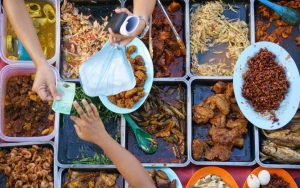
Street food plays a major role in Malaysian food culture and remains one of the most enjoyable ways to experience local flavours. Many of these dishes are affordable, widely available, and deeply connected to the country’s multicultural heritage. Whether you’re visiting a bustling night market, a roadside stall, or a busy food street, street food offers a glimpse into everyday Malaysian life.
Some favourites include:
- Satay – Charcoal-grilled meat skewers served with peanut sauce and ketupat.
- Murtabak – A stuffed and pan-fried flatbread filled with meat, eggs, and onions.
- Popiah – Fresh spring rolls packed with vegetables and savoury fillings.
- Apam Balik – A crispy folded pancake filled with peanuts, sugar, and sweet corn.
- Otak-Otak – Spiced fish paste wrapped in banana leaves and grilled over charcoal.
- Lok Lok – Skewered ingredients cooked in hot broth and enjoyed with a variety of sauces.
- Ramly Burger – Malaysia’s famous street-style burger, often wrapped in egg and loaded with sauces.
- Keropok Lekor – Fish crackers from the east coast of Peninsular Malaysia, usually served with chilli sauce.
Many of these can be found at the city’s night markets and food streets. Areas such as Jalan Alor, Petaling Street, and the Taman Connaught Night Market are popular places to sample a variety of street food in one visit. If you’re keen to explore further, check out our guides to the best street food in Kuala Lumpur and best night markets in Kuala Lumpur for more recommendations.
Malaysian Desserts You Should Try
Malaysia’s tropical climate has helped shape a dessert culture filled with refreshing shaved ice treats, coconut-based sweets, and colourful traditional snacks. Many Malaysian desserts make use of local ingredients such as pandan, palm sugar, coconut milk, glutinous rice, and tropical fruits, creating flavours that are both unique and memorable.
Whether you’re looking for a cooling treat after a day of sightseeing or hoping to discover traditional recipes passed down through generations, these are some of the Malaysian desserts worth trying in Kuala Lumpur.
Cendol
Cendol combines shaved ice, coconut milk, palm sugar syrup, and green rice flour jelly. The rich sweetness of the gula melaka balances beautifully with the creamy coconut milk, making it one of Malaysia’s most beloved desserts.
Some versions include red beans, sweet corn, sticky rice, or even durian. On a hot afternoon in Kuala Lumpur, few desserts are more refreshing. If you’re looking for recommendations, explore our guide to the best cendol in Kuala Lumpur.
Ais Kacang
Also known as ABC (Air Batu Campur), ais kacang is a colourful shaved ice dessert topped with syrups, sweet corn, red beans, grass jelly, peanuts, and a variety of other ingredients.
Every vendor has their own interpretation, with some adding ice cream, fruit, or local favourites such as cendol jelly. Its combination of textures and flavours makes it a popular dessert among both locals and visitors. For more recommendations, check out our guide to the best ais kacang in Kuala Lumpur.
Kuih-Muih
Kuih refers to a wide variety of traditional Malaysian snacks and desserts. These colourful treats are often made from coconut, glutinous rice, pandan, palm sugar, tapioca, and mung beans.
Popular examples include kuih lapis, kuih seri muka, onde-onde, and kuih ketayap. Many local markets, neighbourhood bakeries, and traditional coffee shops still prepare these delicacies using time-honoured recipes. Trying a selection of kuih is one of the best ways to experience Malaysia’s rich culinary heritage.
Tau Fu Fah
Tau fu fah is a silky smooth soybean pudding served with sweet syrup and occasionally topped with ingredients such as ginger syrup or grass jelly.
Simple yet comforting, it is enjoyed throughout the day and is especially popular as a light dessert or afternoon snack. Its delicate texture makes it a favourite among locals of all ages.
Bubur Cha Cha
Bubur cha cha is a traditional Nyonya dessert made with sweet potatoes, taro, sago pearls, coconut milk, and pandan leaves.
Depending on the preparation, it may be served warm or chilled. The combination of creamy coconut milk and soft root vegetables creates a comforting dessert that reflects Malaysia’s Peranakan culinary heritage.
If you enjoy sweet treats, Kuala Lumpur offers countless opportunities to sample traditional desserts, modern dessert cafés, and local favourites that have delighted generations of Malaysians.
Popular Malaysian Drinks
Malaysia’s diverse food culture extends to its drinks as well. From traditional coffee shop beverages and frothy milk teas to refreshing drinks designed for the tropical climate, Malaysian drinks are often enjoyed alongside meals or as a mid-day refreshment.
Whether you’re dining at a hawker centre, a mamak restaurant, or a local kopitiam, these are some of the most popular drinks you’ll encounter in Kuala Lumpur.
Teh Tarik
Known as Malaysia’s national drink, teh tarik is a frothy milk tea created by repeatedly pouring the tea between containers. This “pulling” technique helps cool the drink while creating its signature creamy foam.
Found at mamak restaurants throughout the country, teh tarik pairs especially well with local favourites such as roti canai and murtabak. It remains one of the most iconic beverages in Malaysian food culture.
Kopi
Traditional Malaysian coffee is often stronger and richer than many international styles. Local kopitiams typically serve coffee brewed with roasted beans that may be roasted with margarine or sugar, resulting in a distinct flavour profile.
Visitors can choose from a variety of styles, including kopi (coffee with milk and sugar), kopi-o (black coffee with sugar), and kopi-c (coffee with evaporated milk). Exploring a traditional kopitiam is one of the best ways to experience everyday life in Malaysia.
Milo Dinosaur
A favourite among younger Malaysians, Milo Dinosaur consists of iced Milo topped with an extra layer of Milo powder.
Sweet, chocolatey, and indulgent, it is commonly found in cafés, food courts, and mamak restaurants. Variations such as Milo Tabur and Milo Volcano have also become popular over the years.
Limau Ais
Limau ais, or iced lime juice, is one of the most refreshing drinks available in Malaysia. The combination of citrusy sweetness and tartness makes it an ideal companion to rich or spicy meals.
It is commonly found at hawker centres, food courts, and local restaurants throughout Kuala Lumpur.
Sirap Bandung
Sirap bandung is a bright pink drink made from rose syrup and evaporated milk. Sweet, creamy, and instantly recognisable, it is a favourite at many local eateries and festive gatherings.
For visitors looking to try something uniquely Malaysian, sirap bandung is a fun and colourful option.
While these drinks may seem simple, they form an important part of Malaysia’s food culture and are often just as memorable as the dishes themselves. Don’t be afraid to order something unfamiliar—you may discover a new favourite alongside your meal.
Where to Eat Malaysian Food in Kuala Lumpur
Kuala Lumpur offers countless opportunities to explore Malaysian cuisine.
Some of the city’s most popular food areas include:
- Jalan Alor
- Petaling Street
- Kampung Baru
- Chow Kit
- Brickfields
- Bukit Bintang
- Taman Connaught Night Market
- Central Market
Each neighbourhood offers its own mix of traditional restaurants, hawker stalls, and modern dining experiences.
Hawker Centres, Food Courts and Restaurants: What’s the Difference?
Hawker Centres
These are collections of independent food stalls offering affordable local dishes. They are often considered some of the best places to experience authentic Malaysian food.
Food Courts
Food courts provide a convenient way to sample multiple dishes in one location. They are commonly found in shopping malls and commercial areas.
Restaurants
Restaurants range from simple family-run establishments to upscale dining venues that showcase Malaysian cuisine in a more refined setting.
Tips for Trying Malaysian Food
- Don’t be afraid to share dishes with friends or family.
- Explore neighbourhoods beyond major tourist areas.
- Visit night markets for local street food.
- Expect spicy flavours, but ask for milder versions if needed.
- Try foods from different cultural communities to appreciate Malaysia’s diversity.
- Keep an open mind and be adventurous.
Frequently Asked Questions
What is the most famous food in Malaysia?
Nasi lemak is widely considered Malaysia’s national dish and is often the first food visitors are encouraged to try.
Is Malaysian food spicy?
Many Malaysian dishes feature chilli and spices, but not all foods are extremely spicy. Most restaurants can adjust spice levels.
What should first-time visitors eat in Kuala Lumpur?
Start with nasi lemak, satay, roti canai, chicken rice, char kway teow, laksa, and cendol.
Is Kuala Lumpur good for food lovers?
Yes. Kuala Lumpur is widely regarded as one of Southeast Asia’s best food cities thanks to its cultural diversity, affordability, and enormous range of dining options.
How many Malaysian dishes should I try during a trip?
Even a short visit can easily include 10 to 20 different dishes, especially if you explore food courts, hawker centres, and night markets.
Food is one of the best ways to understand Malaysia’s culture, history, and people.
Whether you’re enjoying a simple breakfast at a neighbourhood coffee shop, sharing satay with friends at a night market, or discovering regional specialities from across the country, Kuala Lumpur offers an unforgettable introduction to Malaysian cuisine.
For many travellers, the food ends up becoming one of the highlights of their entire trip.