
The MRT Putrajaya Line is the second MRT line serving Kuala Lumpur and the Klang Valley, connecting Kwasa Damansara in the north-west with Putrajaya Sentral in Malaysia’s federal administrative capital.
Stretching approximately 57.7 kilometres, the line passes through northern Kuala Lumpur, the city centre, southern suburbs, Cyberjaya and Putrajaya. It has 36 operational stations, including 27 elevated and nine underground stations, with a complete end-to-end journey taking approximately 84 minutes.
For visitors, the Putrajaya Line is particularly useful for travelling to areas around Titiwangsa, Hospital Kuala Lumpur, Ampang Park, KLCC, TRX, Cyberjaya and Putrajaya. It also connects with the MRT Kajang Line, several LRT lines, KL Monorail, KTM Komuter and KLIA Transit.
If you’re unfamiliar with the wider network, start with our MRT Kuala Lumpur Guide, which explains how the Kajang and Putrajaya Lines work together. Our Public Transport in Kuala Lumpur and Getting Around Kuala Lumpur guides cover the rest of the city’s transport options.
What Is the MRT Putrajaya Line?
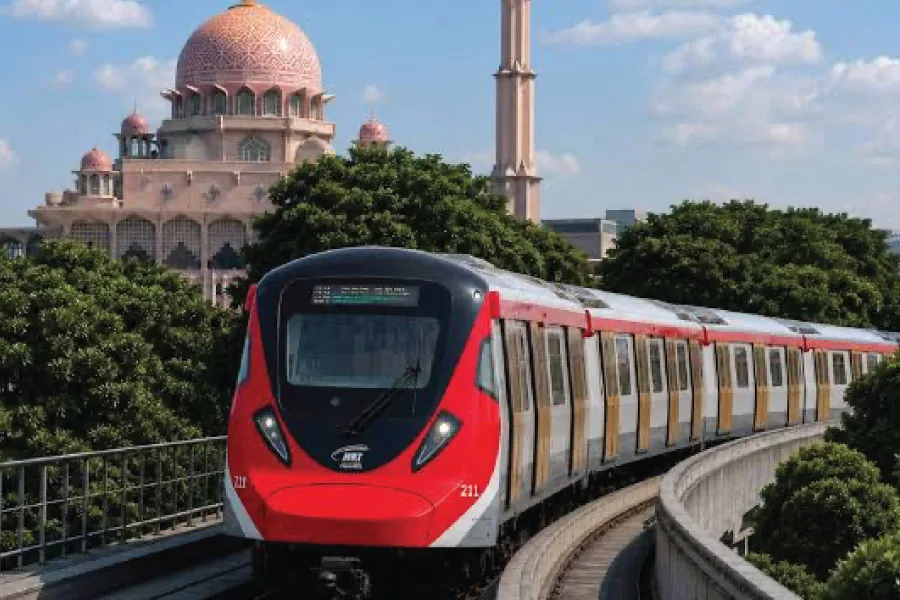
The Putrajaya Line is the second line of the Klang Valley Mass Rapid Transit network.
The route begins at Kwasa Damansara, where it connects with the MRT Kajang Line, before travelling through Sungai Buloh, Kepong and northern Kuala Lumpur.
It then enters central Kuala Lumpur through an underground section serving Titiwangsa, Hospital Kuala Lumpur, Ampang Park, Persiaran KLCC, Conlay and Tun Razak Exchange (TRX).
From TRX, the route continues south through Chan Sow Lin, Kuchai, Sungai Besi, Serdang and several suburban communities before reaching Cyberjaya and finally Putrajaya Sentral.
The line contains 44.2 kilometres of elevated tracks and 13.5 kilometres of underground tunnels. MRT Corp states that the corridor serves a population of around two million people.
MRT Putrajaya Line Stations
The operational Putrajaya Line stations, travelling from north to south, are:
- Kwasa Damansara
- Kampung Selamat
- Sungai Buloh
- Damansara Damai
- Sri Damansara Barat
- Sri Damansara Sentral
- Sri Damansara Timur
- Metro Prima
- Kepong Baru
- Jinjang
- Sri Delima
- Kampung Batu
- Kentonmen
- Jalan Ipoh
- Sentul Barat
- Titiwangsa
- Hospital Kuala Lumpur
- Raja Uda
- Ampang Park
- Persiaran KLCC
- Conlay
- Tun Razak Exchange (TRX)
- Chan Sow Lin
- Kuchai
- Taman Naga Emas
- Sungai Besi
- Serdang Raya Utara
- Serdang Raya Selatan
- Serdang Jaya
- UPM
- Taman Equine
- Putra Permai
- 16 Sierra
- Cyberjaya Utara
- Cyberjaya City Centre
- Putrajaya Sentral
MRT Corp also built several provisional stations along the alignment for potential future use. These should not be confused with the 36 stations currently operating.
Major MRT Putrajaya Line Stations & Interchanges
One of the Putrajaya Line’s biggest strengths is connectivity. MRT Corp identifies 10 interchange or connecting stationsalong the route.
Here are the stations most useful to understand.
Kwasa Damansara
Connection: MRT Kajang Line
Kwasa Damansara is the northern terminus of the Putrajaya Line and an interchange with the MRT Kajang Line.
This allows passengers to transfer towards destinations including:
- Kota Damansara
- Mutiara Damansara
- Bandar Utama
- TTDI
- Bukit Bintang
- Kajang
However, passengers travelling between the Putrajaya and Kajang Lines within central Kuala Lumpur will usually find TRX a much more convenient interchange.
Sungai Buloh
Sungai Buloh is an important transport point serving the north-western Klang Valley and provides connectivity with the KTM network.
The station is particularly useful for residents and commuters travelling between Sungai Buloh and destinations along the Putrajaya Line.
Sri Damansara Timur
Sri Damansara Timur provides connectivity with Kepong Sentral KTM station, opening up journeys towards destinations served by KTM Komuter.
The surrounding area also serves residential communities around Bandar Sri Damansara and Kepong.
Kampung Batu
Kampung Batu connects the MRT Putrajaya Line with KTM Komuter, making it another useful interchange for journeys around northern Kuala Lumpur.
The station serves residential areas around Kampung Batu and Jalan Ipoh.
Titiwangsa
Titiwangsa is one of the most important interchange stations on the Putrajaya Line.
Passengers can transfer to:
- KL Monorail
- LRT Ampang Line
- LRT Sri Petaling Line
This makes Titiwangsa particularly useful for travelling towards Chow Kit, Bukit Bintang, KL Sentral, Masjid Jamek and other areas served by the Monorail or LRT.
Our KL Monorail Guide and LRT Ampang & Sri Petaling Line Guide explain these connections in greater detail.
Nearby destinations include:
- Hospital Kuala Lumpur
- Istana Budaya
- National Art Gallery
- Titiwangsa neighbourhood
- Titiwangsa Lake Gardens, with an onward connection
Ampang Park
Connection: LRT Kelana Jaya Line
Ampang Park is one of the most useful Putrajaya Line interchanges for visitors.
Passengers can transfer to the LRT Kelana Jaya Line for destinations including:
- KLCC
- Kampung Baru
- Masjid Jamek
- Pasar Seni
- KL Sentral
- Bangsar
- Petaling Jaya
This interchange is particularly useful when combining journeys between the Putrajaya Line and Kuala Lumpur’s east-west rail corridor.
See our complete LRT Kelana Jaya Line Guide for the route, stations and attractions along that line.
Tun Razak Exchange (TRX)
Connection: MRT Kajang Line
TRX is arguably the most important MRT interchange in central Kuala Lumpur.
Both operational MRT lines meet here, allowing passengers to change between the Putrajaya Line and Kajang Line.
From the Kajang Line, passengers can continue towards:
- Bukit Bintang
- Merdeka
- Pasar Seni
- Muzium Negara / KL Sentral
- TTDI
- Bandar Utama
- Cheras
- Kajang
TRX station also provides direct access to The Exchange TRX, one of Kuala Lumpur’s major shopping and lifestyle destinations, as well as TRX City Park.
Chan Sow Lin
Chan Sow Lin provides an interchange between the Putrajaya Line and the LRT Ampang and Sri Petaling Lines.
This is useful for journeys towards destinations including:
- Ampang
- Maluri
- Bukit Jalil
- Bandar Tasik Selatan
- Puchong
- Putra Heights
Sungai Besi
Sungai Besi provides another connection with the Sri Petaling Line.
The interchange can be useful for passengers travelling between the Putrajaya corridor and Bukit Jalil, Bandar Tasik Selatan, Puchong or Putra Heights.
Putrajaya Sentral
Connection: KLIA Transit
Putrajaya Sentral is the southern terminus of the MRT Putrajaya Line and the main public transport gateway into Putrajaya.
It connects directly with KLIA Transit, which travels between KL Sentral and Kuala Lumpur International Airport via several intermediate stations.
Putrajaya Sentral also has feeder buses, ticketing facilities, toilets, accessible facilities and Park & Ride.
From here, passengers can continue by bus, taxi or Grab to attractions throughout Putrajaya.
Best Putrajaya Line Stations for Visitors
Although many stations primarily serve residential communities, several are particularly useful for sightseeing.
Titiwangsa
Best for: Northern central KL and transport connections
Titiwangsa’s biggest advantage is connectivity. The combination of MRT, LRT and Monorail makes it a useful interchange for travelling between northern Kuala Lumpur and the city centre.
Nearby cultural destinations include Istana Budaya and the National Art Gallery, while Titiwangsa Lake Gardens can be reached with a short onward journey.
Hospital Kuala Lumpur
Best for: Hospital Kuala Lumpur
As its name suggests, the station primarily serves the Hospital Kuala Lumpur precinct.
It significantly improves rail access to one of Malaysia’s largest public hospitals and surrounding medical facilities.
Ampang Park
Best for: KLCC’s eastern side and LRT interchange
Ampang Park serves the eastern side of central Kuala Lumpur and is particularly useful for office buildings, hotels and developments around Jalan Ampang.
Its interchange with the Kelana Jaya Line also makes it an important transfer station.
Persiaran KLCC
Best for: KLCC and Kuala Lumpur Convention Centre
Persiaran KLCC is one of the most useful Putrajaya Line stations for tourists.
Nearby destinations include:
- Kuala Lumpur Convention Centre
- Aquaria KLCC
- KLCC Park
- Suria KLCC
- Petronas Twin Towers
- Hotels around the KLCC precinct
Depending on exactly where you’re going, KLCC station on the Kelana Jaya Line may still be more convenient for Suria KLCC and the Petronas Twin Towers.
However, Persiaran KLCC is particularly useful for destinations towards the southern side of the KLCC precinct.
Conlay
Best for: Jalan Conlay and southern Golden Triangle
Conlay station serves the area between KLCC and Bukit Bintang.
It is useful for hotels, offices and developments around Jalan Conlay and provides another rail option for accessing the southern side of Kuala Lumpur’s Golden Triangle.
Tun Razak Exchange (TRX)
Best for: The Exchange TRX and MRT interchange
TRX station is directly connected to The Exchange TRX, where you’ll find a large selection of restaurants, international brands and retail outlets.
Above the mall is TRX City Park, an elevated urban park offering landscaped gardens, play areas and city views.
TRX is also the easiest place in central Kuala Lumpur to switch between the Putrajaya and Kajang MRT lines.
UPM
Best for: Universiti Putra Malaysia
UPM station serves Universiti Putra Malaysia and the surrounding Serdang area.
It is primarily useful for students, staff and visitors travelling to the university rather than general sightseeing.
Cyberjaya City Centre
Best for: Cyberjaya
Cyberjaya City Centre and Cyberjaya Utara provide rail access to Malaysia’s technology-focused township.
Because Cyberjaya is spread over a large area, many destinations will still require a feeder bus, taxi or Grab after leaving the MRT station.
Putrajaya Sentral
Best for: Exploring Putrajaya
Putrajaya Sentral is the gateway to Malaysia’s federal administrative capital.
From here, travellers can continue towards attractions including:
- Putra Mosque
- Putrajaya Lake
- Perdana Putra
- Putrajaya International Convention Centre
- Seri Wawasan Bridge
- Putrajaya Botanical Garden
- Government precincts
Our guide to Putra Mosque is useful if you’re planning to visit one of Putrajaya’s most recognisable landmarks.
How to Get to KLCC Using the Putrajaya Line
One of the most useful journeys for visitors is reaching the KLCC area.
The Putrajaya Line does not have a station named “KLCC”, but it has two useful stations around the district.
Persiaran KLCC
Use Persiaran KLCC for destinations around:
- Kuala Lumpur Convention Centre
- Aquaria KLCC
- KLCC Park
- Southern KLCC precinct
Ampang Park
Use Ampang Park for destinations around:
- Jalan Ampang
- Eastern KLCC
- Intermark area
- Kelana Jaya Line interchange
For the Petronas Twin Towers and Suria KLCC themselves, KLCC station on the Kelana Jaya Line may provide the most direct access depending on where your journey begins.
How to Get to TRX Using the Putrajaya Line
Getting to TRX is straightforward because Tun Razak Exchange is directly on the Putrajaya Line.
Exit at:
Tun Razak Exchange (TRX)
The station is integrated with The Exchange TRX development.
TRX is also where you can change to the Kajang Line for destinations such as Bukit Bintang, Merdeka, Pasar Seni and Muzium Negara.
How to Get to Putrajaya by MRT
The Putrajaya Line makes it possible to travel from Kuala Lumpur to Putrajaya entirely by MRT.
Simply board a Putrajaya Sentral-bound train and remain onboard until the final station.
From central Kuala Lumpur, you can join the line at stations including:
- Titiwangsa
- Ampang Park
- Persiaran KLCC
- Conlay
- TRX
However, Putrajaya is a planned city with attractions spread across a large geographical area. Reaching Putrajaya Sentral does not mean you can walk to most major sights.
After arriving, continue by:
- Local bus
- Feeder bus
- Taxi
- Grab
If you’re planning an overnight visit rather than a day trip, our guide to the Best Hotels in Putrajaya covers accommodation options around the city.
MRT or KLIA Transit to Putrajaya?
This depends largely on where you’re starting.
From KL Sentral
KLIA Transit is generally the more direct rail option because it runs from KL Sentral directly to Putrajaya & Cyberjaya station without requiring MRT transfers.
From TRX, KLCC or areas along the Putrajaya Line
The MRT Putrajaya Line can be more convenient because you can travel directly towards Putrajaya Sentral without first heading to KL Sentral.
From Kuala Lumpur International Airport
Use KLIA Transit, which stops at Putrajaya & Cyberjaya on its route between KLIA and KL Sentral.
Our KLIA Express vs KLIA Transit Guide explains the difference between the two airport rail services.
How Long Does the MRT Putrajaya Line Take?
The complete journey between Kwasa Damansara and Putrajaya Sentral takes approximately 84 minutes.
Most visitors will travel only part of the route.
Journey times vary depending on:
- Your starting station
- Your destination
- Transfer time
- Train frequency
- Temporary operational conditions
If you’re travelling specifically between central Kuala Lumpur and Putrajaya, compare your MRT route with KLIA Transit, particularly when starting from KL Sentral.
How to Use the MRT Putrajaya Line
Using the Putrajaya Line is straightforward.
1. Identify Your Direction
Trains generally travel towards one of the two termini:
- Kwasa Damansara
- Putrajaya Sentral
If you’re travelling from central Kuala Lumpur towards Cyberjaya or Putrajaya, follow signs for Putrajaya Sentral.
2. Enter the Station
Purchase a single-journey token or use an accepted travel card at the fare gates.
3. Check the Platform Display
Electronic displays show the train direction and service information.
4. Board the Train
Allow passengers to exit before entering and move further inside during busy periods.
5. Transfer When Necessary
Follow interchange signage when changing to another MRT, LRT, Monorail or rail service.
How to Pay for the MRT Putrajaya Line
The Putrajaya Line uses Rapid KL’s integrated fare system.
Common payment options include:
- Touch ‘n Go card
- Single-journey token
- Eligible Rapid KL travel passes
Fares are distance-based, so longer journeys cost more than short trips.
If you’re travelling extensively around Kuala Lumpur, a Touch ‘n Go card is particularly convenient because it can also be used across much of the city’s LRT, MRT, Monorail and bus network.
See our Public Transport in Kuala Lumpur Guide for a broader explanation of fares and payment options.
MRT Putrajaya Line Operating Hours
Rapid KL rail services generally begin operating from around 6:00am, although last-train times vary according to the station and direction.
The integrated network’s published general operating window is 6:00am to midnight from Monday to Saturday and 6:00am to 11:30pm on Sundays and public holidays, subject to operational requirements.
Do not assume that arriving at a station just before closing time means you can travel the entire length of the line. If you’re travelling late at night, check the last train from your specific station.
Train frequency also varies throughout the day. Rapid KL has operated the Putrajaya Line at around four-minute intervals during recent weekday peak periods, although frequencies can change according to operating conditions.
Check current Rapid KL service information before travelling if timing is important.
MRT Putrajaya Line Feeder Buses
Many Putrajaya Line stations serve large suburban areas where destinations are too far to comfortably reach on foot.
MRT feeder buses therefore connect selected stations with nearby neighbourhoods.
Examples include services around:
- Damansara Damai
- Bandar Sri Damansara
- Desa ParkCity
- Kepong
- Serdang
- Cyberjaya
MRT Corp lists feeder routes from stations including Damansara Damai, Sri Damansara Barat, Sri Damansara Sentral, Sri Damansara Timur and Metro Prima, among others.
For other bus services around the city, our Kuala Lumpur Bus Guide covers Rapid KL, Go KL and Smart Selangor buses.
Park & Ride Along the Putrajaya Line
The Putrajaya Line is also designed for commuters who want to combine driving with public transport.
There are 17 stations with Park & Ride facilities, providing a combined 6,416 parking bays along the route.
This can be useful for commuters living outside comfortable walking or feeder-bus distance from a station, particularly in suburban sections of the route.
Is the MRT Putrajaya Line Good for Tourists?
Yes, although its usefulness depends heavily on where you’re travelling.
For most first-time visitors, the MRT Kajang Line may be used more frequently because it directly serves Bukit Bintang, Chinatown and the KL Sentral area.
However, the Putrajaya Line is particularly useful for:
- Titiwangsa
- Hospital Kuala Lumpur
- Ampang Park
- KLCC area
- TRX
- Cyberjaya
- Putrajaya
It is also valuable as an interchange line because it connects with multiple MRT, LRT, Monorail, KTM and airport rail services.
For a complete overview of both MRT routes, see our MRT Kuala Lumpur Guide.
Tips for Using the MRT Putrajaya Line
- Check whether your train is heading towards Kwasa Damansara or Putrajaya Sentral.
- Use TRX to change between the Putrajaya and Kajang Lines.
- Use Ampang Park to change to the Kelana Jaya Line.
- Use Titiwangsa for the Monorail or Ampang/Sri Petaling Lines.
- Use Persiaran KLCC for the southern side of the KLCC precinct.
- Compare MRT and KLIA Transit if travelling from KL Sentral to Putrajaya.
- Allow for an onward bus or Grab when exploring Putrajaya or Cyberjaya.
- Use feeder buses for suburban destinations farther from stations.
- Avoid weekday rush hours when possible if travelling for sightseeing.
- Check current Rapid KL service updates before beginning a time-sensitive journey.
Frequently Asked Questions
Where does the MRT Putrajaya Line go?
The MRT Putrajaya Line runs between Kwasa Damansara and Putrajaya Sentral, passing through areas including Sungai Buloh, Kepong, Titiwangsa, Ampang Park, KLCC, TRX, Sungai Besi, Serdang and Cyberjaya.
How many stations are on the MRT Putrajaya Line?
There are 36 operational stations, consisting of 27 elevated and nine underground stations.
How long is the MRT Putrajaya Line?
The line is approximately 57.7 kilometres long, comprising 44.2 kilometres of elevated alignment and 13.5 kilometres of underground tunnels.
How long does the full journey take?
MRT Corp lists an end-to-end journey time of approximately 84 minutes.
Does the MRT Putrajaya Line go to KLCC?
It serves the KLCC area through Persiaran KLCC and Ampang Park. For Suria KLCC and the Petronas Twin Towers, KLCC station on the Kelana Jaya Line may sometimes be more convenient.
Does the Putrajaya Line go to Bukit Bintang?
No. Change to the MRT Kajang Line at TRX and travel one stop to Bukit Bintang.
Does the Putrajaya Line go to KL Sentral?
No. One option is to change to the Kajang Line at TRX and continue to Muzium Negara, which is connected to KL Sentral by a pedestrian walkway. Depending on your starting point, other LRT connections may also be more convenient.
Does the MRT go directly to Putrajaya?
Yes. The line terminates at Putrajaya Sentral.
Does the MRT go to Cyberjaya?
Yes. The Putrajaya Line serves Cyberjaya Utara and Cyberjaya City Centre.
Can I take the MRT Putrajaya Line to KLIA?
No. The MRT does not continue to Kuala Lumpur International Airport. Change to KLIA Transit at Putrajaya Sentralfor the airport. Putrajaya Sentral is an official interchange with the KLIA Transit Line.
What is the interchange between the Kajang and Putrajaya Lines?
The two lines connect at TRX and Kwasa Damansara. For most journeys through central Kuala Lumpur, TRX is the more useful interchange.
Can I use Touch ‘n Go on the MRT Putrajaya Line?
Yes. Touch ‘n Go can be used on Rapid KL’s MRT network.
The MRT Putrajaya Line has significantly expanded Kuala Lumpur’s rail network beyond the traditional city-centre corridors.
Its 57.7-kilometre route links Kwasa Damansara and Putrajaya through Kepong, Titiwangsa, the KLCC area, TRX, Sungai Besi, Serdang and Cyberjaya, while numerous interchange stations connect it with the rest of the Klang Valley’s rail network.
For visitors, the most useful stations are likely to be Titiwangsa, Ampang Park, Persiaran KLCC, Conlay, TRX and Putrajaya Sentral. TRX provides easy access to the Kajang Line, while Putrajaya Sentral makes the line especially useful for travellers planning to explore Malaysia’s administrative capital.
Combined with the MRT Kajang Line, LRT Kelana Jaya Line, Ampang and Sri Petaling Lines, KL Monorail and Kuala Lumpur’s bus network, the Putrajaya Line makes it increasingly practical to explore Greater Kuala Lumpur without driving.