Long before Bukit Bintang became Kuala Lumpur’s premier shopping district and enormous malls reshaped the city’s retail landscape, there was Batu Road.
Today known as Jalan Tuanku Abdul Rahman, or simply Jalan TAR, this historic thoroughfare remains one of Kuala Lumpur’s most recognisable traditional shopping streets.
Running north from the historic city centre towards Chow Kit, Jalan Tuanku Abdul Rahman is lined with textile shops, jewellery stores, restaurants, old shophouses, shopping centres and businesses that have served generations of Kuala Lumpur residents.
Its character becomes particularly vibrant ahead of major celebrations such as Hari Raya Aidilfitri and Deepavali, when shoppers descend on Jalan TAR and neighbouring Masjid India in search of clothing, fabrics, decorations and festive necessities.
But Jalan Tuanku Abdul Rahman is more than a shopping destination.
Its original name, Batu Road, recalls an earlier Kuala Lumpur, while landmarks such as the Coliseum Theatre and Hotel, old shophouses and long-established businesses provide glimpses into the street’s past.
As part of our Street Stories series, we explore the history behind Jalan Tuanku Abdul Rahman, how Batu Road became Jalan TAR, what to see and eat along the street, and why it remains an important part of Kuala Lumpur today.
Where is Jalan Tuanku Abdul Rahman?
Jalan Tuanku Abdul Rahman runs through the northern section of central Kuala Lumpur.
Beginning around the historic city centre near Jalan Tun Perak, the road extends northwards through the Masjid India area before reaching Chow Kit and continuing towards Jalan Raja Muda Abdul Aziz.
Its location places Jalan TAR between several important Kuala Lumpur neighbourhoods.
To the west are areas surrounding Merdeka Square and Jalan Raja, while Kampung Baru lies further east. At its northern end, the street reaches Chow Kit, one of Kuala Lumpur’s oldest commercial neighbourhoods.
Jalan TAR therefore functions as both an important city road and a natural link between several historic parts of Kuala Lumpur.
The History of Jalan Tuanku Abdul Rahman
Jalan Tuanku Abdul Rahman dates from Kuala Lumpur’s early development and was originally known as Batu Road.
As Kuala Lumpur expanded beyond its original commercial centre around Market Square, Chinatown and the Klang and Gombak rivers, new roads connected the growing town with settlements, mines and communities further away.
Batu Road developed into one of these important routes.
Over time, businesses and residences appeared along the road. Its proximity to Kuala Lumpur’s administrative and commercial centre gradually transformed it into an important urban street.
By the early 20th century, Batu Road had developed a distinctive commercial character.
Shophouses, restaurants, cinemas, hotels and retailers appeared along the street, turning it into an important destination for shopping and entertainment.
That commercial identity has survived remarkably well.
Although the names of businesses and buildings have changed, Jalan Tuanku Abdul Rahman remains one of Kuala Lumpur’s busiest traditional retail corridors today.
Why Was it Called Batu Road?
Before becoming Jalan Tuanku Abdul Rahman, generations of Kuala Lumpur residents knew the street simply as Batu Road.
The name reflected the road’s role as a route leading northwards from Kuala Lumpur towards Batu, including the wider area associated with Batu Caves.
This was a common way of naming roads during Kuala Lumpur’s early years.
Rather than commemorating individuals, many streets were named according to their destinations, landmarks or functions.
Even after its official renaming, the name Batu Road remained familiar among older generations of Kuala Lumpur residents and continues to appear in historical photographs, maps and stories about the city.
Understanding Batu Road therefore provides an important window into how people once navigated early Kuala Lumpur.
From Batu Road to Jalan Tuanku Abdul Rahman
Batu Road was eventually renamed Jalan Tuanku Abdul Rahman in honour of Tuanku Abdul Rahman ibni Almarhum Tuanku Muhammad, the first Yang di-Pertuan Agong of independent Malaya.
The renaming reflected a broader transformation of Kuala Lumpur’s street names following independence, when numerous colonial-era and English street names were replaced by names commemorating Malaysian rulers, leaders and historical figures.
Despite its considerably longer official name, Kuala Lumpur residents commonly shorten Jalan Tuanku Abdul Rahman to Jalan TAR.
Today, both identities remain important.
Batu Road belongs to the historical memory of old Kuala Lumpur, while Jalan Tuanku Abdul Rahman reflects the emergence of the independent Malaysian capital.
Who Was Tuanku Abdul Rahman?
Tuanku Abdul Rahman ibni Almarhum Tuanku Muhammad was the Yang di-Pertuan Besar of Negeri Sembilan and became the first Yang di-Pertuan Agong of the Federation of Malaya following independence.
His reign began in 1957, placing him at the centre of an important period in Malaysian history.
Tuanku Abdul Rahman was installed as the country’s first constitutional monarch under the distinctive system in which the Yang di-Pertuan Agong is elected from among the Malay rulers.
He served as Yang di-Pertuan Agong until his death in 1960.
Naming one of Kuala Lumpur’s major roads after Tuanku Abdul Rahman commemorated his position as the country’s first head of state following independence.
Jalan TAR as Kuala Lumpur’s Traditional Shopping Street
Shopping has defined Jalan Tuanku Abdul Rahman for generations.
Before Kuala Lumpur became a city of enormous shopping centres, families travelled to areas such as Batu Road, Jalan Masjid India and Chinatown to purchase clothing, textiles, household products and everyday necessities.
That tradition remains particularly visible along Jalan TAR.
The street is still famous for:
- textiles and fabrics
- traditional Malay clothing
- Indian clothing
- scarves and hijabs
- jewellery
- shoes and accessories
- household goods
- festive decorations
- traditional retailers
Many businesses operate from traditional shophouses rather than enclosed malls, giving Jalan TAR a shopping atmosphere quite different from Bukit Bintang or KLCC.
Textile Shopping on Jalan Tuanku Abdul Rahman
Textiles are particularly closely associated with Jalan TAR and neighbouring Jalan Masjid India.
Fabric shops sell everything from colourful printed textiles and lace to materials for baju kurung, baju Melayu, kebaya and other traditional clothing.
Ready-made clothing is equally prominent.
In the weeks before Hari Raya Aidilfitri, Jalan TAR becomes one of Kuala Lumpur’s busiest shopping areas as families search for festive outfits, accessories, decorations and food.
The shopping activity often extends into the evening, creating one of the liveliest seasonal street scenes in Kuala Lumpur.
Visitors interested in traditional shopping can combine Jalan TAR with our guide to shopping in Kuala Lumpur, which covers everything from historic markets to the city’s modern malls.
Hari Raya Shopping on Jalan TAR
Few periods demonstrate the importance of Jalan TAR better than the weeks leading up to Hari Raya Aidilfitri.
The entire district around Jalan Tuanku Abdul Rahman and Masjid India becomes a major festive shopping destination.
Temporary stalls and established retailers sell baju Melayu, baju kurung, tudung, songkok, fabrics, shoes, home decorations and festive food.
Shoppers often remain in the district late into the evening, particularly as Hari Raya approaches.
For visitors, the period provides an opportunity to experience Jalan TAR at its most energetic. However, expect significantly larger crowds and heavier traffic than usual.
Heritage Shophouses Along Jalan TAR
Look above the modern shop signs and Jalan Tuanku Abdul Rahman reveals another layer of its history.
Rows of older shophouses remain along sections of the street, preserving architectural elements from Kuala Lumpur’s earlier commercial development.
Visitors can look for details including:
- decorative façades
- shuttered windows
- covered five-foot ways
- ornamental plasterwork
- traditional narrow shopfronts
- Art Deco influences
Some buildings have been extensively modified, while others retain much of their historic appearance.
Together they provide a reminder that Jalan TAR was already an established commercial street long before Kuala Lumpur’s modern shopping malls appeared.
Coliseum Theatre
One of the most famous historic landmarks associated with Jalan Tuanku Abdul Rahman is the Coliseum Theatre.
Opened in the early 20th century, the Coliseum became one of Kuala Lumpur’s best-known cinemas and entertainment venues.
For generations, residents came to Batu Road to watch films here, particularly Indian movies, reflecting the diverse communities living and working around the neighbourhood.
Its distinctive historic façade remains an important piece of Kuala Lumpur’s entertainment heritage and recalls an era when cinemas were major social landmarks within individual neighbourhoods.
Coliseum Café and Hotel
Beside the theatre, the historic Coliseum Café and Hotel became another institution associated with old Batu Road.
The establishment became famous for its colonial-era atmosphere and Western-style dishes, particularly sizzling steaks served on hot plates.
For generations of Kuala Lumpur residents, the Coliseum represented a distinctive part of the city’s dining history.
Together, the theatre, café and surrounding shophouses help visitors imagine the atmosphere of Batu Road during an era when this was one of Kuala Lumpur’s important entertainment and commercial districts.
SOGO Kuala Lumpur
At the southern end of Jalan Tuanku Abdul Rahman stands SOGO Kuala Lumpur, one of the most recognisable modern retail landmarks along the street.
The department store sells fashion, cosmetics, household goods, food and other products across multiple floors.
Its location beside the traditional shops of Jalan TAR illustrates the gradual evolution of retail in the district.
While much of the street continues to depend on independent businesses and specialist retailers, SOGO introduced the large department-store shopping experience to the neighbourhood.
Pertama Complex
Another long-established shopping centre along Jalan Tuanku Abdul Rahman is Pertama Complex.
Opened during the era when modern shopping complexes were beginning to appear across Kuala Lumpur, Pertama became particularly associated with sportswear, footwear and specialist retailers.
Although newer malls have since transformed Kuala Lumpur’s shopping landscape, Pertama Complex remains part of Jalan TAR’s distinctive mix of old shophouses, department stores and shopping centres.
Globe Silk Store and the Memory of Old Batu Road
Older Kuala Lumpur residents may also associate Batu Road with retailers such as Globe Silk Store, once among the city’s recognisable department stores.
Businesses like Globe formed part of an earlier era of shopping before modern malls became dominant.
For more stories about retailers remembered by generations of Kuala Lumpur residents, our feature on supermarkets and department stores we used to visit in Kuala Lumpur explores names such as Yaohan, Hankyu Jaya and other businesses that once shaped the city’s shopping culture.
Jalan Tuanku Abdul Rahman and Chow Kit
Continue north along Jalan TAR and the character of the street gradually transitions into Chow Kit.
Named after businessman Loke Chow Kit, the neighbourhood developed into one of Kuala Lumpur’s most important traditional commercial districts.
Today it remains famous for Chow Kit Market, local restaurants, textile businesses and busy streets filled with everyday city life.
The neighbourhood is also undergoing its own transformation, with boutique hotels, cafés and newer businesses appearing alongside its traditional markets.
Our complete Chow Kit guide explores the history, food, market and attractions of the neighbourhood in greater detail.
Jalan TAR and Masjid India
The southern section of Jalan Tuanku Abdul Rahman is closely connected with Masjid India, another of Kuala Lumpur’s traditional shopping districts.
The neighbourhood is particularly known for Indian and Malay textiles, jewellery, clothing, food and festive shopping.
Jalan Masjid India runs nearby, allowing visitors to explore both shopping areas easily on foot.
During celebrations such as Hari Raya and Deepavali, the wider Jalan TAR–Masjid India district becomes especially colourful and crowded.
What to Eat Around Jalan Tuanku Abdul Rahman
The neighbourhood surrounding Jalan TAR contains an extensive mix of Malay, Indian-Muslim, Chinese and international food.
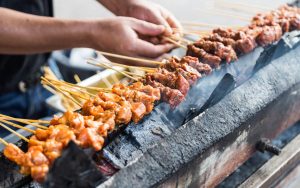
Around Masjid India, visitors will find nasi kandar, roti canai, mee goreng, biryani and other Indian-Muslim favourites.
Further north towards Chow Kit are traditional Malay restaurants, local coffee shops and stalls serving dishes ranging from nasi campur to noodles.
Nearby Kampung Baru provides even more choices and remains one of the best areas in central Kuala Lumpur for traditional Malay food.
The variety reflects the communities that have lived, traded and worked around Jalan TAR for generations.
To explore more about food, check out our guide to Kuala Lumpur’s food.
Hotels and Accommodation Near Jalan TAR
Jalan Tuanku Abdul Rahman’s central location makes the surrounding area convenient for travellers interested in shopping, heritage attractions and public transportation.
Hotels can be found throughout the Jalan TAR, Masjid India and Chow Kit areas, ranging from inexpensive accommodation to contemporary boutique and international properties.
Staying here also provides relatively easy access to Merdeka Square, Kampung Baru, Chinatown and KLCC.
Travellers comparing neighbourhoods can explore our complete guide to where to stay in Kuala Lumpur before deciding whether Jalan TAR, Chow Kit or another part of the city is most suitable.
Public Transportation
Jalan Tuanku Abdul Rahman is particularly easy to reach by public transport.
Bandaraya LRT Station
Bandaraya LRT Station provides convenient access to the southern section of Jalan TAR, including SOGO and the surrounding shopping district.
The station is served by the Ampang and Sri Petaling lines.
Our Ampang and Sri Petaling LRT Line guide explains the route and major stations in greater detail.
Medan Tuanku Monorail Station
Further north, Medan Tuanku Monorail Station provides access to Jalan TAR and the surrounding Chow Kit area.
The KL Monorail connects directly with Bukit Bintang, Imbi, KL Sentral and Titiwangsa.
Sultan Ismail LRT Station
Sultan Ismail LRT Station is another useful option for reaching the northern section of Jalan Tuanku Abdul Rahman.
Visitors unfamiliar with Kuala Lumpur’s transport system can start with our complete Kuala Lumpur public transportation guide.
Nearby Attractions
Merdeka Square
Located within walking distance of the southern end of Jalan TAR, Merdeka Square is one of Malaysia’s most important historical sites. Surrounded by colonial-era architecture, it remains closely associated with the country’s independence celebrations.
Sultan Abdul Samad Building
Facing Merdeka Square, the Sultan Abdul Samad Building is among Kuala Lumpur’s most recognisable heritage landmarks. Its distinctive clock tower, arches and copper domes make it an essential stop while exploring the historic city centre.
Masjid Jamek
Located near the meeting point of the Klang and Gombak rivers, Masjid Jamek is one of Kuala Lumpur’s oldest mosques. Its elegant architecture and riverside setting make it a major landmark of the old city.
Masjid India
The bustling Masjid India neighbourhood is located beside Jalan TAR and is particularly famous for textiles, jewellery, traditional clothing and Indian-Muslim food. It becomes especially lively during major Malaysian festive seasons.
Chow Kit Market
At the northern end of the wider district, Chow Kit Market offers a completely different Kuala Lumpur experience. Explore stalls selling fresh produce, meat, spices and everyday necessities within one of the city’s best-known traditional markets.
Kampung Baru
Located east of Jalan TAR, Kampung Baru preserves traditional Malay houses and community life within central Kuala Lumpur. It is also one of the city’s most popular destinations for nasi lemak and Malay cuisine.
Jalan Doraisamy
Nearby Jalan Doraisamy is named after businessman and miner R. Doraisamy Pillay. Once famous as Asian Heritage Row, its restored shophouses at The Row now house restaurants, cafés and creative businesses.
Exploring Jalan Tuanku Abdul Rahman on Foot
One of the best ways to understand Jalan TAR is simply to walk along it.
Begin around SOGO and explore the surrounding commercial buildings before continuing along the traditional shopfronts towards the Coliseum.
Look above the modern signs to spot surviving architectural details on the upper floors of older shophouses.
Visitors can detour into Masjid India before continuing north towards Chow Kit, where the atmosphere gradually changes from traditional shopping street to bustling market neighbourhood.
Alternatively, head south towards Merdeka Square and the historic city centre.
From there, a longer heritage walk can continue towards Central Market, Chinatown and streets covered elsewhere in our Street Stories series, including Jalan Tun H.S. Lee, Jalan Panggung and Jalan Petaling.
Why Jalan Tuanku Abdul Rahman Matters to Kuala Lumpur
Jalan Tuanku Abdul Rahman tells an important story about how Kuala Lumpur shops.
Before Pavilion Kuala Lumpur, Suria KLCC and the enormous malls of modern Kuala Lumpur, streets such as Batu Road served as the city’s shopping destinations.
People came here for textiles, clothing, entertainment, restaurants and department stores.
Some of that old retail culture survives today.
Traditional textile shops operate beside shopping complexes. Historic shophouses stand near modern towers. The Coliseum recalls the days when going to Batu Road for a film was an event, while SOGO represents a later generation of city-centre retail.
The road’s two names also connect different periods of Malaysian history.
Batu Road recalls the practical naming conventions and expanding geography of early Kuala Lumpur.
Jalan Tuanku Abdul Rahman commemorates independent Malaya’s first Yang di-Pertuan Agong.
Together, these layers make Jalan TAR much more than another shopping street.
Frequently Asked Questions About Jalan Tuanku Abdul Rahman
What was Jalan Tuanku Abdul Rahman previously called?
Jalan Tuanku Abdul Rahman was formerly known as Batu Road, a name still familiar to many older Kuala Lumpur residents and commonly found on historical maps and photographs.
Why was it called Batu Road?
The road led northwards from central Kuala Lumpur towards the Batu area, including the direction of Batu Caves. Early Kuala Lumpur roads were frequently named after the destinations they served.
Who is Jalan Tuanku Abdul Rahman named after?
The street is named after Tuanku Abdul Rahman ibni Almarhum Tuanku Muhammad, the first Yang di-Pertuan Agong of independent Malaya.
Is Jalan TAR good for shopping?
Yes. Jalan TAR remains particularly famous for textiles, traditional clothing, hijabs, jewellery, accessories and festive shopping, especially in the period leading up to Hari Raya Aidilfitri.
What is Jalan TAR famous for?
Besides shopping, Jalan TAR is known for its history as Batu Road, heritage shophouses, the Coliseum Theatre, SOGO Kuala Lumpur and its proximity to Masjid India and Chow Kit.
Which train station is closest to Jalan TAR?
Several stations serve different parts of the long street. Bandaraya LRT Station is convenient for SOGO and southern Jalan TAR, while Medan Tuanku Monorail and Sultan Ismail LRT stations serve areas further north.
Is Jalan TAR near Merdeka Square?
Yes. The southern section of Jalan Tuanku Abdul Rahman is within walking distance of Merdeka Square, making it easy to combine both areas in a heritage walking itinerary.
From Batu Road to Jalan Tuanku Abdul Rahman, this historic street has remained an important part of everyday Kuala Lumpur for generations.
Its name has changed. Cinemas have given way to different forms of entertainment. Department stores have come and gone, while enormous shopping malls have emerged elsewhere in the city.
Yet Jalan TAR continues doing something it has done for decades: bringing people into the city to shop.
Walk beneath its five-foot ways, look above the colourful shop signs and explore the surrounding streets, and traces of old Batu Road remain visible.
That continuity makes Jalan Tuanku Abdul Rahman especially valuable to Kuala Lumpur.
It is not simply a preserved heritage street. It remains a living commercial district where the history of the city continues alongside the rhythms of everyday life.